




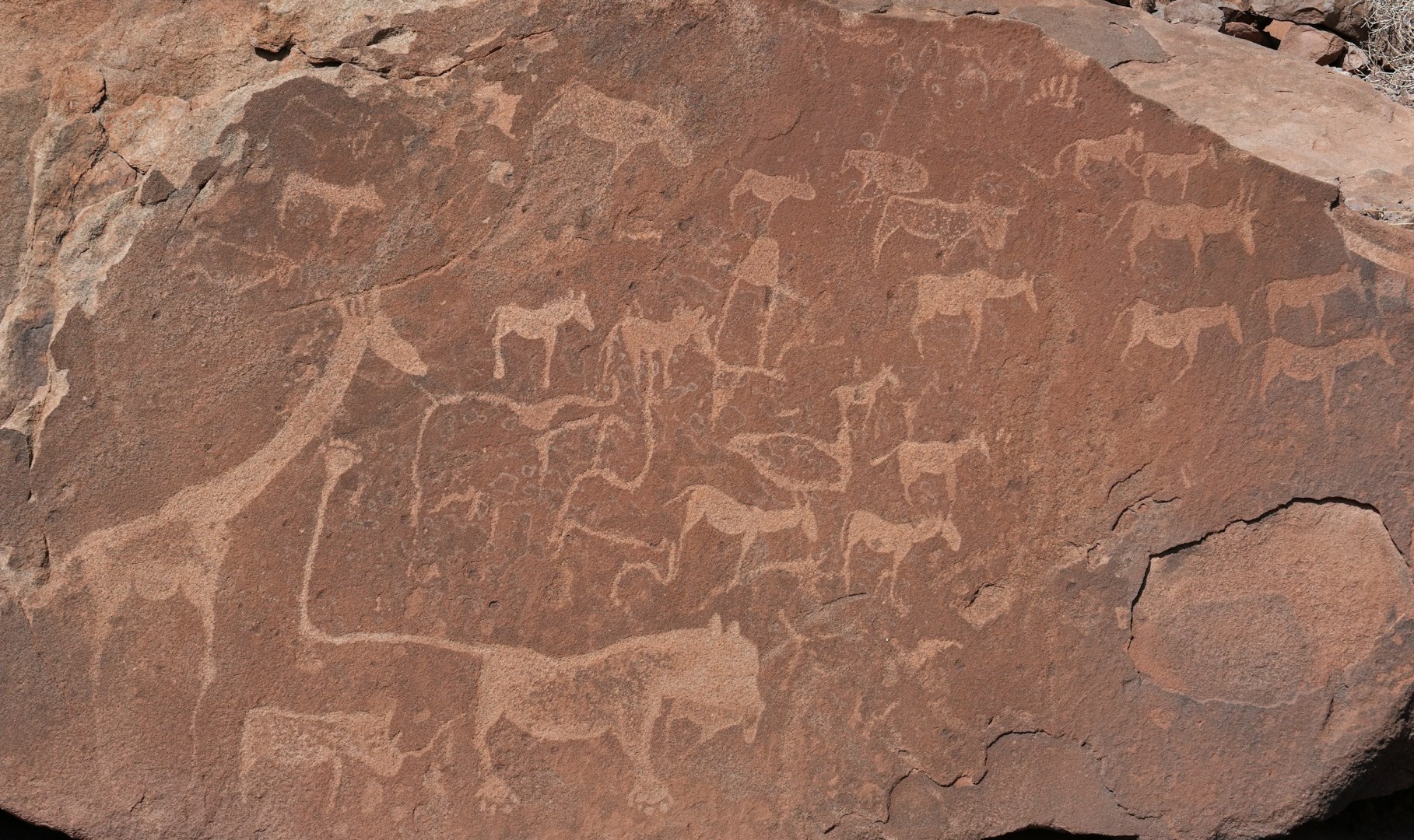
Twyfelfontein is a cultural heritage site in the rugged Damaraland region of northwestern Namibia, known for one of Africa’s largest concentrations of ancient rock engravings. The site lies among sandstone cliffs, dry valleys, and open plains where water is scarce and vegetation is adapted to arid conditions. Twyfelfontein or /Ui-//aes is recognized as a UNESCO World Heritage Site because of its extensive collection of engravings and painted rock shelters. The surrounding landscape forms an important part of the site, linking the artwork with the rocky terrain and seasonal water sources that supported human communities.
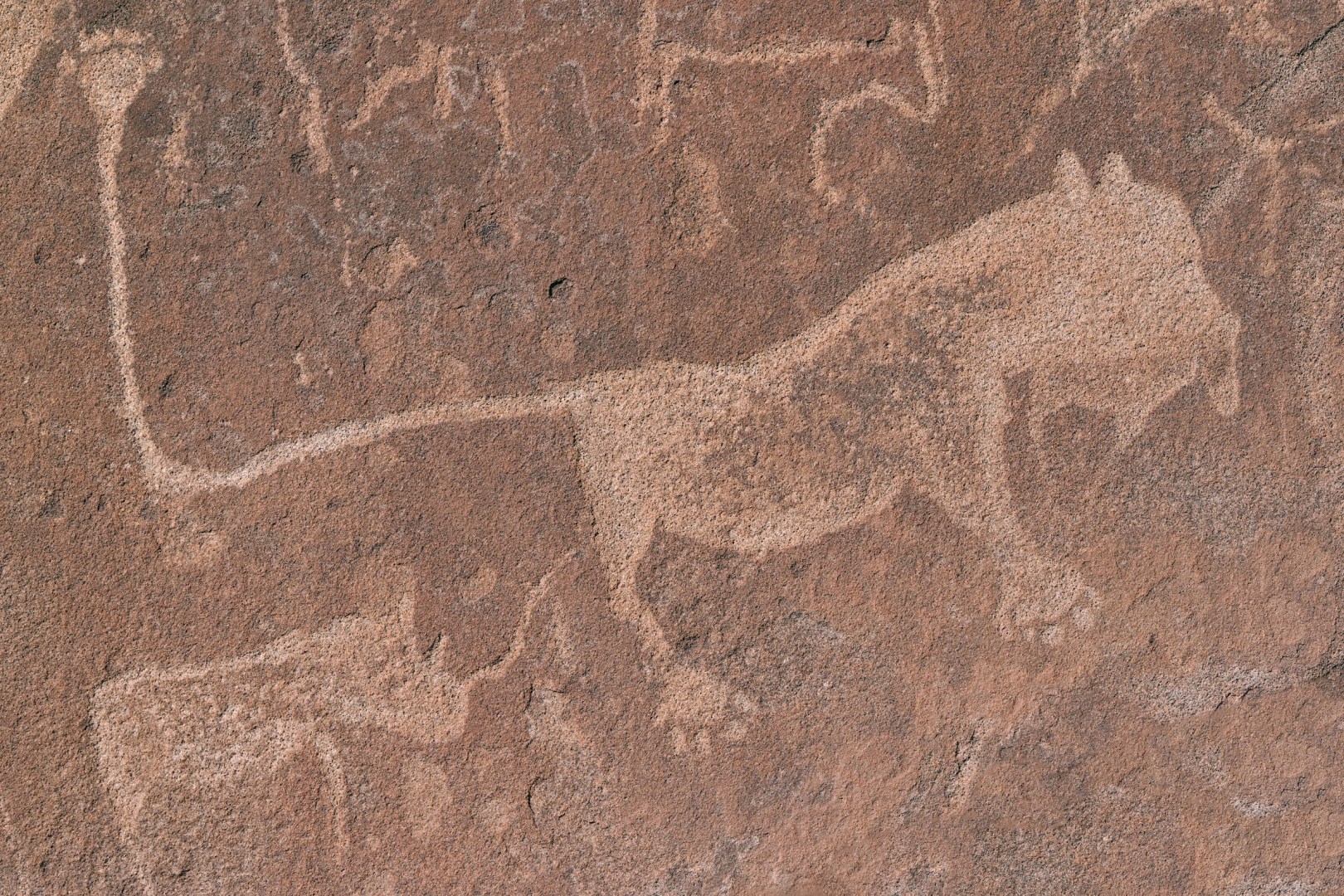
The rock art was created by San hunter-gatherer communities and records animals, human figures, and footprints. Rhinoceroses, elephants, giraffes, and ostriches are among the most frequently represented animals, while some panels show human and animal tracks. UNESCO considers the engravings evidence of ritual practices connected with the economic and spiritual life of hunter-gatherers. The site also contains archaeological remains and six painted rock shelters decorated with red-ochre figures. Together, these features provide insight into the traditions and beliefs of communities that lived in this part of southern Africa.
Visitors explore the rock engravings along marked routes that pass between sandstone boulders and low cliffs. The engravings are found on both flat and upright rock surfaces, with individual images varying in size and detail. Nearby attractions include the Organ Pipes, Burnt Mountain, and the Petrified Forest, all within the broader Damaraland landscape. The region is also known for wildlife adapted to dry conditions, including desert-adapted elephants, black rhinos, oryx, springbok, and a variety of bird species. Twyfelfontein therefore provides access to both an important archaeological site and a distinctive desert environment.
Twyfelfontein’s name is associated with a spring that emerges from a fault zone and feeds into the Aba Huab River. The limited water supply helps explain why the area was significant to people and animals moving through the dry landscape. Today, a visitor centre provides information about the rock art, local history, geology, and people of the region, while guided walks help visitors understand individual engravings and their setting. The site is protected under Namibia’s heritage legislation, and visitor management helps safeguard the exposed rock surfaces from damage. The combination of ancient artwork and an arid setting makes Twyfelfontein distinctive within Namibia’s cultural landscape.
