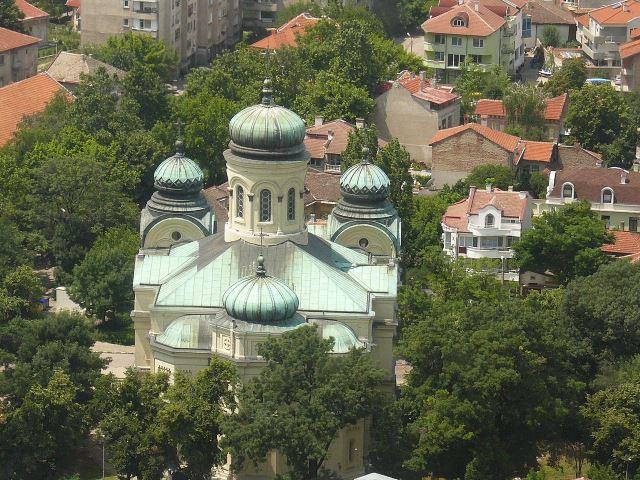


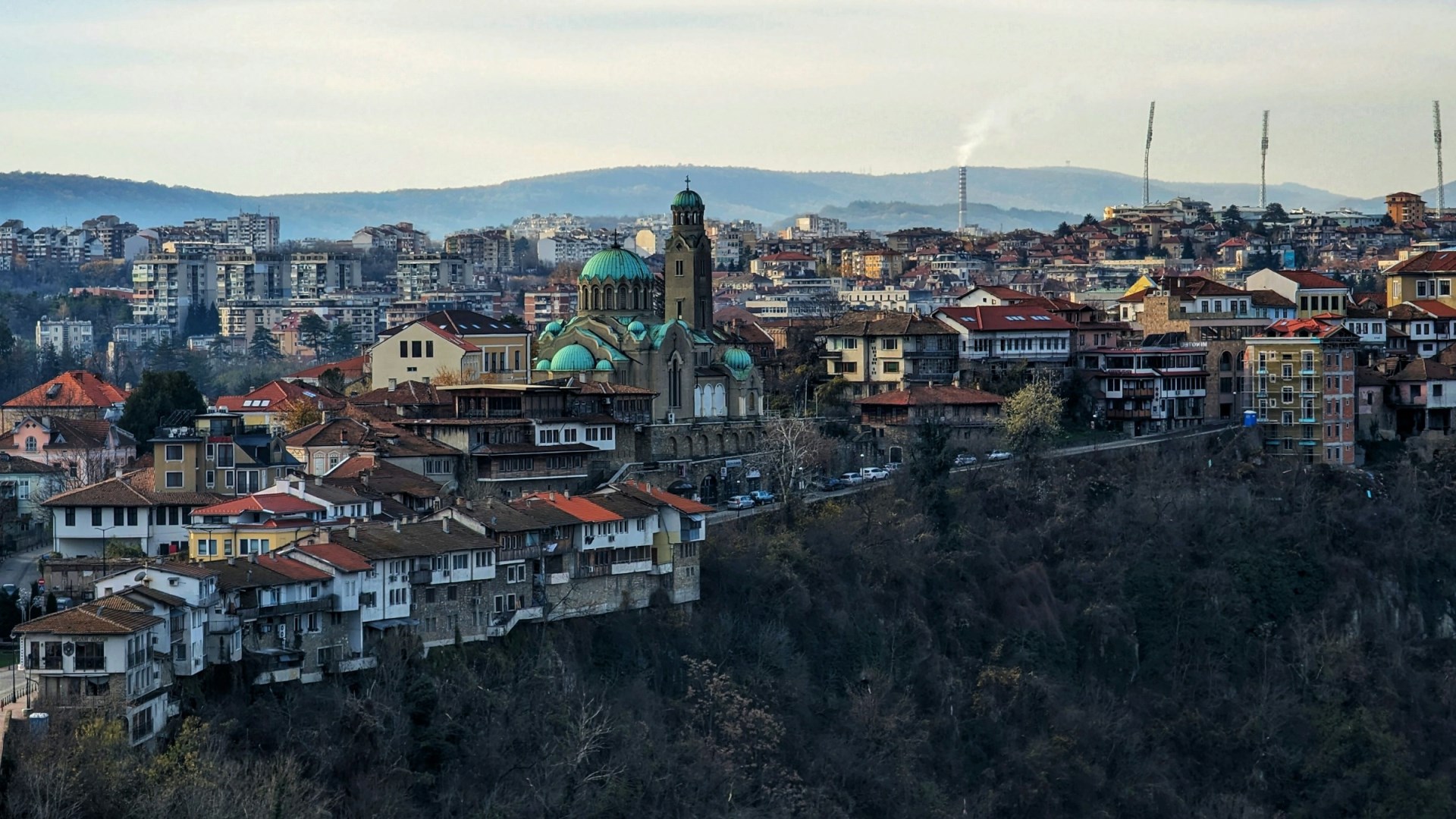
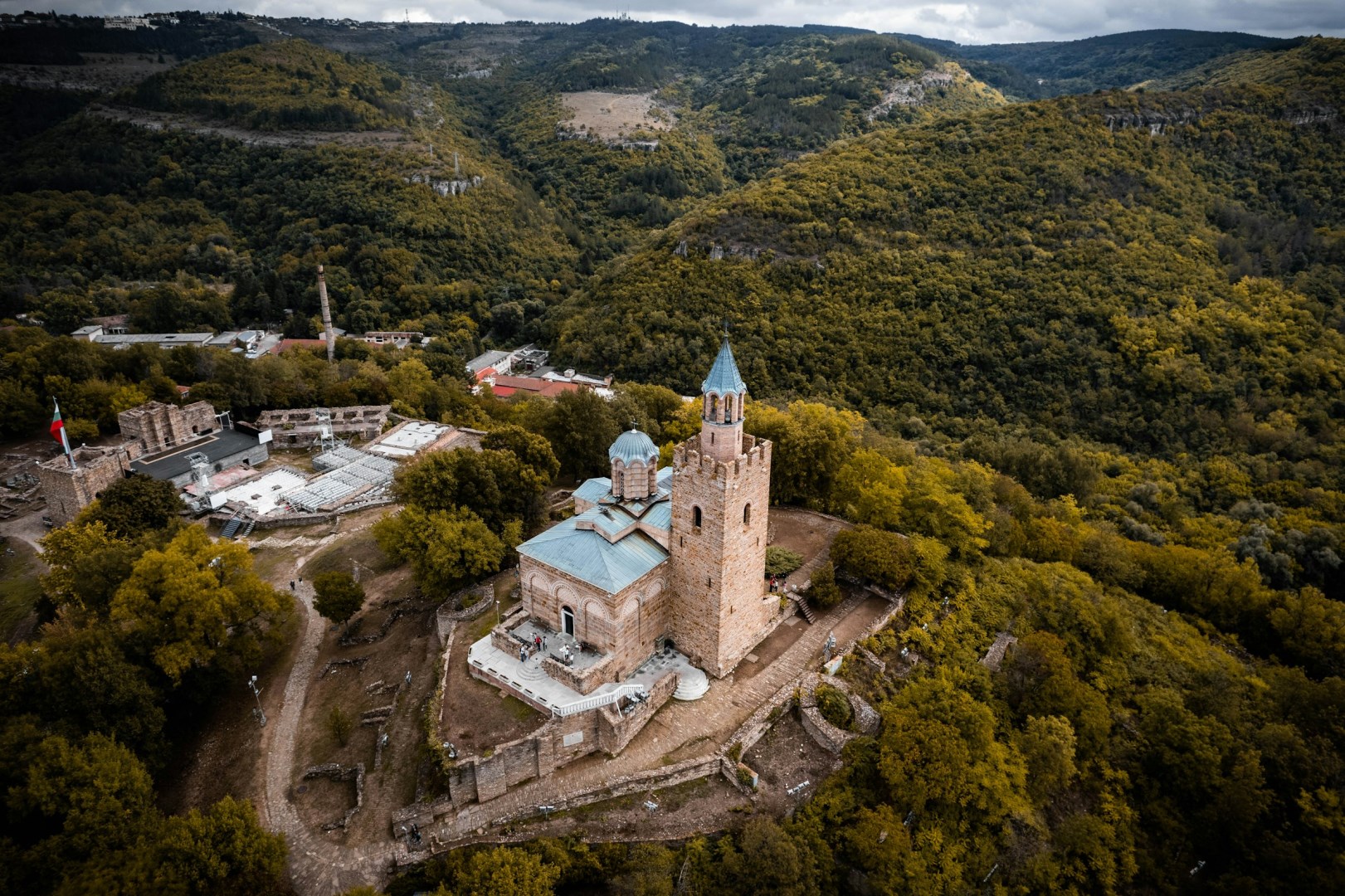
Veliko Tarnovo is a historic city in central Bulgaria, built along the steep hills and bends of the Yantra River. Its distinctive setting is defined by houses rising above the river and narrow streets that climb between the hills. The city is closely associated with Bulgaria’s medieval state and remains an important cultural center in the country. Tsarevets Fortress dominates the historic landscape, while the Asenova quarter, old churches, traditional houses, and viewpoints along the Yantra reveal the city’s layered architectural character.
Veliko Tarnovo has a strong connection with Bulgarian national history and Orthodox Christian traditions. Tsarevets was the principal fortified area of the medieval Bulgarian capital, and its Patriarchal Church stands at the summit of the hill. The nearby Trapezitsa hill contains archaeological remains and the foundations of numerous medieval churches. In the old town, the Samovodska Charshia preserves the atmosphere of a traditional craft street, with workshops producing ceramics, woodwork, textiles, and other handmade goods. Local cultural life also includes folklore performances and traditional Bulgarian music.
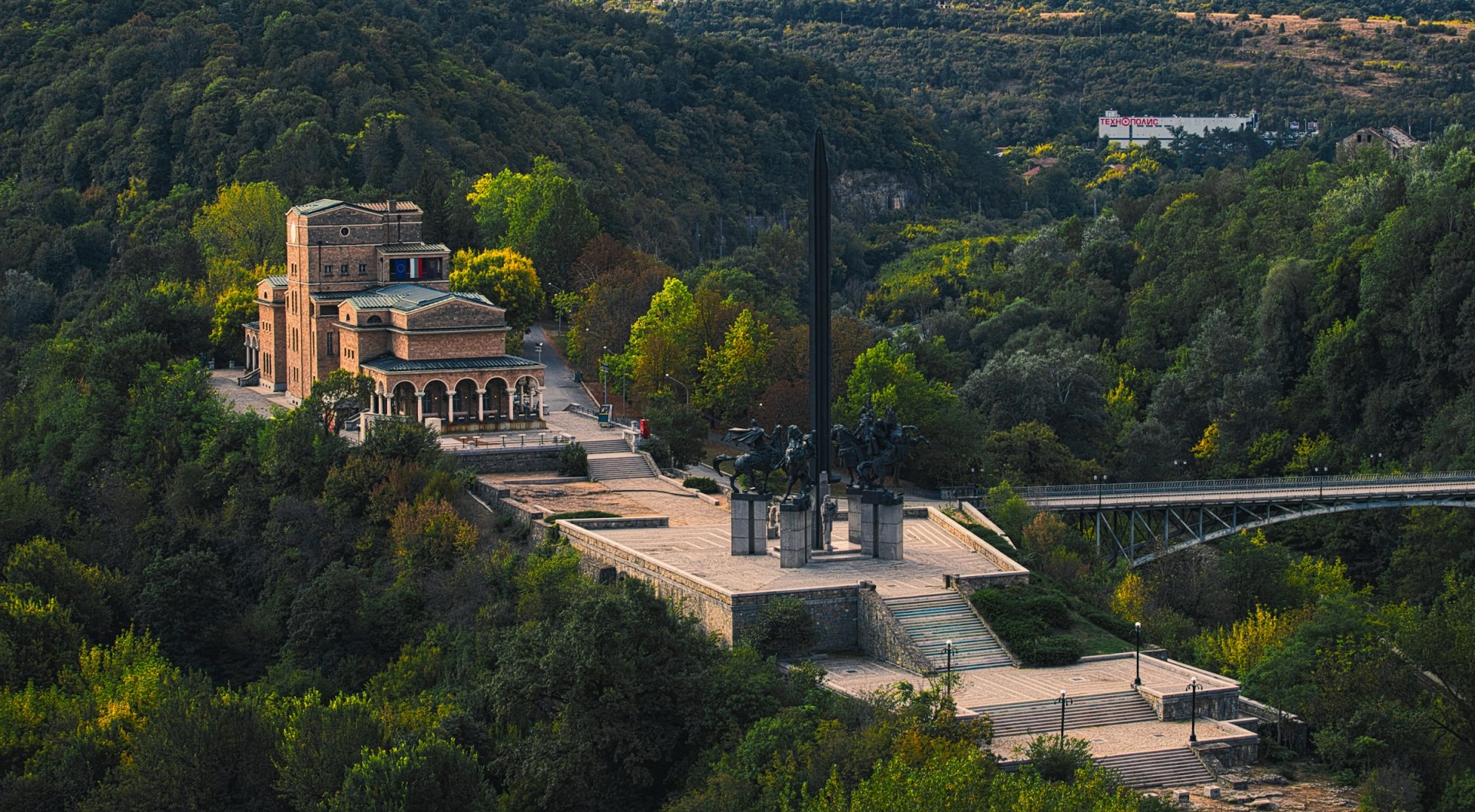
The city’s steep terrain creates several notable viewpoints and walking routes. Tsarevets Fortress provides broad views over the Yantra River and surrounding hills, while Trapezitsa offers another perspective on the historic center. The Monument to the Assen Dynasty stands beside the river and commemorates rulers associated with the medieval Bulgarian state. Just outside the city, the village of Arbanasi is known for its stone houses and historic churches, including the Church of the Nativity, whose interior contains extensive wall paintings. The surrounding region combines wooded hills, river valleys, and small rural settlements.
Veliko Tarnovo’s food reflects Bulgarian cooking traditions, with dishes such as banitsa, shopska salad, kavarma, and grilled meats commonly found in local restaurants. Yogurt, white brined cheese, peppers, tomatoes, and fresh herbs are widely used ingredients. The Samovodska Charshia also offers opportunities to encounter regional food products alongside traditional crafts. One of the city’s distinctive cultural events is the Sound and Light performance at Tsarevets, which uses illumination, music, and projected effects to interpret important episodes from Bulgarian history against the fortress walls.
Other Popular Destinations in Bulgaria