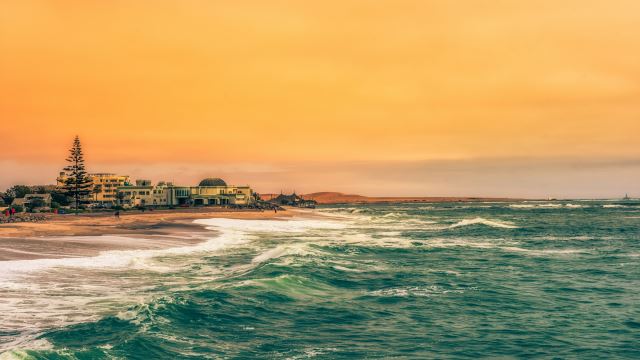


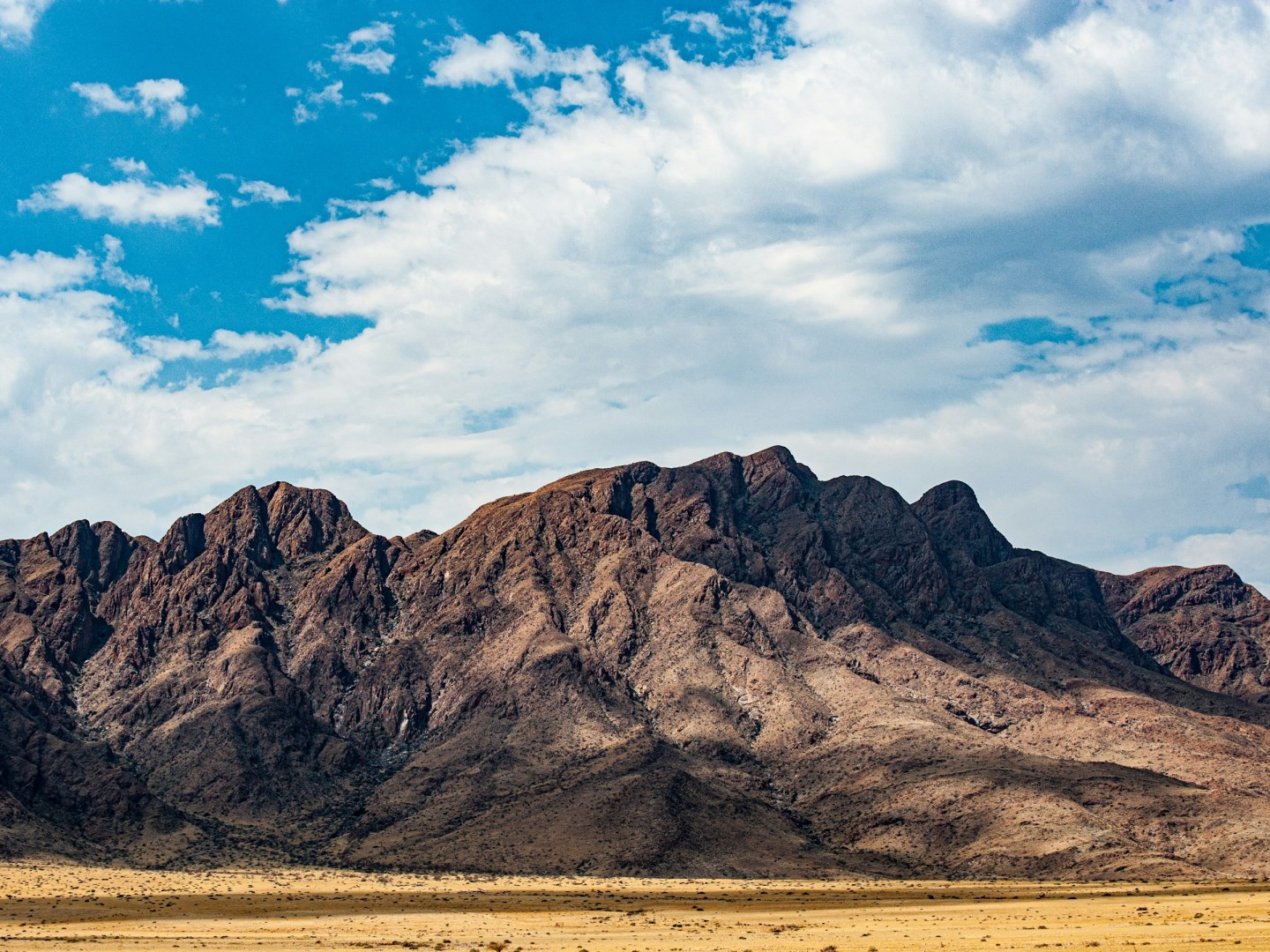
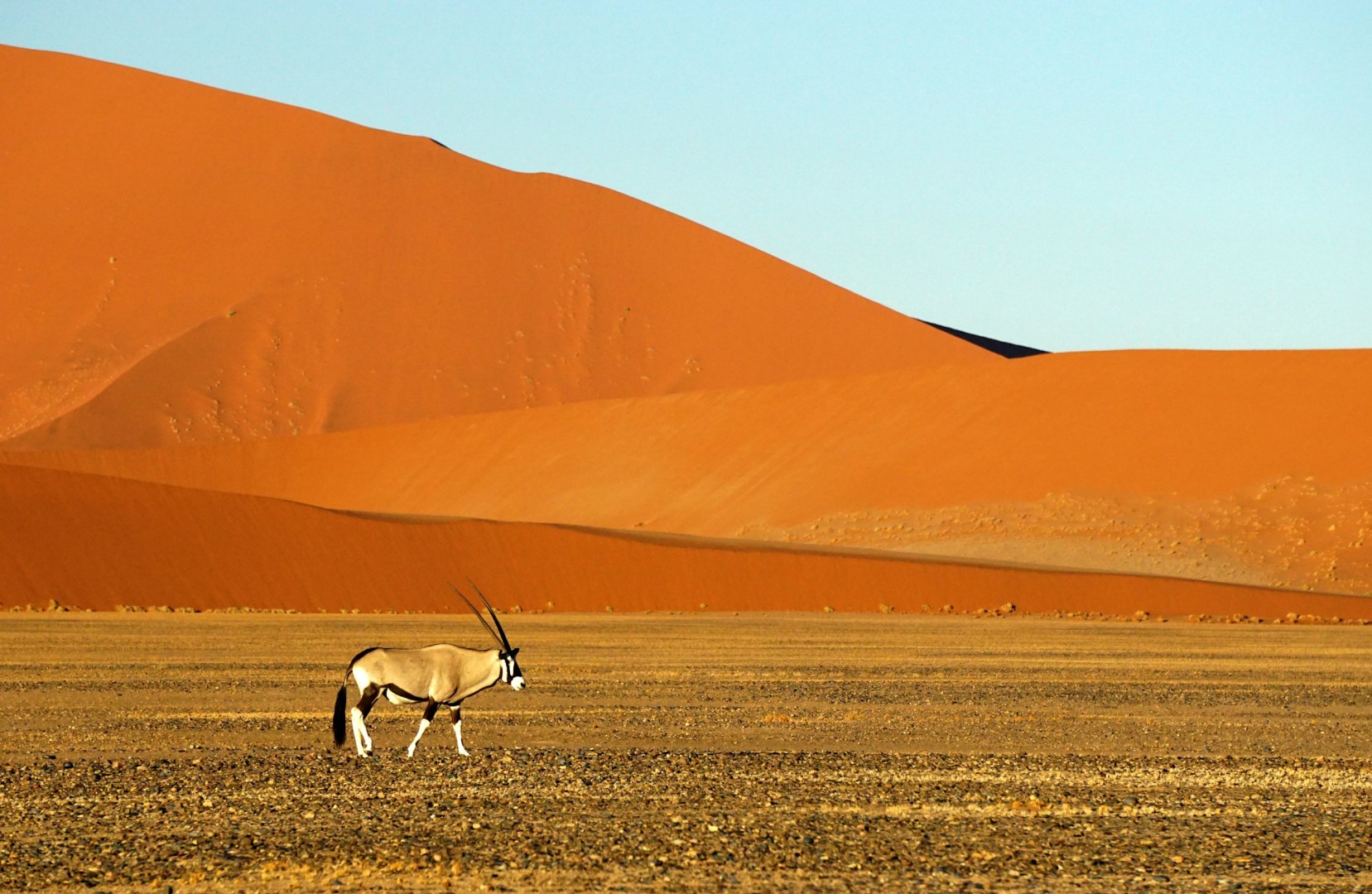
Namib-Naukluft National Park is Namibia’s largest protected area, covering a vast stretch of desert from the central plateau toward the Atlantic coast. Its landscape includes rolling gravel plains, isolated rocky mountains, dry river valleys, and some of the country’s most recognizable sand dunes. The park contains the Namib Sand Sea, a UNESCO World Heritage property known for extensive dune fields shaped by wind and coastal fog. Within this immense protected area, the scenery changes from the highlands of the Naukluft Mountains to the open desert around Sossusvlei, creating several distinct environments within one park.
The park also reflects a long history of human movement through an extremely dry environment. Archaeological evidence along the Kuiseb River records Stone Age activity, while the Topnaar people continue to live along parts of the river within the park. Their traditional connection to the desert includes knowledge of seasonal water sources and local plants. The park’s cultural landscape also includes traces of former coastal settlements, diamond-related activity, shipwrecks, and historic sites. These elements show that the Namib has supported communities, travel, and economic activity despite its limited rainfall and difficult conditions.
Sossusvlei, Deadvlei, and Sesriem Canyon are among the park’s best-known places. Sossusvlei is surrounded by large orange-red dunes, while Deadvlei contains pale clay ground and the remains of ancient camel-thorn trees. Sesriem Canyon cuts through layers of sediment and can be explored on foot when conditions allow. Farther south and east, the Naukluft Mountains contain rugged valleys, springs, and hiking routes. The park also protects Welwitschia plants, lichens, oryx, Hartmann’s mountain zebra, springbok, giraffe, brown hyena, leopard, and hundreds of recorded bird species.
Namib-Naukluft National Park is particularly notable for the ways plants and animals survive with very little surface water. Coastal fog provides an important source of moisture in parts of the Namib Sand Sea, supporting specialized insects, reptiles, and other organisms. The park’s ephemeral rivers, including the Kuiseb and Tsauchab, may flow only after rainfall but shape important valleys and landscapes. Visitors commonly explore the area through hiking, four-wheel-drive routes, guided nature drives, photography, bird-watching, and stargazing. The desert setting also makes clear skies and exceptionally dark night conditions an important part of the park experience.
Other Popular Destinations in Namibia