



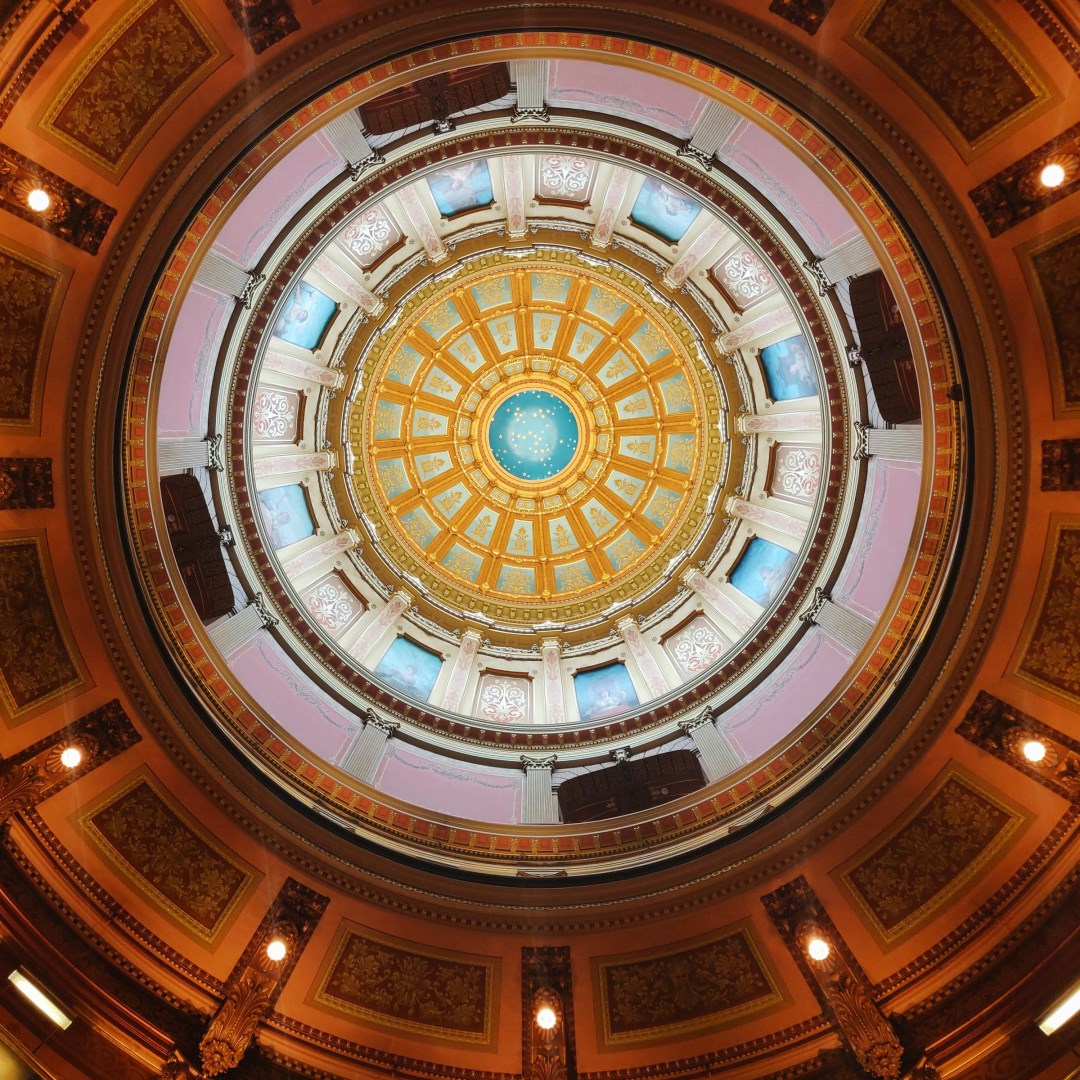

Lansing is the capital of Michigan, located in the south-central part of the Lower Peninsula along the Grand River. The city serves as the center of Michigan state government and has a long connection to manufacturing, education, and transportation. Its urban landscape includes the Capitol complex, established neighborhoods, riverfront parks, and former industrial areas. The Grand River runs through the city and provides a natural corridor for trails and recreation. Lansing is closely connected with neighboring East Lansing, home of Michigan State University, creating a larger metropolitan area centered on government, education, research, and regional commerce.
Lansing’s history includes Indigenous connections to the Grand River valley, followed by settlement, agriculture, transportation, and industrial growth. The Michigan State Capitol is one of the city’s principal historic landmarks and contains decorative paintings, cast-iron features, and restored interior spaces. The Michigan History Center presents exhibits on the state’s Indigenous peoples, political development, industries, and communities. Lansing also became an important center for automobile manufacturing, particularly through the presence of Oldsmobile and later General Motors operations. This industrial heritage remains part of the city’s identity alongside its role as Michigan’s political center.
The Capitol grounds provide a central public space surrounded by government buildings and downtown attractions. The River Trail follows the Grand River through Lansing and connects parks, museums, and neighborhoods, while Hawk Island County Park offers a beach, trails, and recreational facilities south of downtown. The Potter Park Zoo contains animals from several regions and sits beside the Red Cedar River near Michigan State University. The Impression 5 Science Center provides interactive exhibits for families, while the nearby R.E. Olds Transportation Museum explores Lansing’s automobile manufacturing history. Together, these attractions highlight the city’s government, river, science, and industrial connections.
Lansing’s food culture reflects the agricultural character of central Michigan and the diversity of its population. Restaurants serve Michigan-grown produce, regional meats, Great Lakes fish, and foods influenced by communities from around the world. The city’s proximity to Michigan State University contributes to a large student population and a varied dining scene. Local agricultural traditions include apples, cherries, corn, soybeans, and other crops grown across the surrounding region. Lansing also has a connection to the state’s craft beverage industry, with breweries and cider producers operating in the area. The combination of government, higher education, manufacturing, and riverfront recreation gives Lansing a distinctive role within Michigan.
Other Popular Destinations in Michigan