



Central Asia | India | Hyderabad
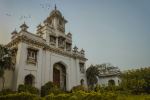
Hyderabad is the capital of Telangana in southern India, built around the Musi River and shaped by a long history of Deccan kingdoms, Islamic architecture, Hindu traditions, and modern technology. The city combines historic neighborhoods with expanding business districts, universities, markets, and residential areas. Its older quarters are centered around landmarks such as Charminar and the Mecca Masjid, while newer Hyderabad is known for its technology and pharmaceutical industries. Granite outcrops, lakes, and parks are scattered across the urban landscape, adding variety to a city that has grown well beyond its historic core.
Hyderabad’s cultural identity reflects the meeting of Telugu and Deccani Muslim traditions. Charminar is the city’s best-known monument, with four grand arches supporting a two-level structure topped by minarets. Nearby Laad Bazaar is traditionally associated with bangles and other decorative goods, while Mecca Masjid is one of the city’s major historic mosques. The Qutb Shahi Tombs contain domed mausoleums, mosques, and landscaped gardens connected with the rulers of the Qutb Shahi dynasty. Telugu literature, Urdu poetry, classical music, and regional festivals also form important parts of Hyderabad’s cultural life.
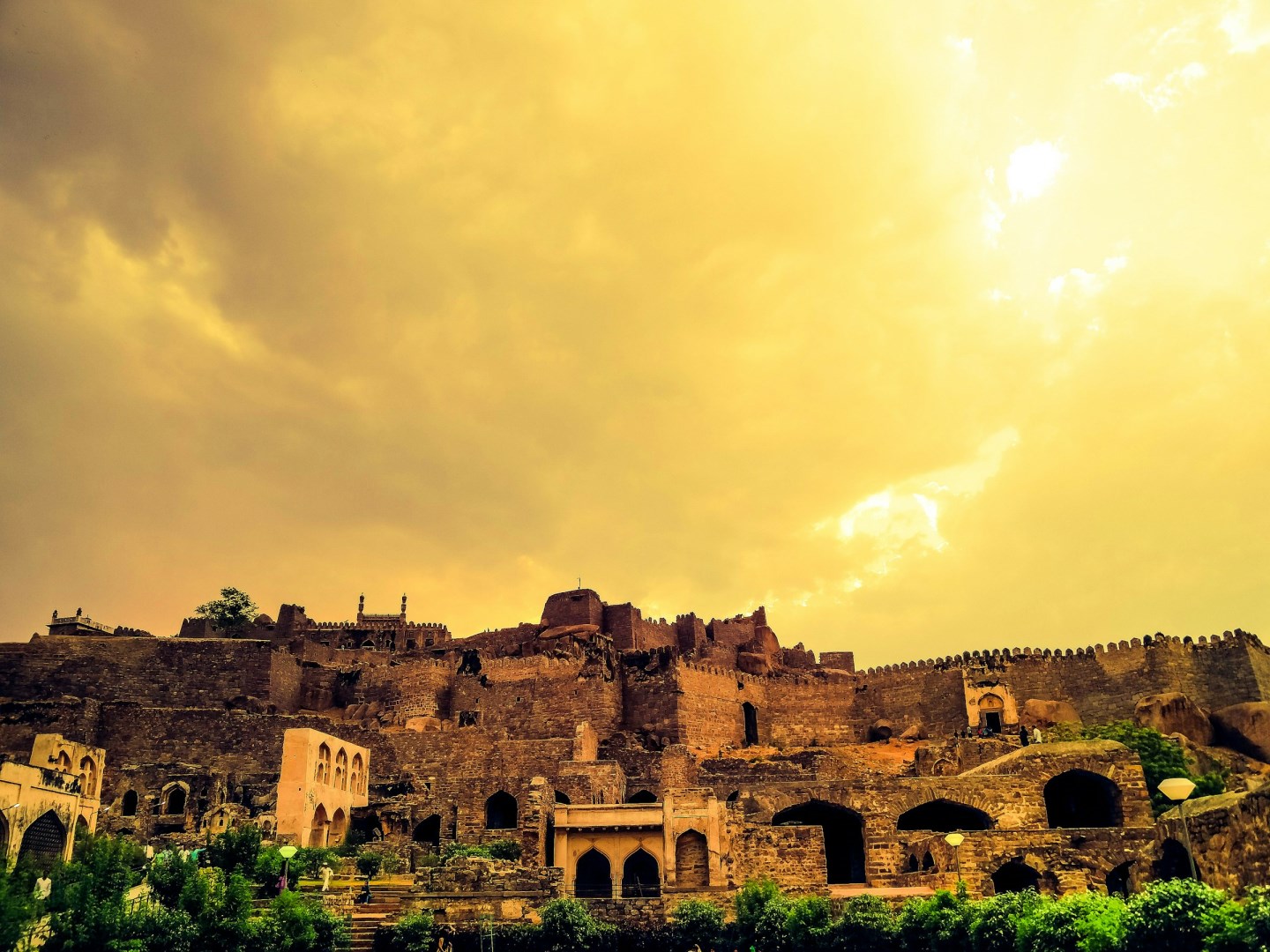
Hyderabad offers a broad range of historic and architectural attractions. Golconda Fort occupies a granite hill west of the old city and contains massive gateways, walls, courtyards, mosques, and royal structures. The Qutb Shahi Tombs nearby form an important architectural complex, while Chowmahalla Palace provides an example of the later royal heritage of the city. Hussain Sagar, a large lake between Hyderabad and Secunderabad, is marked by a prominent Buddha statue on an island near its center. The city also contains several parks, museums, and lakes that provide open spaces within its expanding metropolitan landscape.
Hyderabad is particularly famous for its food, with Hyderabadi biryani serving as its best-known specialty. Other regional dishes include haleem, mirchi ka salan, bagara rice, kebabs, and double ka meetha, a bread-based dessert. Irani chai and Osmania biscuits are also closely associated with the city’s café culture and historic neighborhoods. Pearls and lac bangles are traditional products sold in the old markets, while the city’s modern identity is increasingly connected with information technology and biotechnology. This combination of Deccan architecture, multilingual culture, distinctive cuisine, traditional crafts, and modern industry gives Hyderabad a character that spans several different eras and communities.
Learn More About Hyderabad
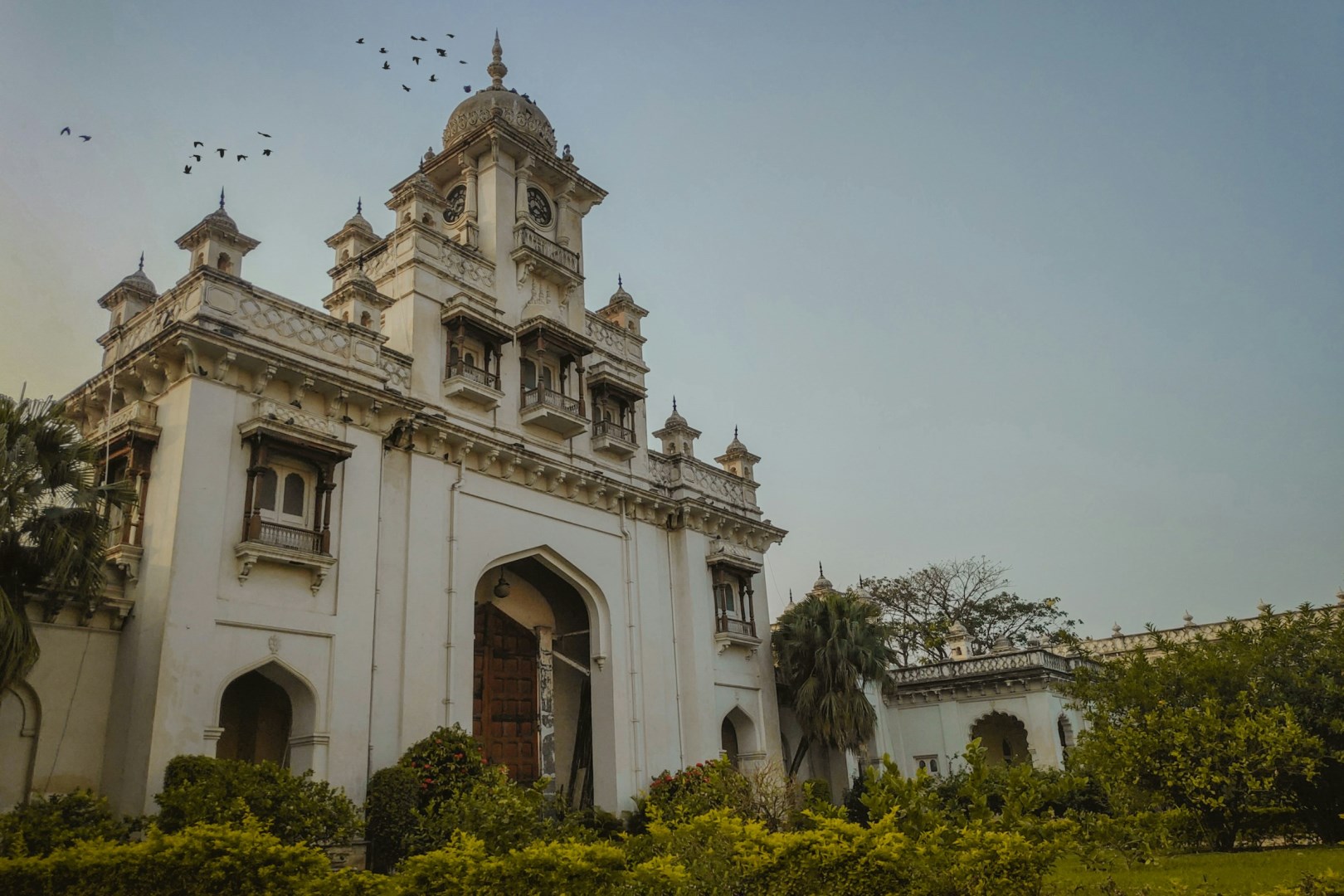
Chowmahalla Palace is a former royal complex in the heart of Hyderabad’s Old City, near Charminar, and was the seat of the Nizams of Hyderabad. Its name refers to four palaces, and the complex combines Mughal, Persian, Indo-Islamic, and European architectural influences. The Southern Courtyard contains four palaces, while the Northern Courtyard features the long Bara Imam corridor and the Khilwat Clock in the Clock Tower. The Khilwat, or grand Durbar Hall, is a central ceremonial space marked by ornate stucco decoration and chandeliers. Restored courtyards, gardens, fountains, and palace interiors now form a museum showcasing the city’s royal heritage.
Other Popular Destinations in India


