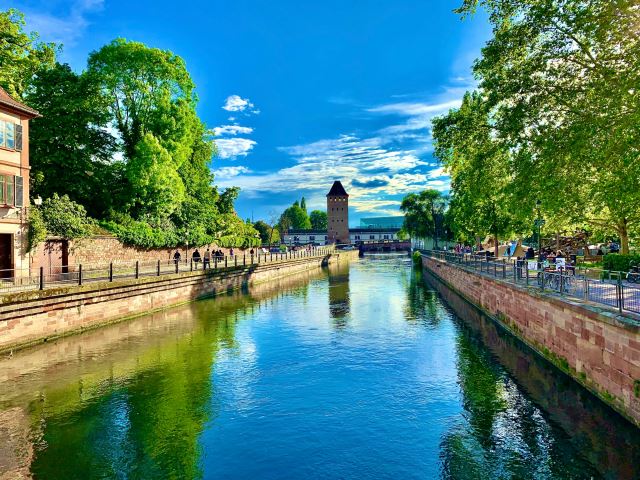



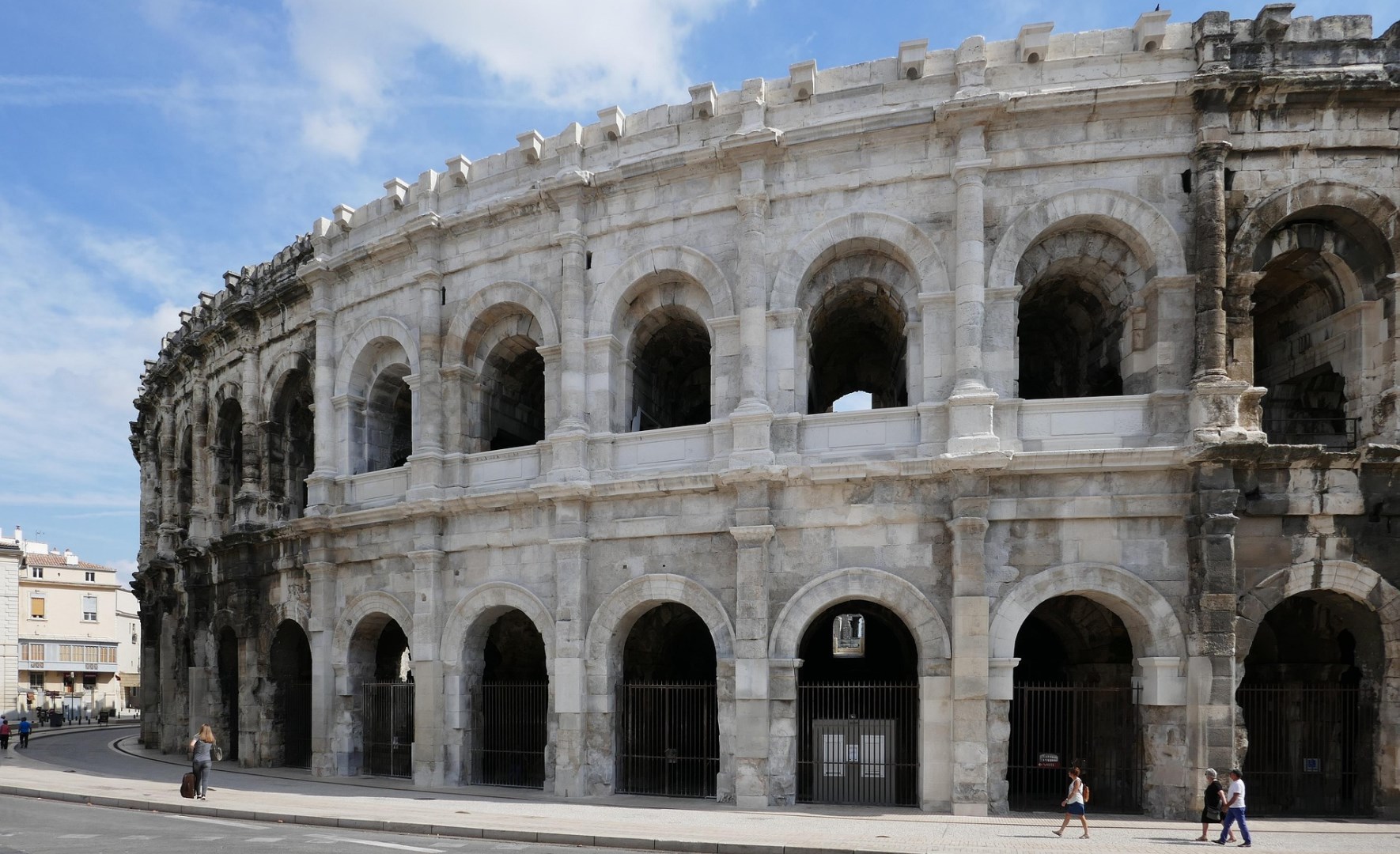
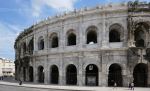
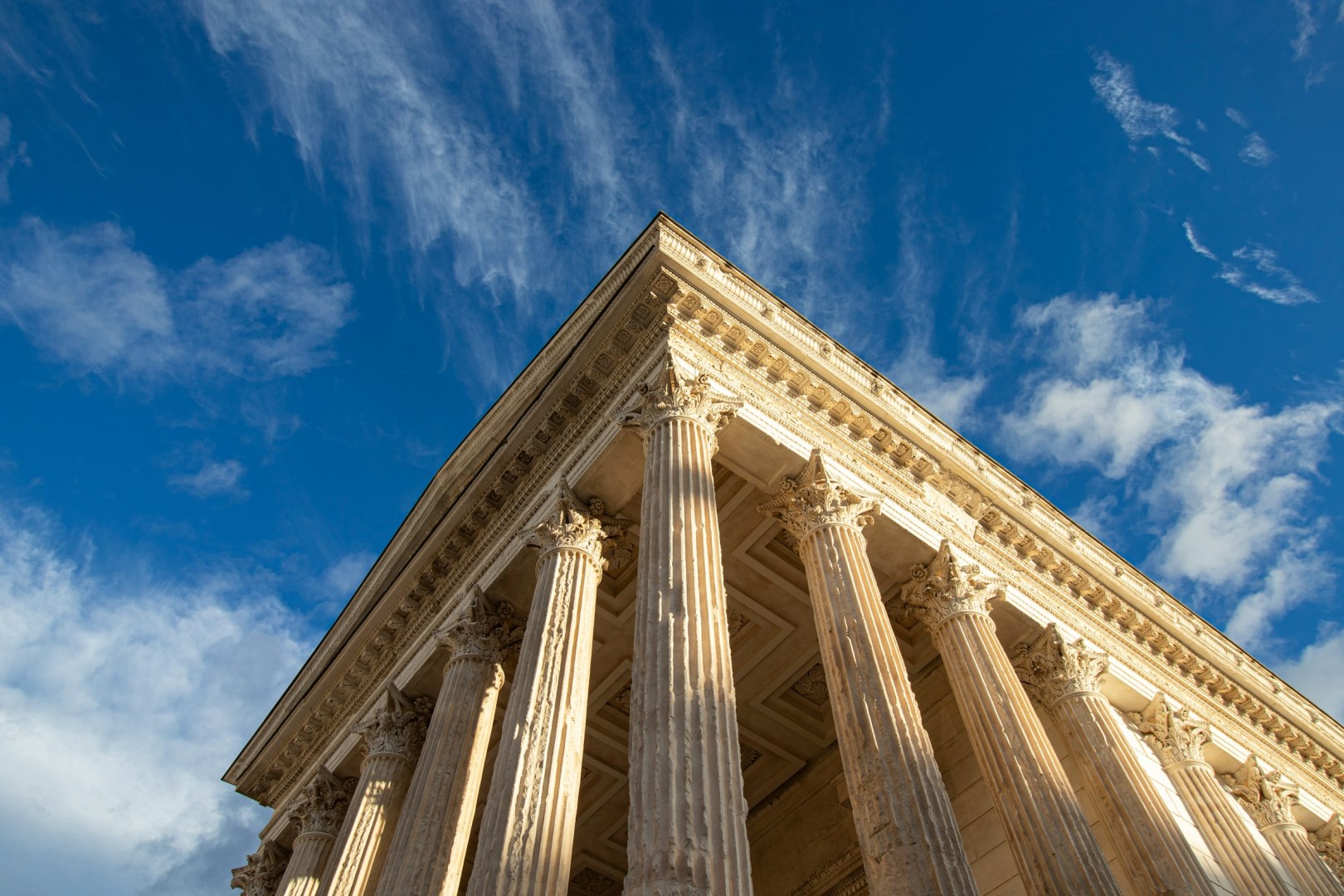

Located among the calcareous plateaus covered with Mideterranean scrub and alluvial deposites from the coastal plains, Nîmes appears as a city with various faces. First and foremost, the city is known as the 'French Roma', because of its famous history and its well conserved antique monuments. Nîmes is also, for many 'aficionados', the 'French Madrid' when the spanish music spreads into the streets and the arena, during and long after the 'corridas' or bullfights when comes the time of the Feria. It is also the most righteous of the mediterranean cities , never forgetting its protestant heritage, even under the wild rythm of 'flamencos'.
This set of faces in the countryside of Provence and Languedoc gathers the main lines of a higly coloured land : the french 'petanque' game, 'le pastis', terraces under shaded boulevards, animated arguments concerning bull races or the peaceful quietness of the Fountain Gardens. A whole set of traditional elements admirably displayed in an exceptional background of antique and middle aged architecture.
This set of faces in the countryside of Provence and Languedoc gathers the main lines of a higly coloured land : the french 'petanque' game, 'le pastis', terraces under shaded boulevards, animated arguments concerning bull races or the peaceful quietness of the Fountain Gardens. A whole set of traditional elements admirably displayed in an exceptional background of antique and middle aged architecture.
Other Popular Destinations in France
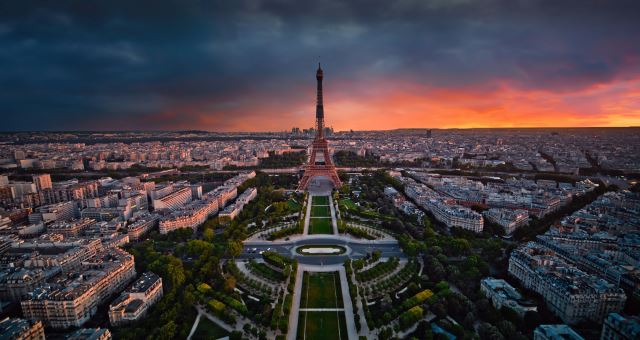
France's capital and most populated city, Paris is an alluring destination and an essential stop for any global traveler. A center of fashion, gastronomy, and the arts. Major tourist attractions in the City of Lights include the Eiffel Tower (such great heights!), the Louvre (home of the Mona Lisa and Venus de Milo), the Arc de Triomphe, and Grand Palais.