



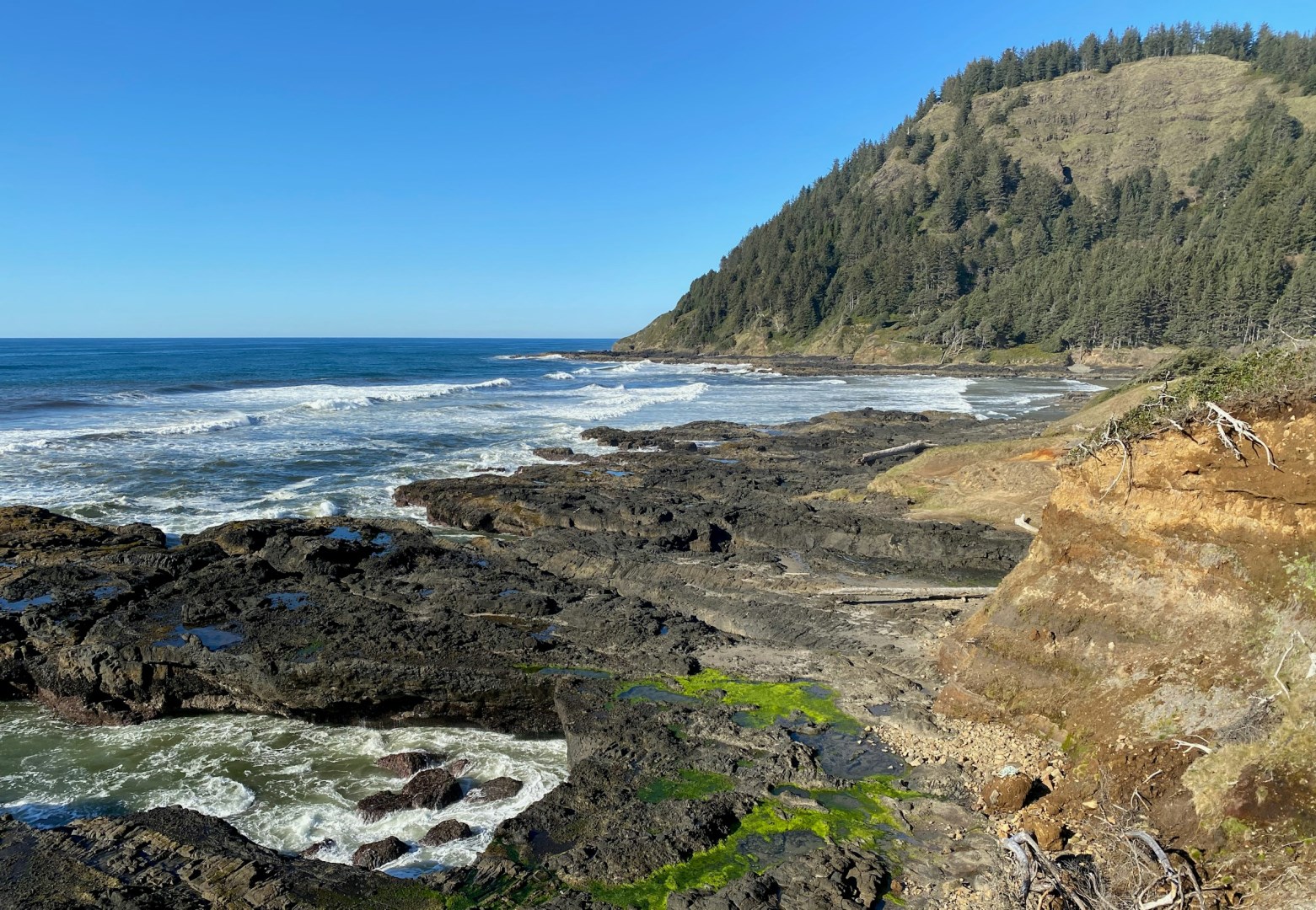
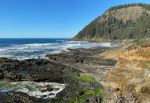
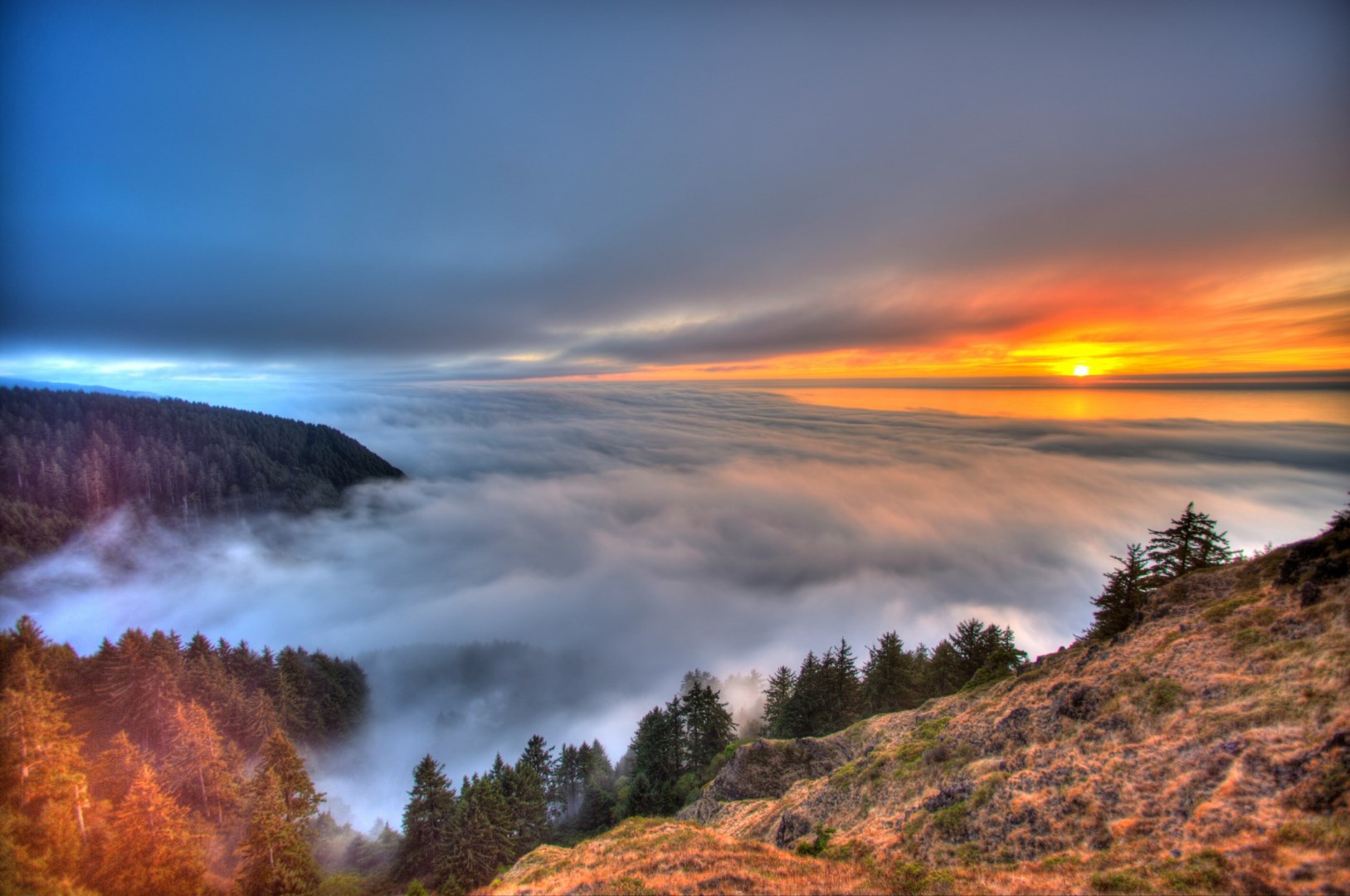

Cape Perpetua is a rugged headland on the central Oregon Coast, rising above the Pacific Ocean south of Yachats. The area is part of the Siuslaw National Forest and combines dense coastal forest with steep cliffs, rocky beaches, tide pools, and open ocean views. Cape Perpetua Scenic Area is centered around a forested headland with trails leading to several coastal viewpoints and geological features. Its position at the edge of the Pacific gives the area a distinct landscape where waves, forest, and exposed basalt formations meet.
Cape Perpetua also has deep Indigenous and maritime history. The area has long been connected with the Siuslaw and other Indigenous peoples of the central Oregon Coast, who relied on the surrounding forests, rivers, and ocean resources. The cape received its European name during an early maritime exploration of the Pacific Northwest. Later, the U.S. Forest Service developed recreational facilities in the area, including the Cape Perpetua Visitor Center and historic structures built by the Civilian Conservation Corps. These remain important parts of the site's cultural landscape.
The Cape Perpetua Scenic Area contains several notable coastal attractions. The Cape Perpetua Lookout, situated high above the ocean, provides broad views along the coastline and toward offshore rocks. Nearby, Thor’s Well is a wave-carved basalt formation that appears to draw seawater into a deep opening, while Spouting Horn produces bursts of spray when waves enter a coastal channel. Devil’s Churn is a narrow rocky inlet where incoming waves create powerful surges and spray. Trails through old-growth forest connect these sites with the shoreline and surrounding viewpoints.
The area’s environment supports a range of coastal species, including seabirds, marine mammals, Roosevelt elk, and black-tailed deer. Tide pools along the rocky shore can contain sea stars, anemones, mussels, and other intertidal life when conditions allow. Cape Perpetua is also known for its large stands of Sitka spruce and western hemlock, which thrive in the cool, wet coastal climate. Visitors are encouraged to remain on designated trails and observe ocean conditions carefully, particularly around exposed formations such as Thor’s Well and Devil’s Churn, where waves can be unpredictable.
Other Popular Destinations in Oregon


