

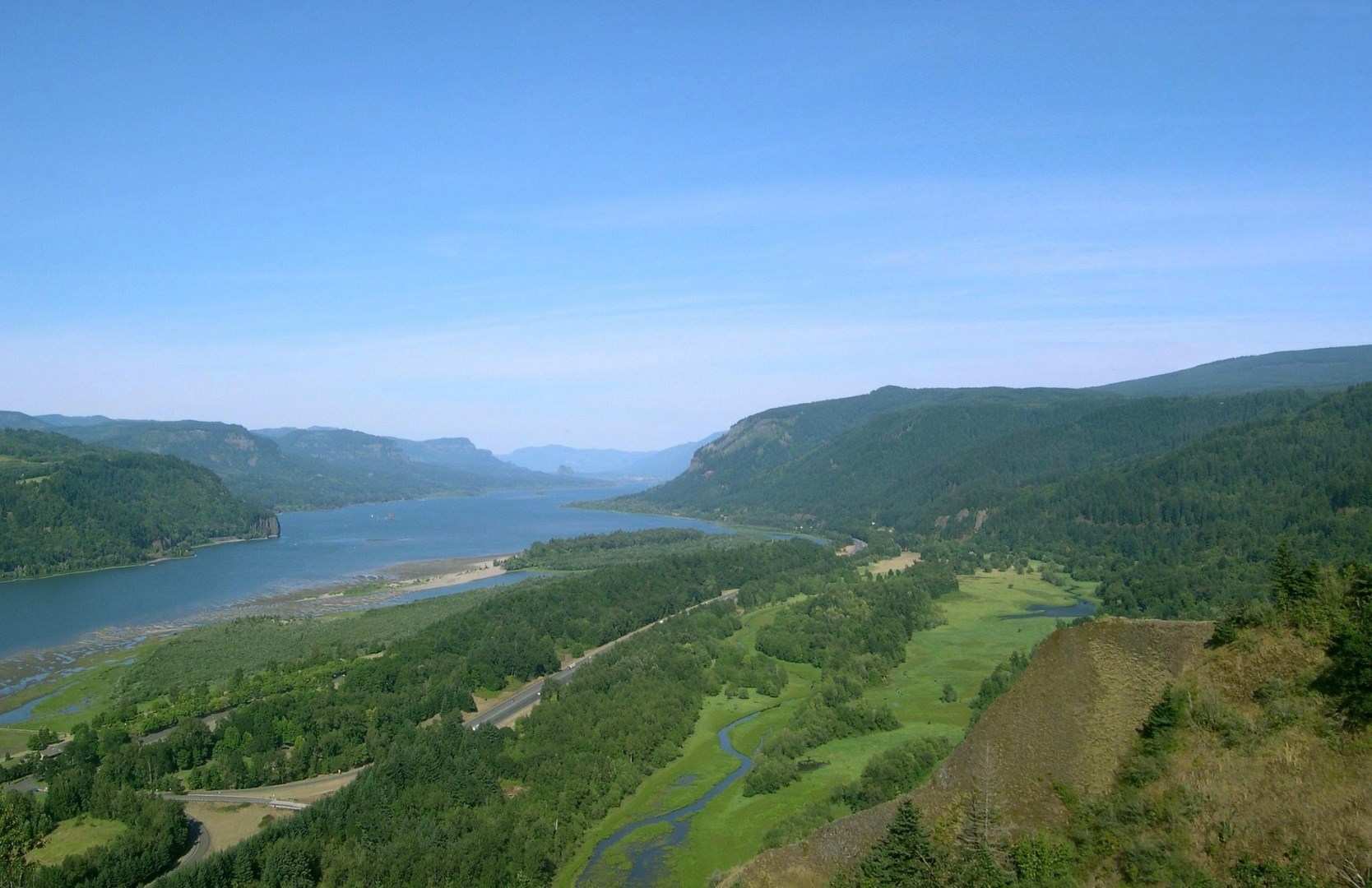
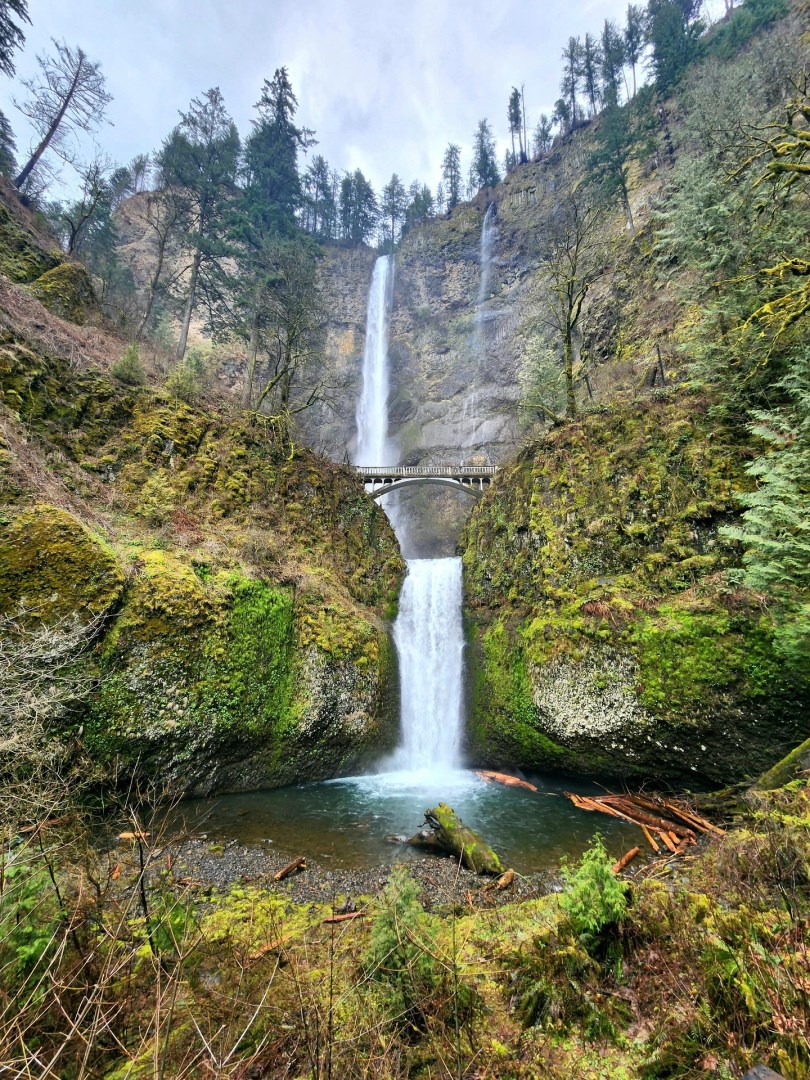
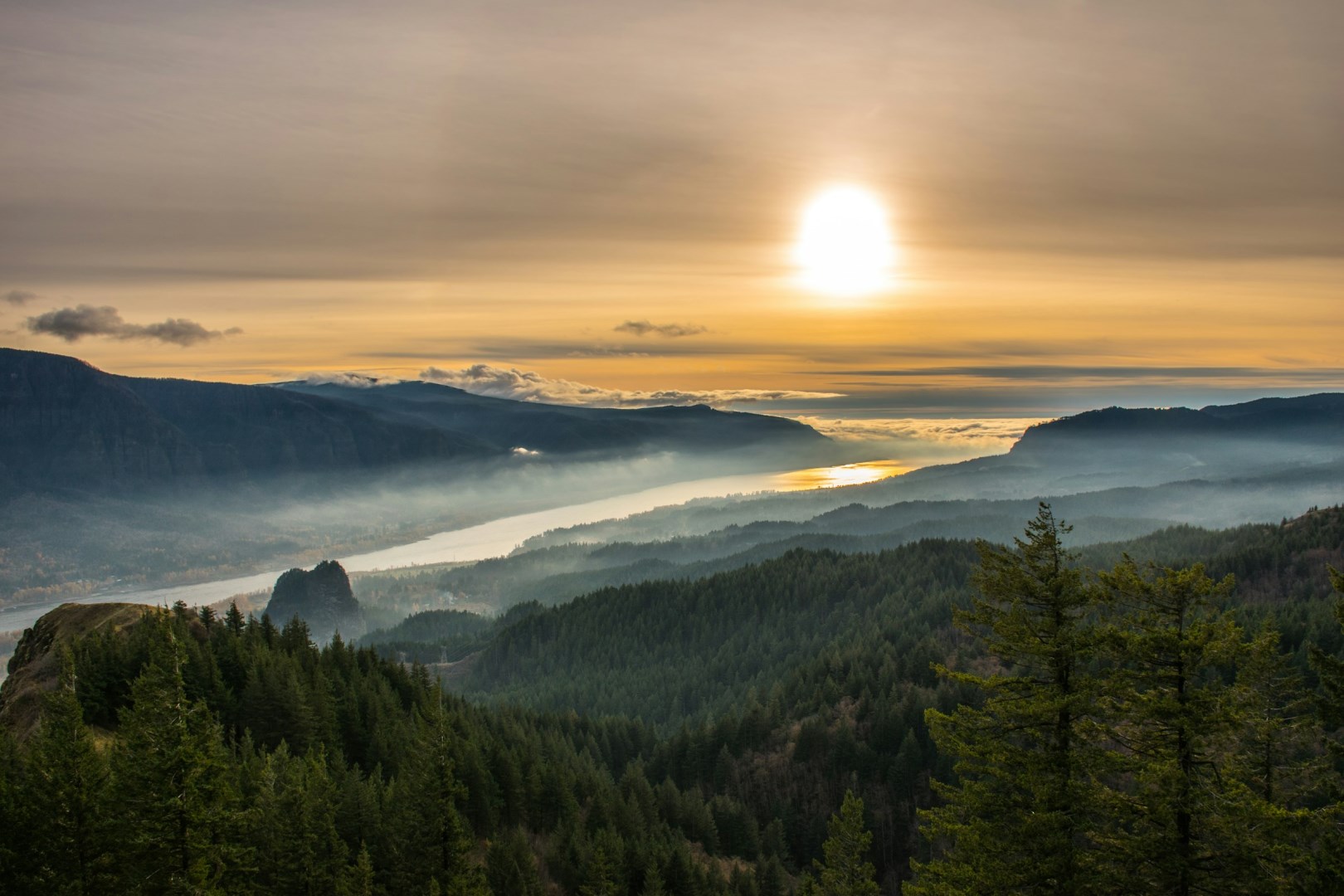
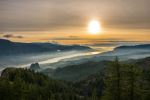
The Columbia River Gorge, straddling the border between Oregon and Washington, is a stunning natural wonder renowned for its breathtaking landscapes and outdoor adventures. This dramatic canyon, carved by the Columbia River, is flanked by towering cliffs and lush forests. One of the highlights is the Multnomah Falls, the tallest waterfall in Oregon, cascading 620 feet into a serene pool below. The falls are accessible via a scenic trail that offers panoramic views of the surrounding gorge.
Nature enthusiasts will find a plethora of activities in the Columbia River Gorge. The Gorge's Scenic Highway offers a picturesque drive with numerous viewpoints, including the historic Vista House. For hiking, the Eagle Creek Trail is a must-visit, leading through lush forests to scenic viewpoints and waterfalls. In addition to its natural beauty, the area is renowned for its excellent wind and water sports on the Columbia River, such as windsurfing and kayaking.
The Columbia River Gorge is also home to charming towns like Hood River and White Salmon, where visitors can enjoy local cuisine and explore vibrant arts scenes. Hood River is known for its fruit orchards, especially apples and pears, which you can sample at local farmers' markets and cideries. White Salmon offers a more laid-back vibe with access to mountain biking trails and cozy cafes.
A fun fact about the Columbia River Gorge is that it serves as a natural boundary between the Cascade Range and the high desert of eastern Oregon. This unique geography creates diverse microclimates and ecosystems within a relatively small area. For the best experience, visit during spring or fall when the weather is mild and the natural beauty is at its peak.
Nature enthusiasts will find a plethora of activities in the Columbia River Gorge. The Gorge's Scenic Highway offers a picturesque drive with numerous viewpoints, including the historic Vista House. For hiking, the Eagle Creek Trail is a must-visit, leading through lush forests to scenic viewpoints and waterfalls. In addition to its natural beauty, the area is renowned for its excellent wind and water sports on the Columbia River, such as windsurfing and kayaking.
The Columbia River Gorge is also home to charming towns like Hood River and White Salmon, where visitors can enjoy local cuisine and explore vibrant arts scenes. Hood River is known for its fruit orchards, especially apples and pears, which you can sample at local farmers' markets and cideries. White Salmon offers a more laid-back vibe with access to mountain biking trails and cozy cafes.
A fun fact about the Columbia River Gorge is that it serves as a natural boundary between the Cascade Range and the high desert of eastern Oregon. This unique geography creates diverse microclimates and ecosystems within a relatively small area. For the best experience, visit during spring or fall when the weather is mild and the natural beauty is at its peak.
Learn More About Columbia River Gorge National Scenic Area
Multnomah Falls
Multnomah Falls is a two-tiered waterfall in the Columbia River Gorge National Scenic Area, about 30 miles east of Portland, Oregon. Water descends from a forested cliff in two main drops, with the upper fall plunging 542 feet before reaching a lower cascade and pool. A stone footbridge crosses the creek between the two sections, providing a close view of the falls, while a paved trail leads toward an overlook above the bridge. The surrounding forest includes Douglas fir, western hemlock, and bigleaf maple, and the waterfall is part of a larger landscape of cliffs, streams, and waterfalls along the Columbia River Gorge.
Vista House
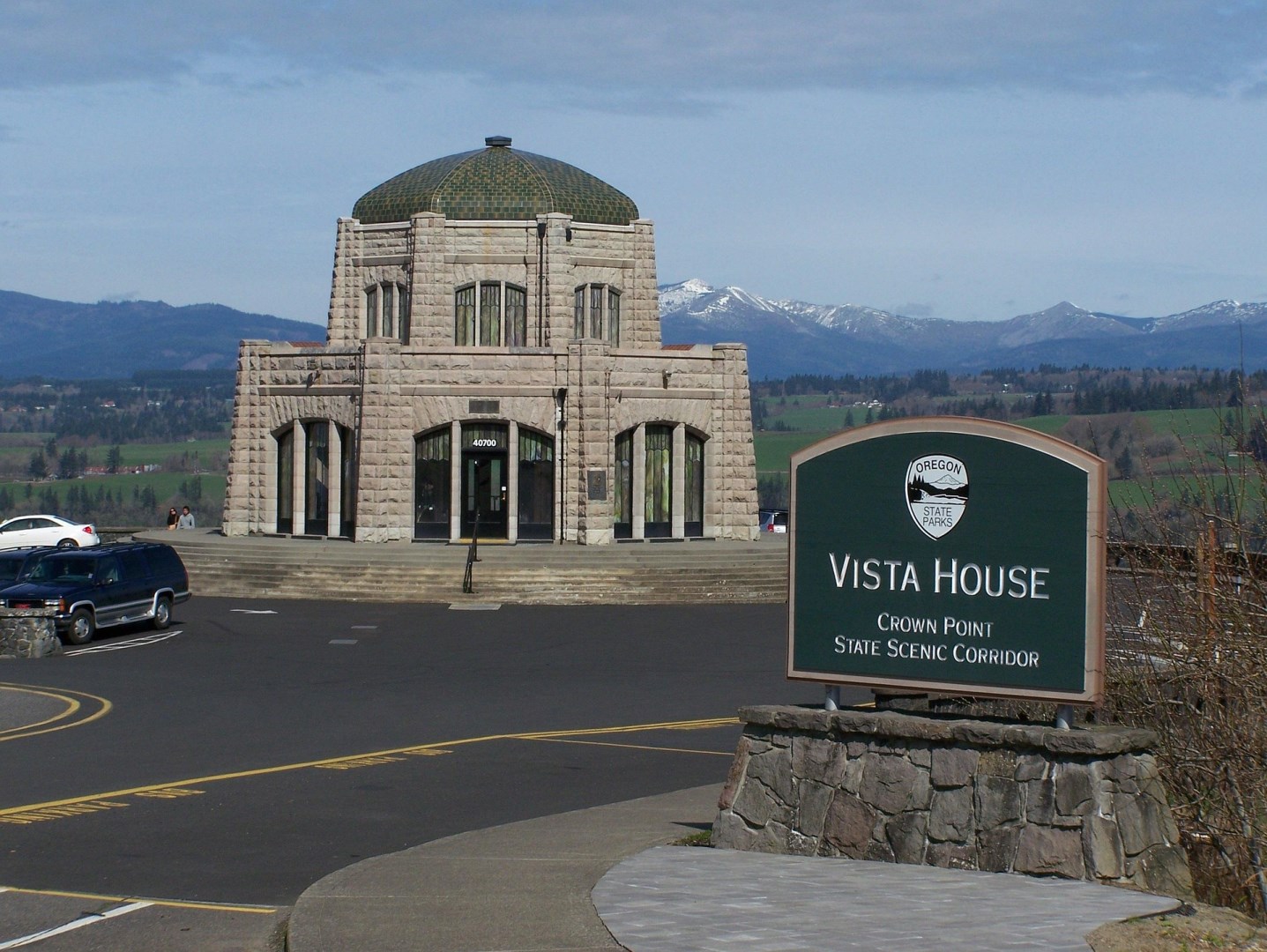
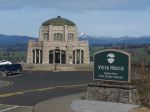
Vista House stands atop Crown Point in the Columbia River Gorge, east of Portland, Oregon, overlooking the Columbia River from a prominent basalt promontory. The octagonal sandstone building was designed by Portland architect Edgar M. Lazarus and built as an observatory and rest stop for travelers using the Historic Columbia River Highway. Its interior features Alaskan marble, opalescent glass windows, and historical displays about the highway and the surrounding gorge. From the observation areas, visitors can look along the river and across the forested gorge, while the building itself remains an important example of early scenic highway architecture.
Other Popular Destinations in Oregon

Portland, Oregon, is a city where natural beauty and urban innovation coexist harmoniously. Nestled between the Columbia and Willamette Rivers and framed by volcanic mountains, Portland offers an array of outdoor adventures alongside its renowned cultural scene. Visitors can explore the lush expanses of Forest Park, one of the largest urban forests in the U.S., or take a leisurely stroll through the Portland Japanese Garden, which showcases exquisite traditional Japanese landscape design.

