





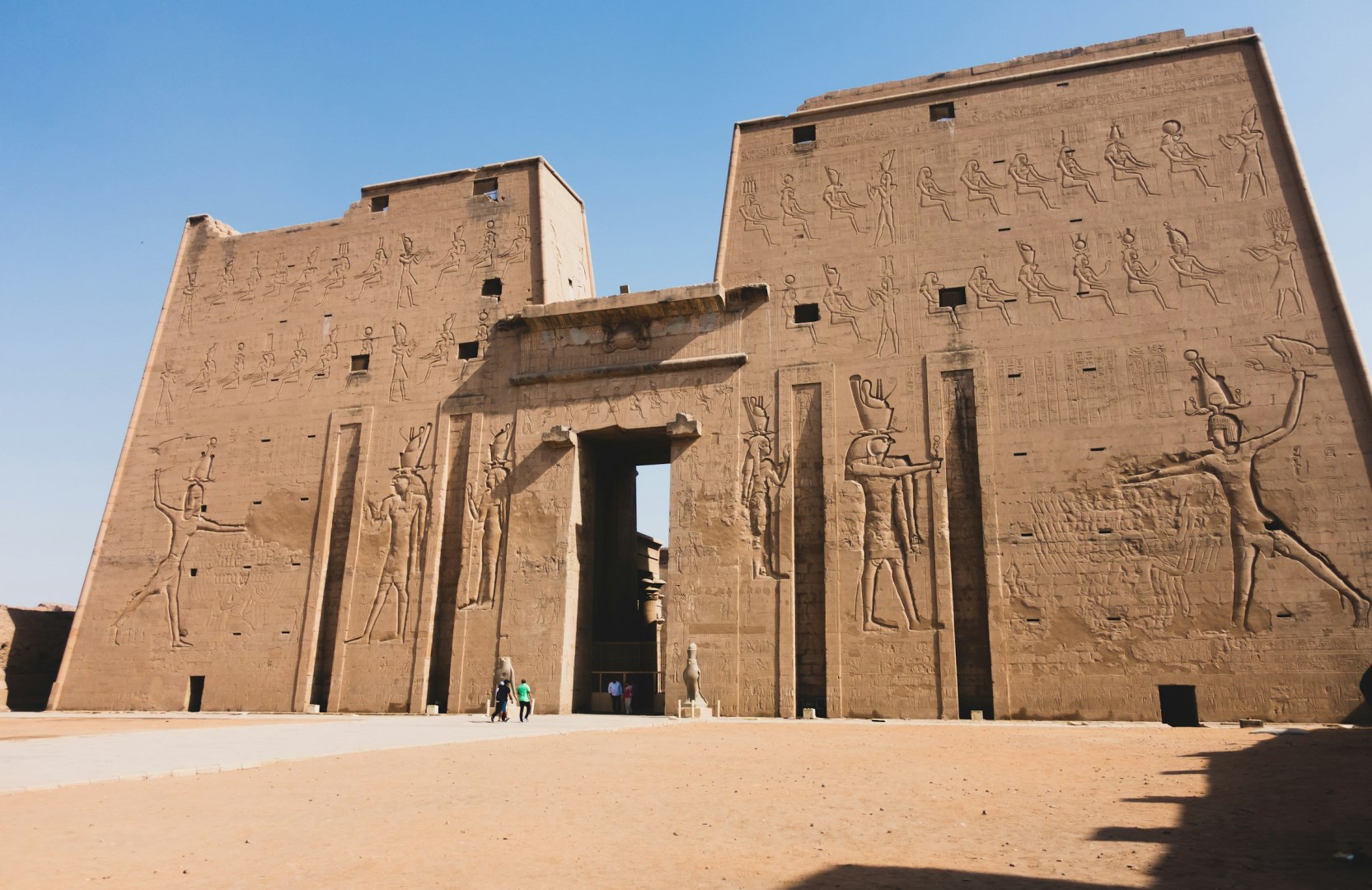
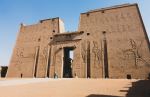
The Temple of Horus at Edfu has a massive entrance pylon covered with sunk relief carvings. This Ptolemaic temple was constructed between 237 and 57 B.C.E.
Once a year for the "Feast of the Beautiful Meeting," Hathor traveled from Dendera to Edfu to visit her husband/consort, Horus. Her arrival was scheduled for the afternoon of the new moon. The statues of the deities remained in the mammisi or birth house until the end of the festival at the full moon. The result of their union was their son Ihy or Horus-Sematawy.
Once a year for the "Feast of the Beautiful Meeting," Hathor traveled from Dendera to Edfu to visit her husband/consort, Horus. Her arrival was scheduled for the afternoon of the new moon. The statues of the deities remained in the mammisi or birth house until the end of the festival at the full moon. The result of their union was their son Ihy or Horus-Sematawy.
Other Popular Destinations in Egypt

Upon the banks of the mighty Nile River, the renowned city of Cairo stands tall as an iconic world capital and a well-preserved relic of antiquity. Immerse yourself in this historically significant city, replete with architectural wonders, mesmerizing artifacts, and sprawling markets humming with energy.

Luxor, often referred to as the world’s greatest open-air museum, is a city where ancient history and breathtaking archaeology converge. Nestled along the eastern bank of the Nile River, Luxor is home to some of the most remarkable and well-preserved relics of ancient Egypt. A visit to the Karnak Temple Complex, an expansive and awe-inspiring site dedicated to the Theban triad of gods, reveals the grandeur of ancient Egyptian architecture and religious practices.
