

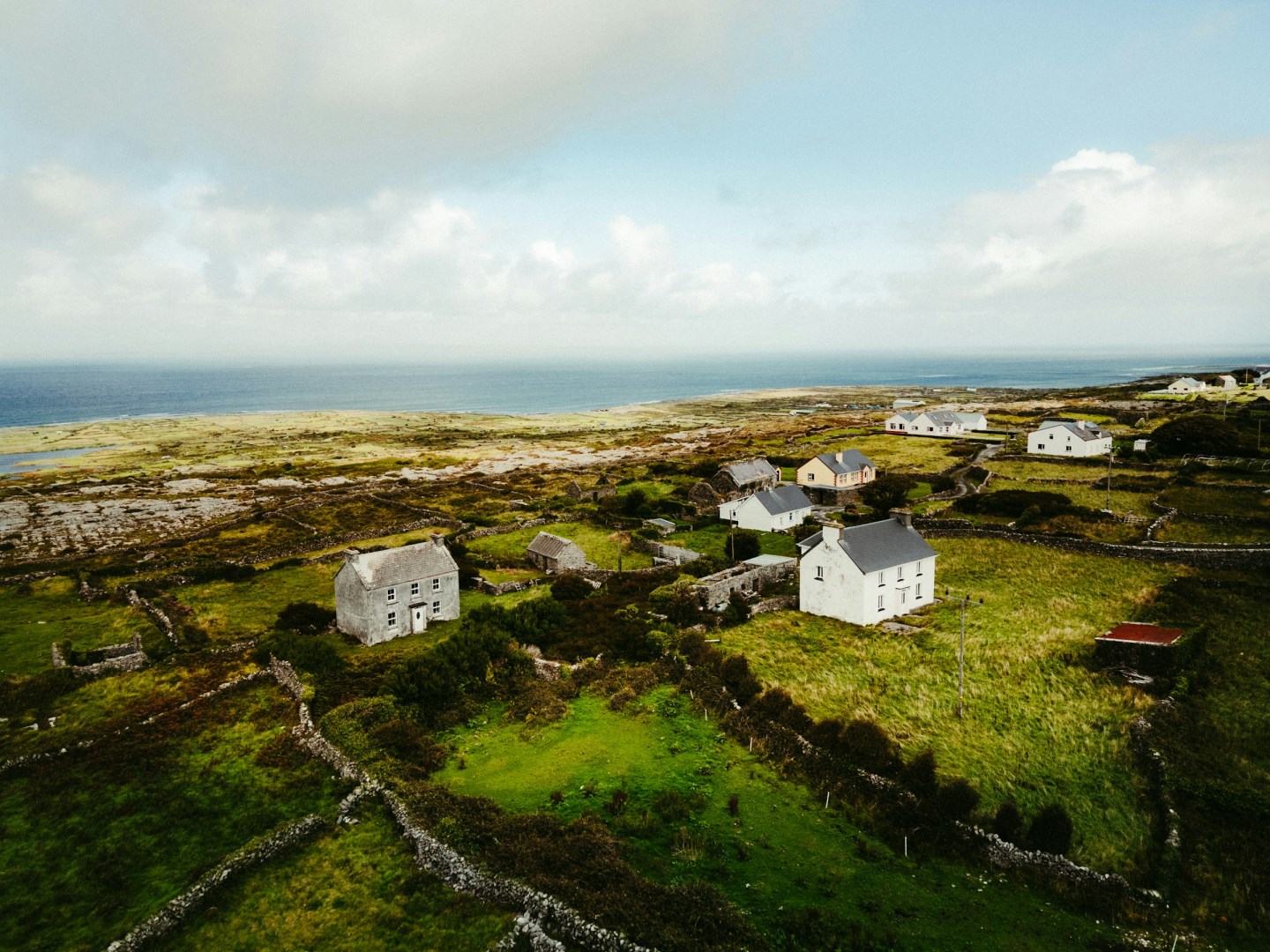

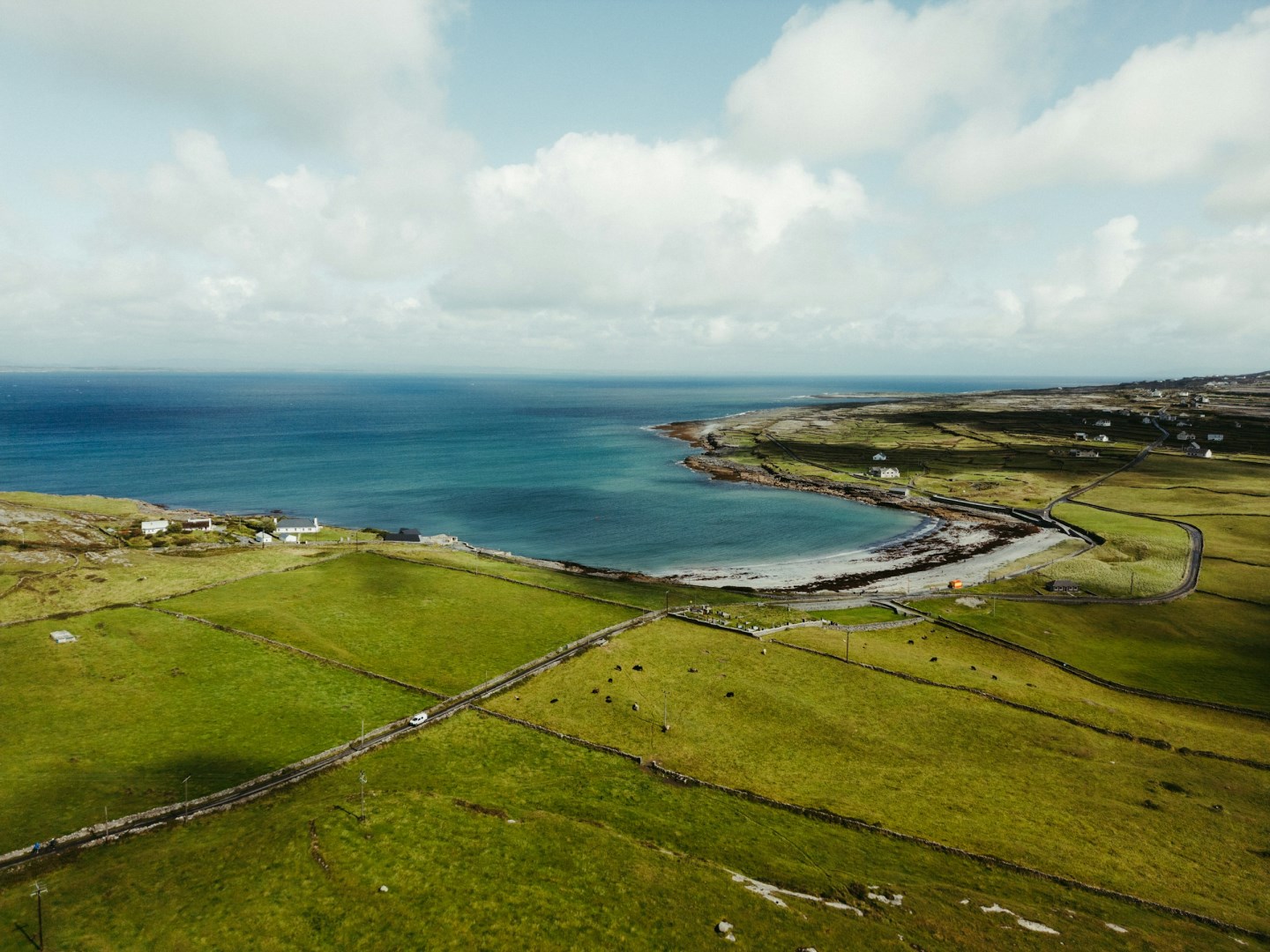
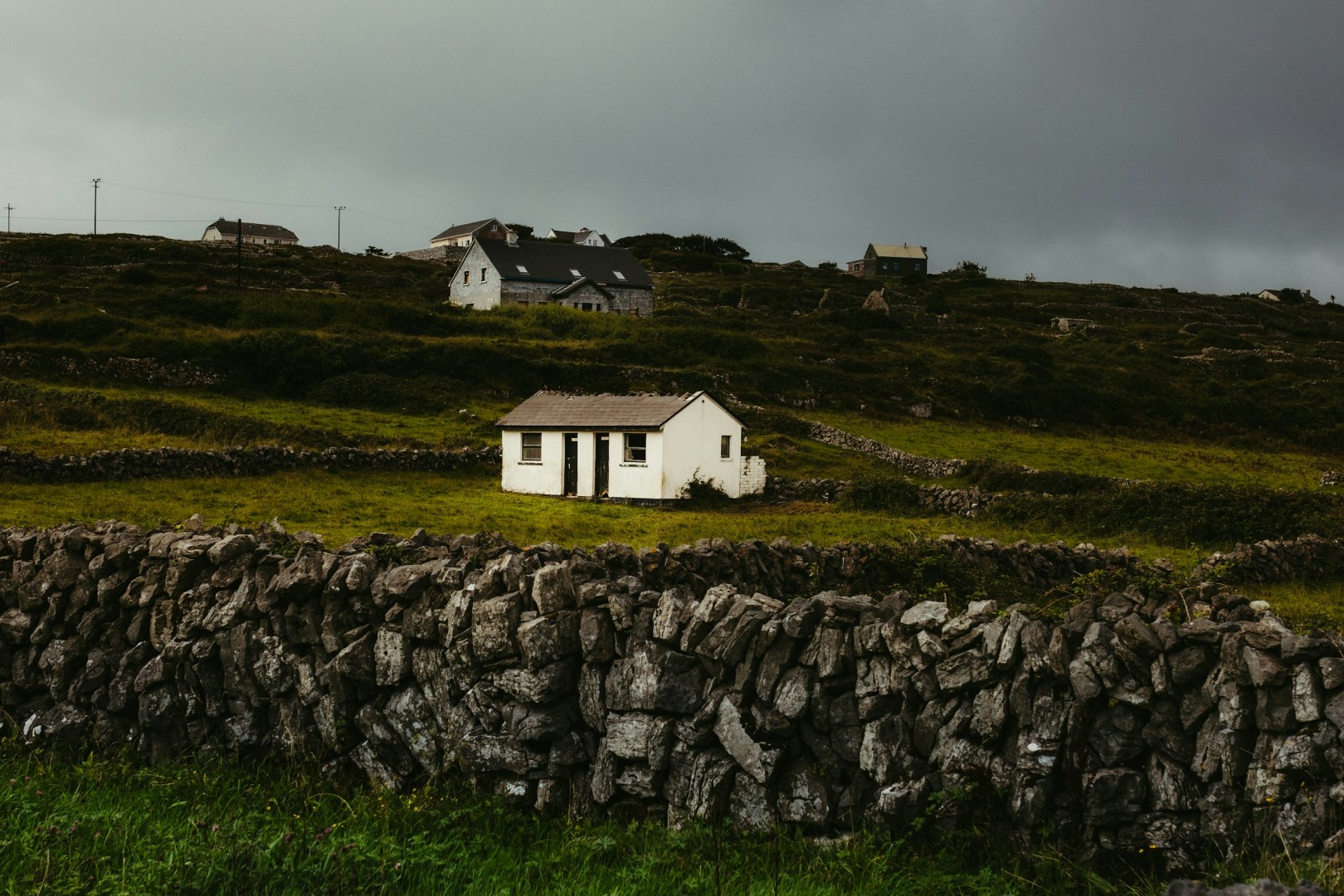
The Aran Islands lie at the mouth of Galway Bay on Ireland’s west coast and comprise three inhabited islands: Inis Mór, Inis Meáin, and Inis Oírr. Their landscapes are defined by limestone terraces, stone walls, small fields, sea cliffs, and exposed coastal ground shaped by Atlantic weather. The islands are known for their distinctive dry-stone walls, which divide much of the farmland into small plots. Gaelic remains an important part of daily life, and the islands are officially recognized as Gaeltacht areas, giving Irish language and culture a visible role in local communities.
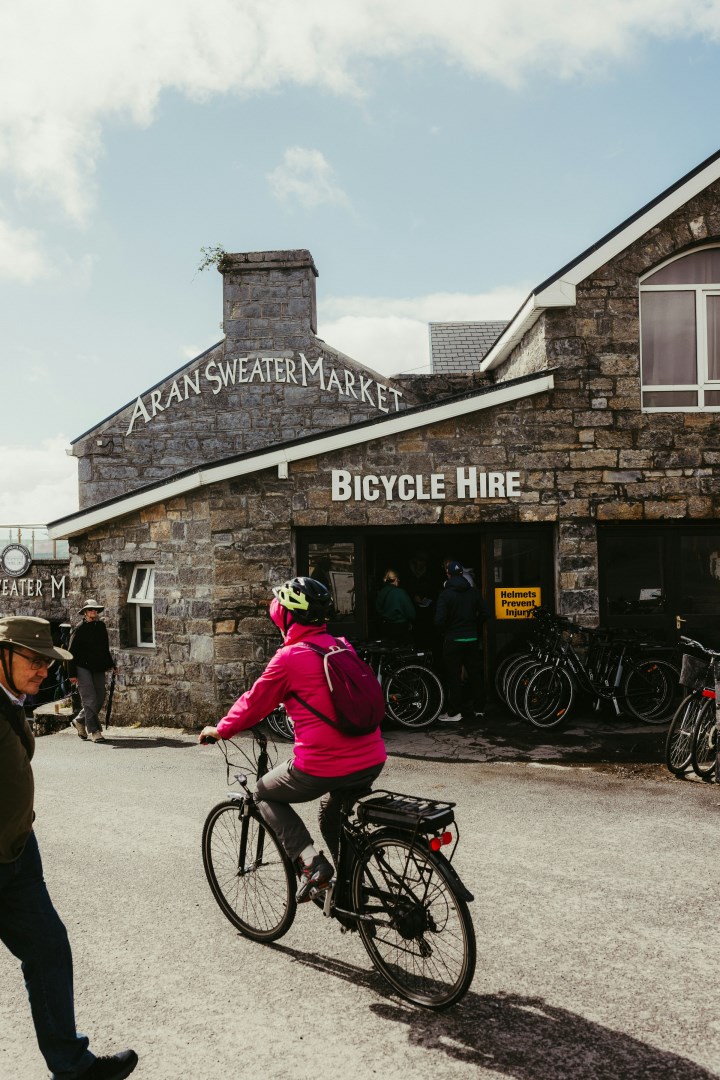
The islands preserve a strong connection with traditional Irish culture, particularly through the Irish language, music, storytelling, and crafts. Inis Meáin is associated with the Aran Islands' traditional knitting, including the wool sweaters that became widely known beyond Ireland. Religious heritage is also prominent, with early and medieval Christian sites scattered across the islands. These include Teampall Bheanáin on Inis Mór, often described as one of Ireland's smallest churches, and the remains of monastic settlements on Inis Oírr. Traditional cottages, farm buildings, and stone walls add to the islands' distinctive architectural character.
Each island offers a different landscape to explore. Inis Mór contains Dún Aonghasa, a prehistoric stone fort positioned dramatically above the Atlantic cliffs, as well as the Worm Hole, a naturally formed rectangular sea pool. Inis Meáin has a quieter network of lanes, fields, and coastal paths, while Inis Oírr is known for its ruined O'Brien's Castle, lighthouse, and shipwreck visible from the shore. The islands' limestone terrain supports unusual plant communities, where Arctic-alpine species grow alongside Mediterranean plants in sheltered areas. Walking and cycling are among the main ways to explore the countryside.
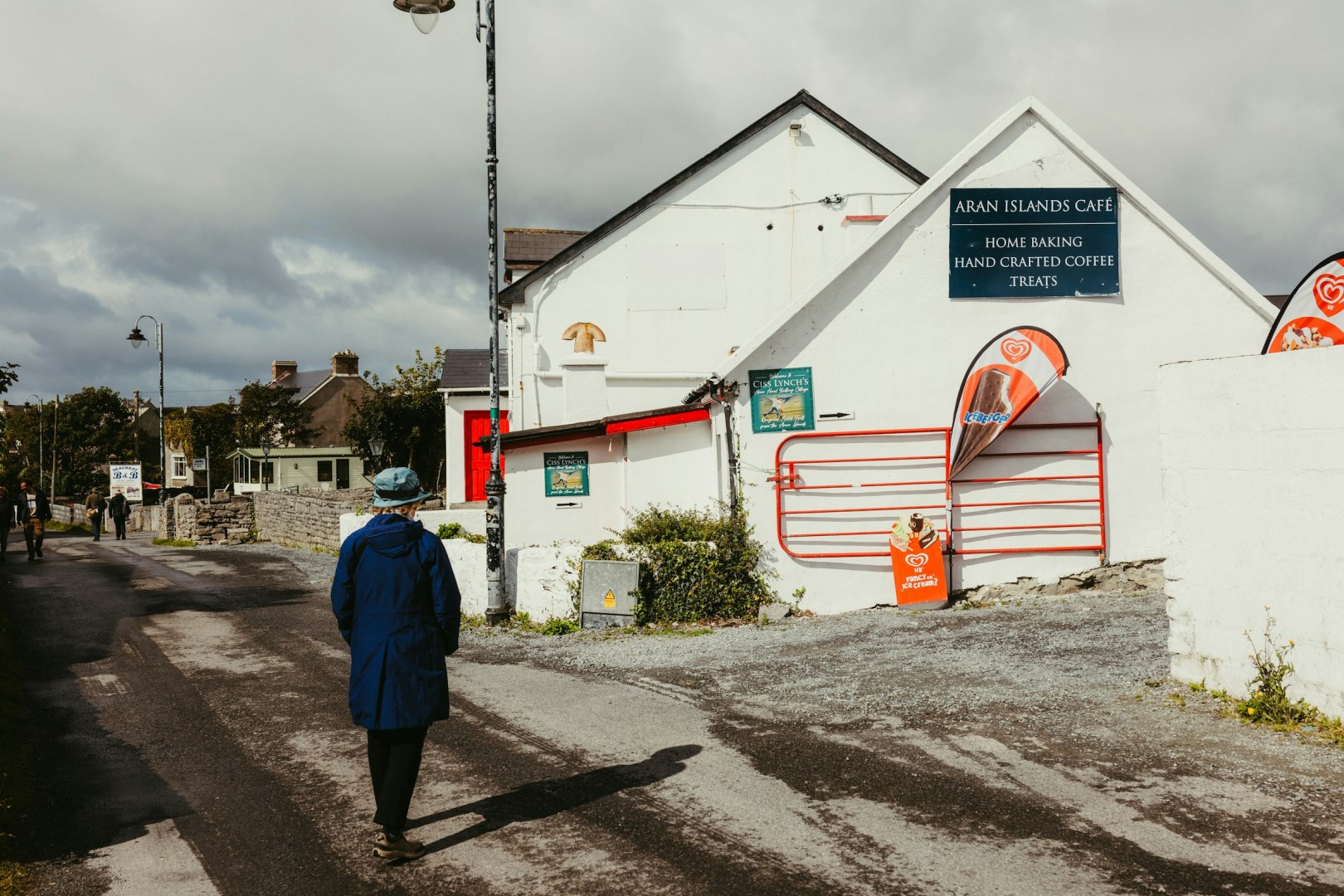
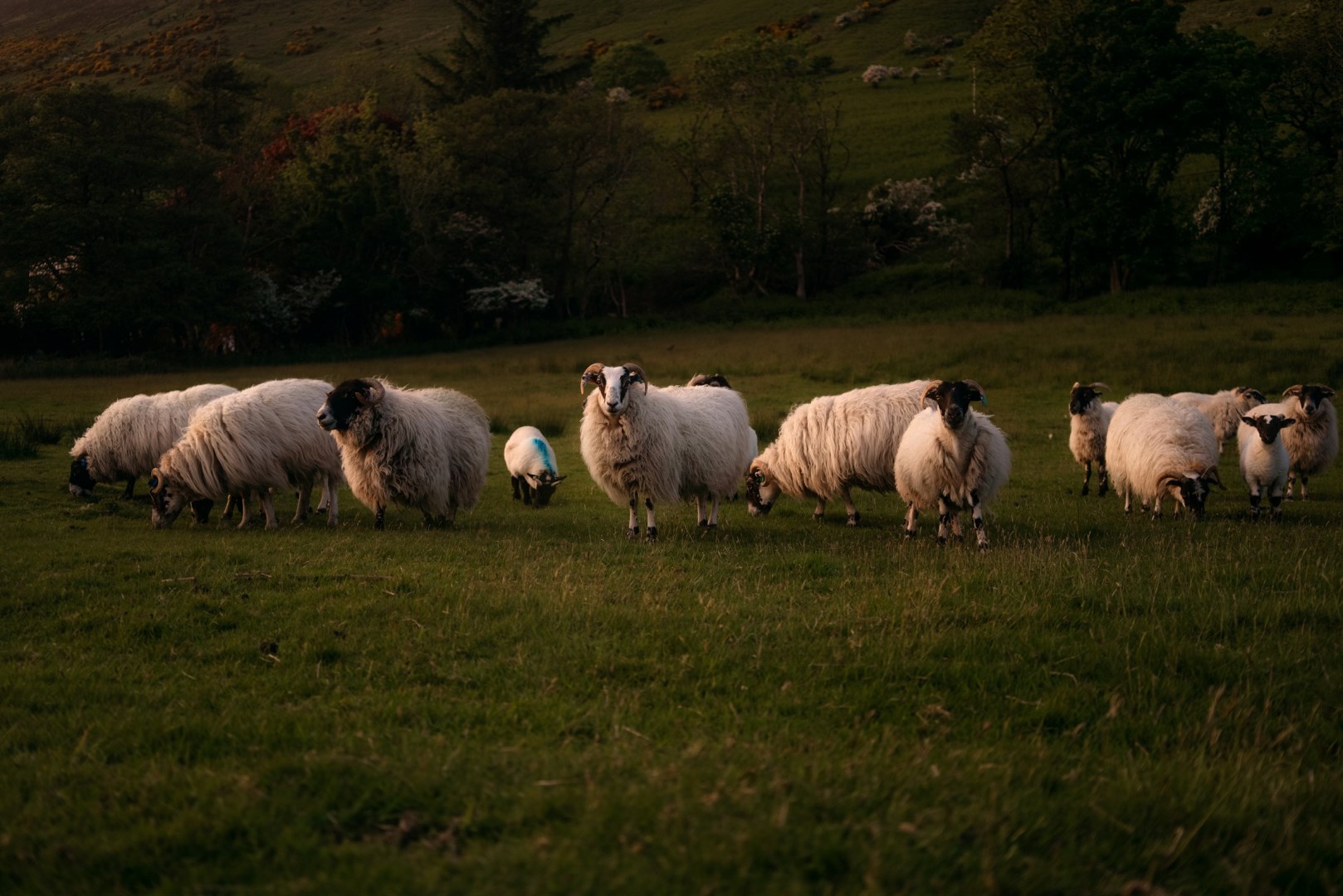
Food on the Aran Islands reflects their maritime and farming traditions, with seafood, locally raised meat, potatoes, dairy products, and homemade breads appearing in island kitchens. Inis Mór, Inis Meáin, and Inis Oírr each have cafés, pubs, and small restaurants where visitors can sample local ingredients alongside familiar Irish dishes. The islands are also known for wildlife, with seabirds nesting along the cliffs and grey seals found around parts of the coast. The combination of Irish-speaking communities, hand-built stone landscapes, archaeological remains, and exposed Atlantic scenery makes the Aran Islands a distinctive cultural landscape rather than simply a group of offshore islands.
Other Popular Destinations in Ireland


