



South America | Brazil | Cuiabá

Cuiabá is the capital of Mato Grosso in central-western Brazil and an important gateway to the Pantanal, Chapada dos Guimarães, and other natural areas of the state. The city developed around gold mining and later became an important regional center along the Cuiabá River. Its historic center contains colonial churches, traditional houses, and public squares, while newer districts extend well beyond the old city. Cuiabá is also associated with its location near the geographic center of South America and serves as an important commercial and cultural hub for Mato Grosso.
Cuiabá’s cultural identity draws on Indigenous, Portuguese, African, and regional traditions. The city preserves historic churches such as Nossa Senhora do Rosário e São Benedito and Senhor dos Passos, while cultural institutions document local history, art, and religious traditions. Cururu and siriri are distinctive forms of regional music and dance, often performed with the viola de cocho, a traditional instrument carved from a single piece of wood. The São Gonçalo Beira-Rio area is another important cultural center, with artisans and communities maintaining crafts and traditions connected with the Cuiabá River.
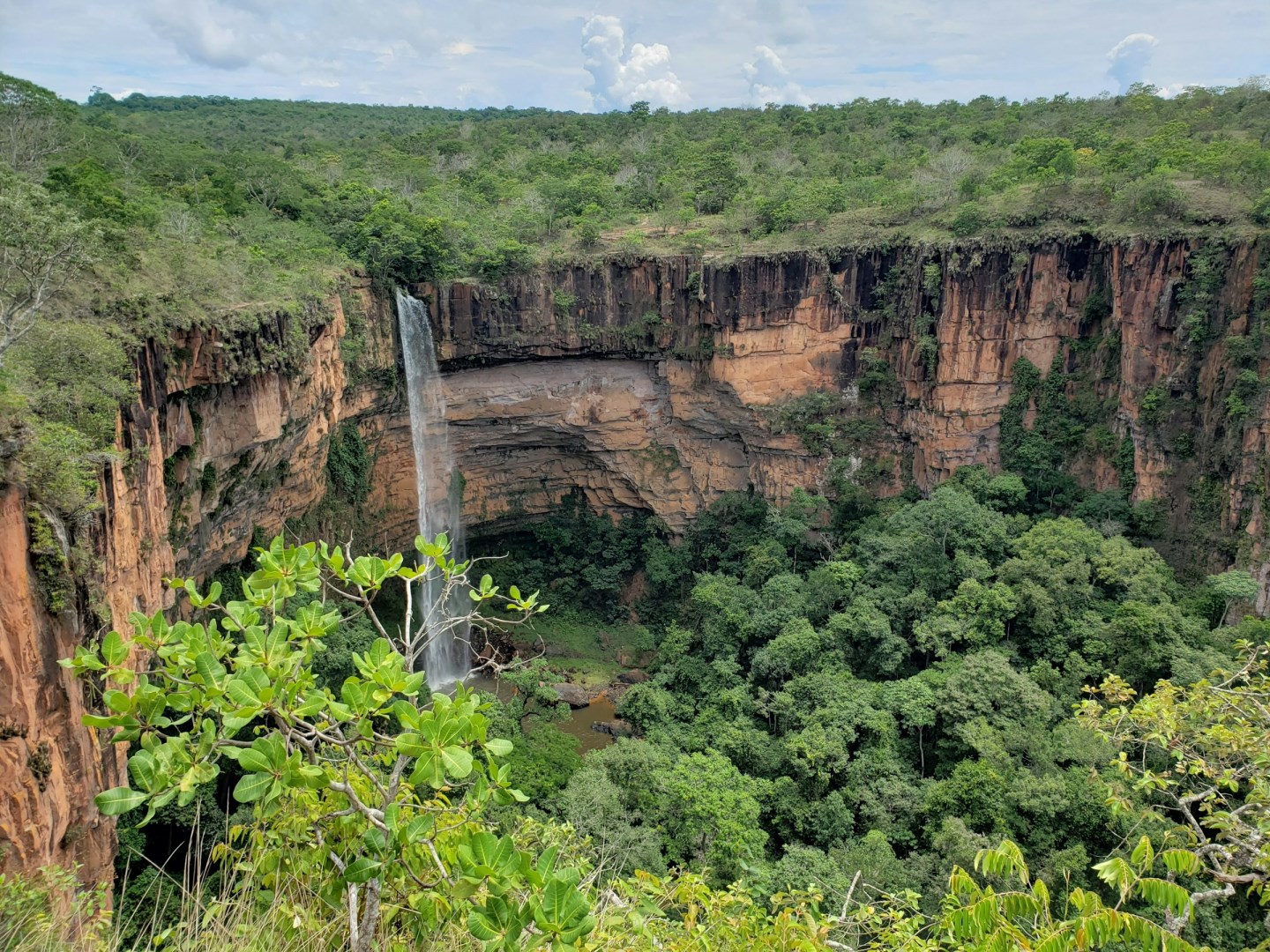
The city offers several green spaces and cultural attractions within its urban area. Parque Mãe Bonifácia contains walking trails and native vegetation, while Parque das Águas and the Orla do Porto provide recreational areas near waterways. The Porto district also contains the Museu do Rio Cuiabá and the Municipal Aquarium, where fish from the Amazon, Pantanal, and Cerrado ecosystems are displayed. Beyond the city, Cuiabá provides access to the Pantanal and Chapada dos Guimarães, making it a practical base for exploring wetlands, savanna landscapes, waterfalls, and sandstone formations in the surrounding region.
Cuiabá’s cuisine reflects the ingredients of Mato Grosso and the influence of river and rural communities. Fish from the region, including pacu, pintado, and other freshwater species, feature prominently in local cooking, while dishes such as Maria Isabel combine rice with dried meat. Bolo de arroz cuiabano, a traditional rice cake, and furrundu, made with green papaya and rapadura, are characteristic local sweets and snacks. Tereré, a cold infusion of yerba mate, is also widely associated with the region. Markets such as Mercado do Porto provide places to encounter regional foods and ingredients.
Other Popular Destinations in Brazil