


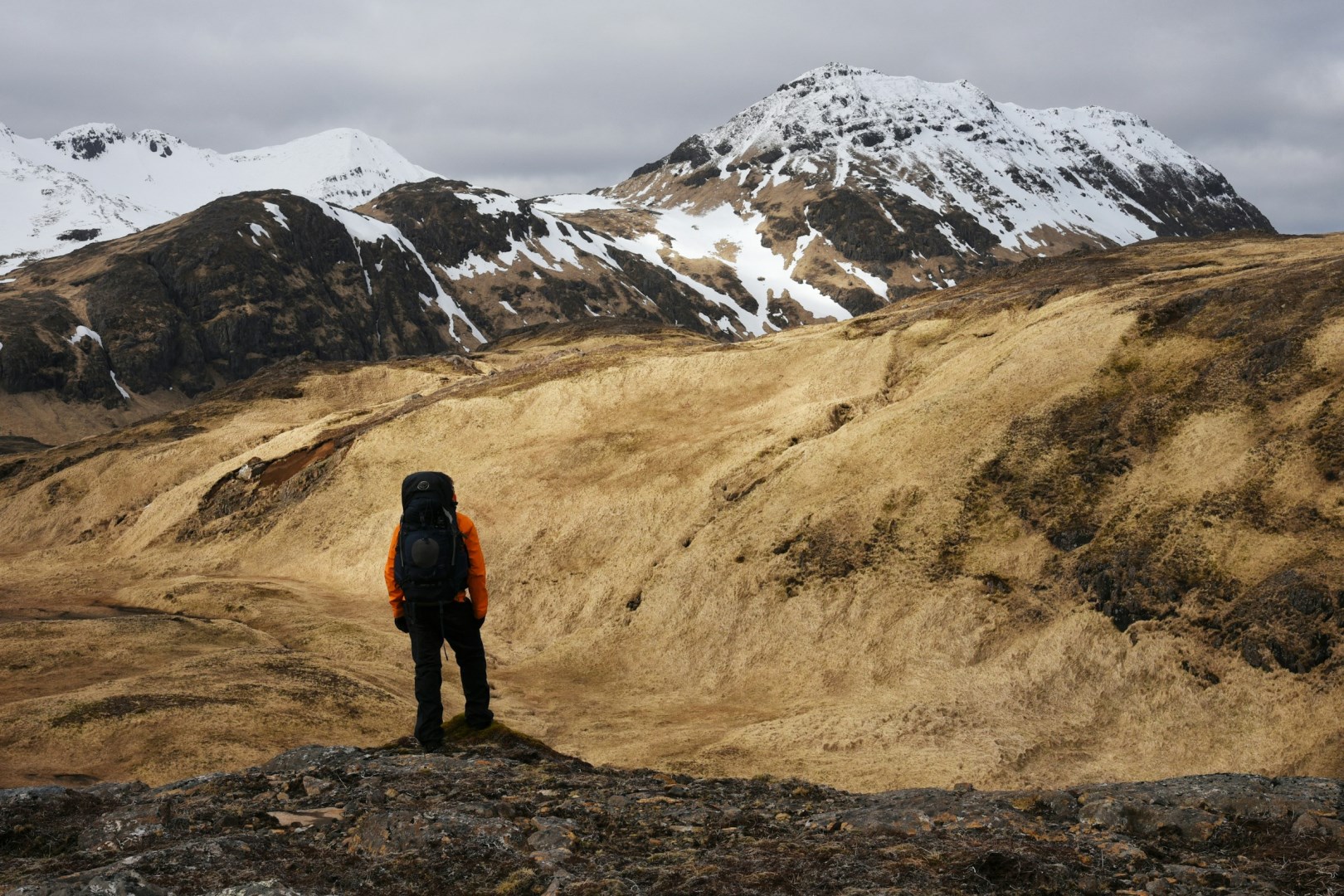

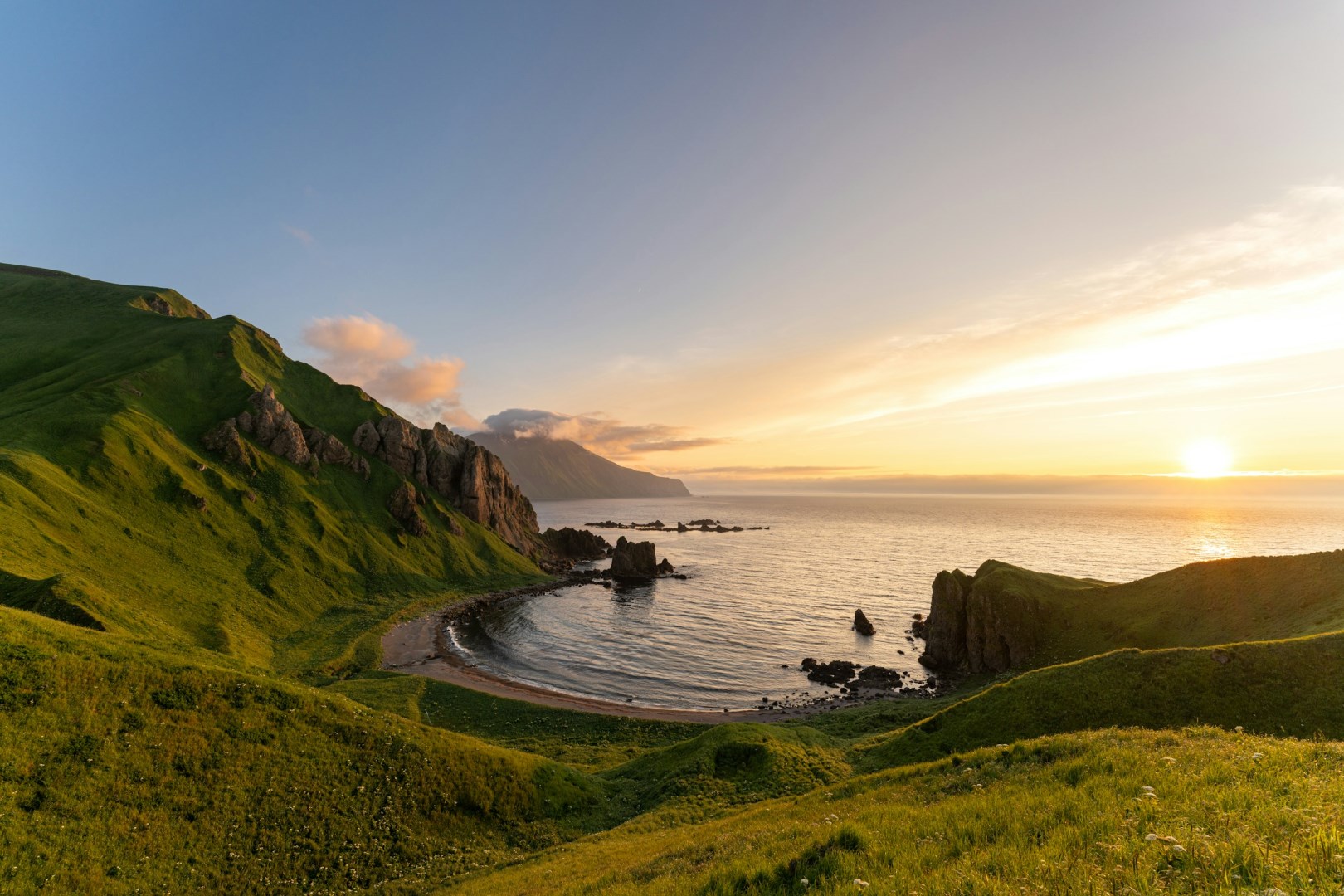

Adak Island lies in the central Aleutian Islands of southwest Alaska, where steep volcanic mountains meet the North Pacific. The community of Adak occupies a sheltered harbor on the island and is one of the few remote Aleutian locations accessible by commercial airline. Much of the island consists of open tundra, rugged slopes, coastal wetlands, and rocky shorelines shaped by strong winds and frequent rain. Its isolated setting gives Adak a distinctly maritime character, while abandoned military infrastructure around the community provides an unusual contrast to the surrounding undeveloped landscape.
Adak is part of the traditional homeland of the Unangax̂ people, whose culture developed around the sea, hunting, fishing, and careful use of coastal resources. The island later became an important American military base during World War II because of its position within the Aleutian chain. The Adak Army Base and Adak Naval Operating Base is recognized as a National Historic Landmark, although many areas of the former military installation are not open to the public. The wartime landscape remains visible through old roads, buildings, airfields, and other structures scattered around the community.
Adak's natural attractions center on its rugged coastline and expansive tundra. Clam Lagoon is particularly notable for wildlife viewing, with sea otters often seen in its protected waters and harbor seals using nearby mudflats. The surrounding Alaska Maritime National Wildlife Refuge provides habitat for seabirds, marine mammals, and other species adapted to the Aleutian environment. Hiking routes lead across open country toward mountain and coastal viewpoints, while fishing is an important recreational activity. The island's volcanic terrain, treeless slopes, freshwater lakes, and frequent low clouds create landscapes that are markedly different from mainland Alaska.
Food on Adak reflects its isolated location and strong connection to the surrounding sea, with seafood and locally caught fish forming an important part of the community's food culture. Fishing also remains a significant part of daily life, both commercially and recreationally. A distinctive feature of Adak is its unusually large network of roads and former military facilities for such a remote island community, a legacy of its strategic role in the Aleutians. The island also supports caribou, introduced for hunting, while native marine wildlife includes sea otters, seals, seabirds, and other species protected within the surrounding refuge.
Other Popular Destinations in Alaska


