






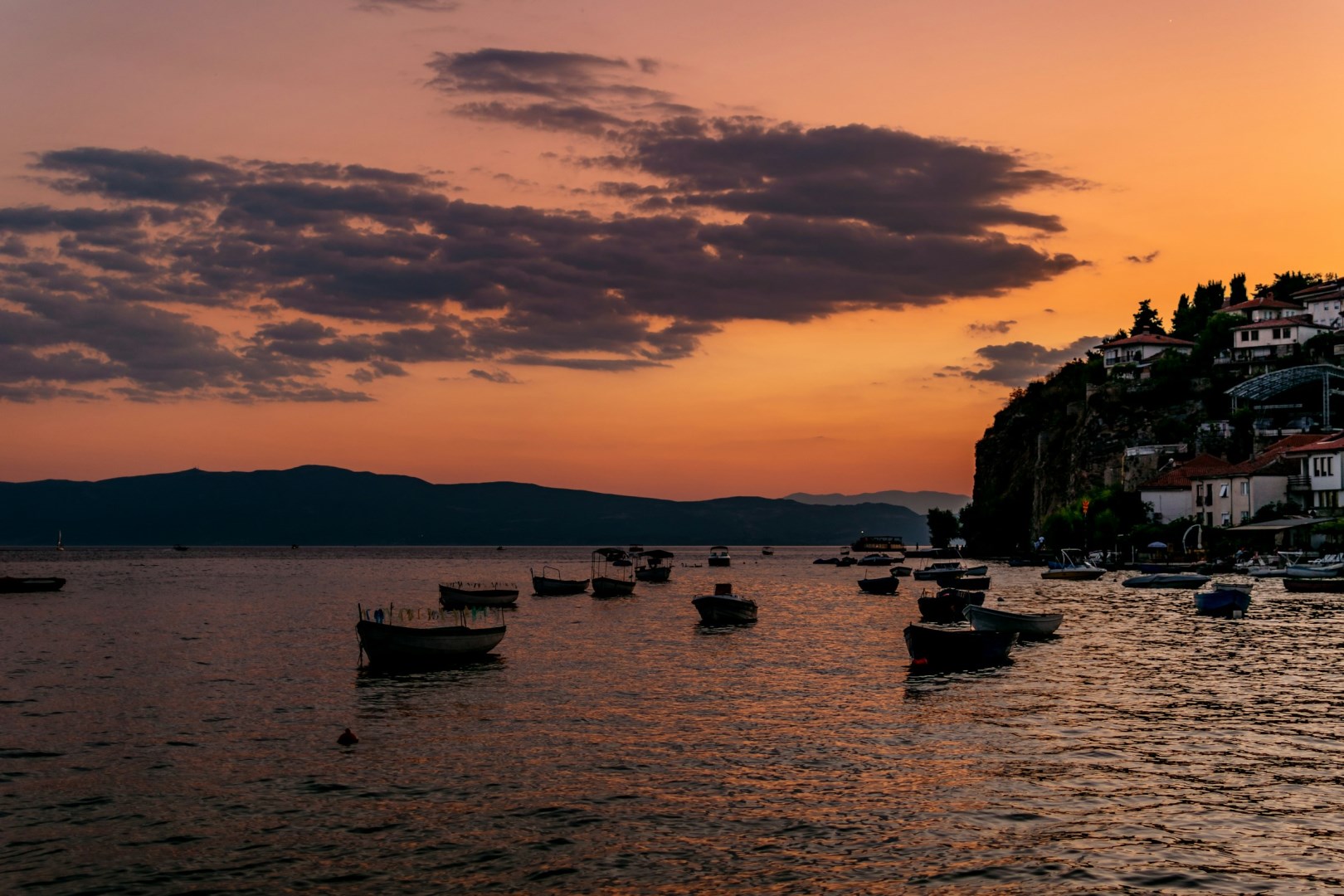

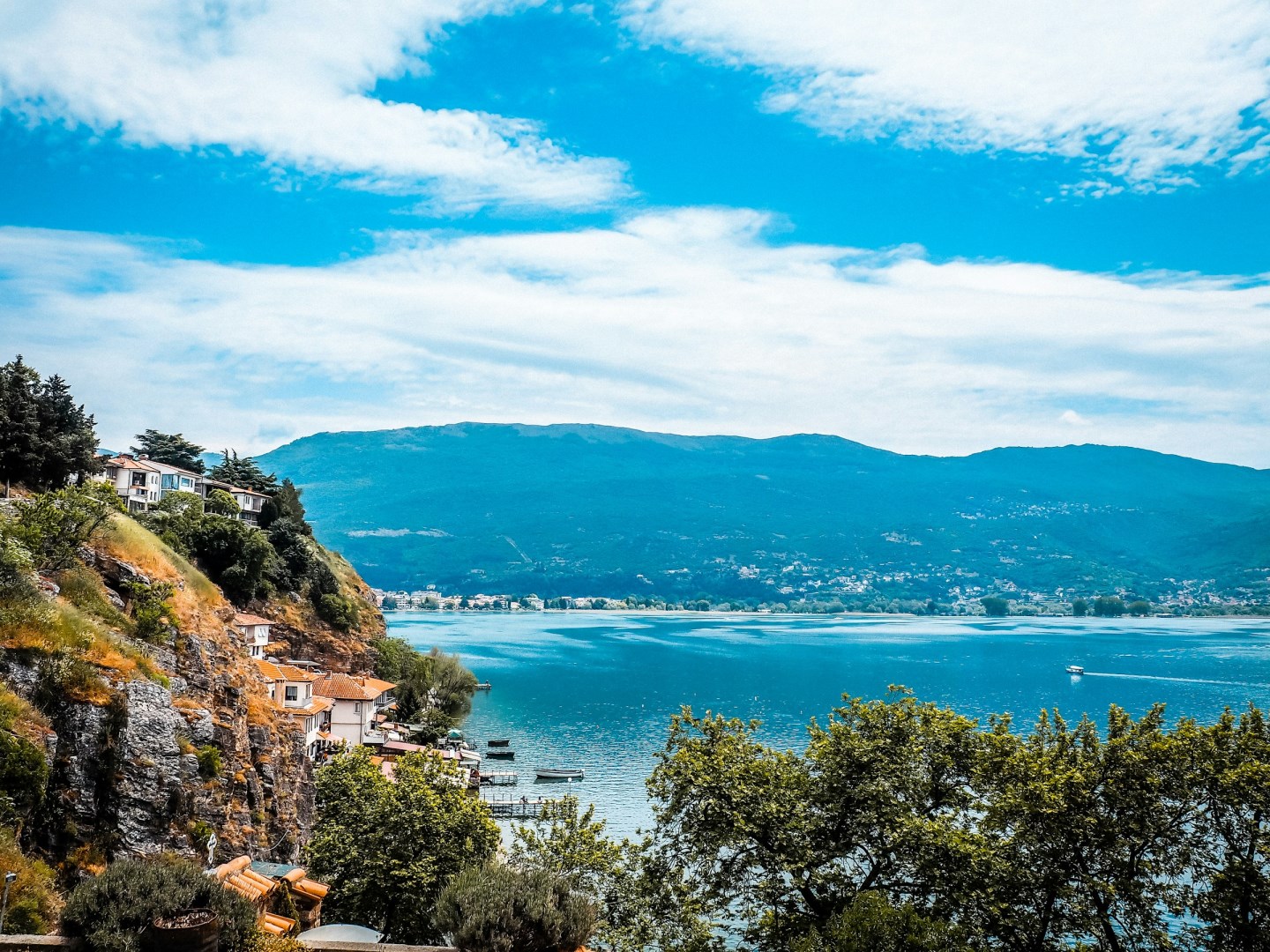


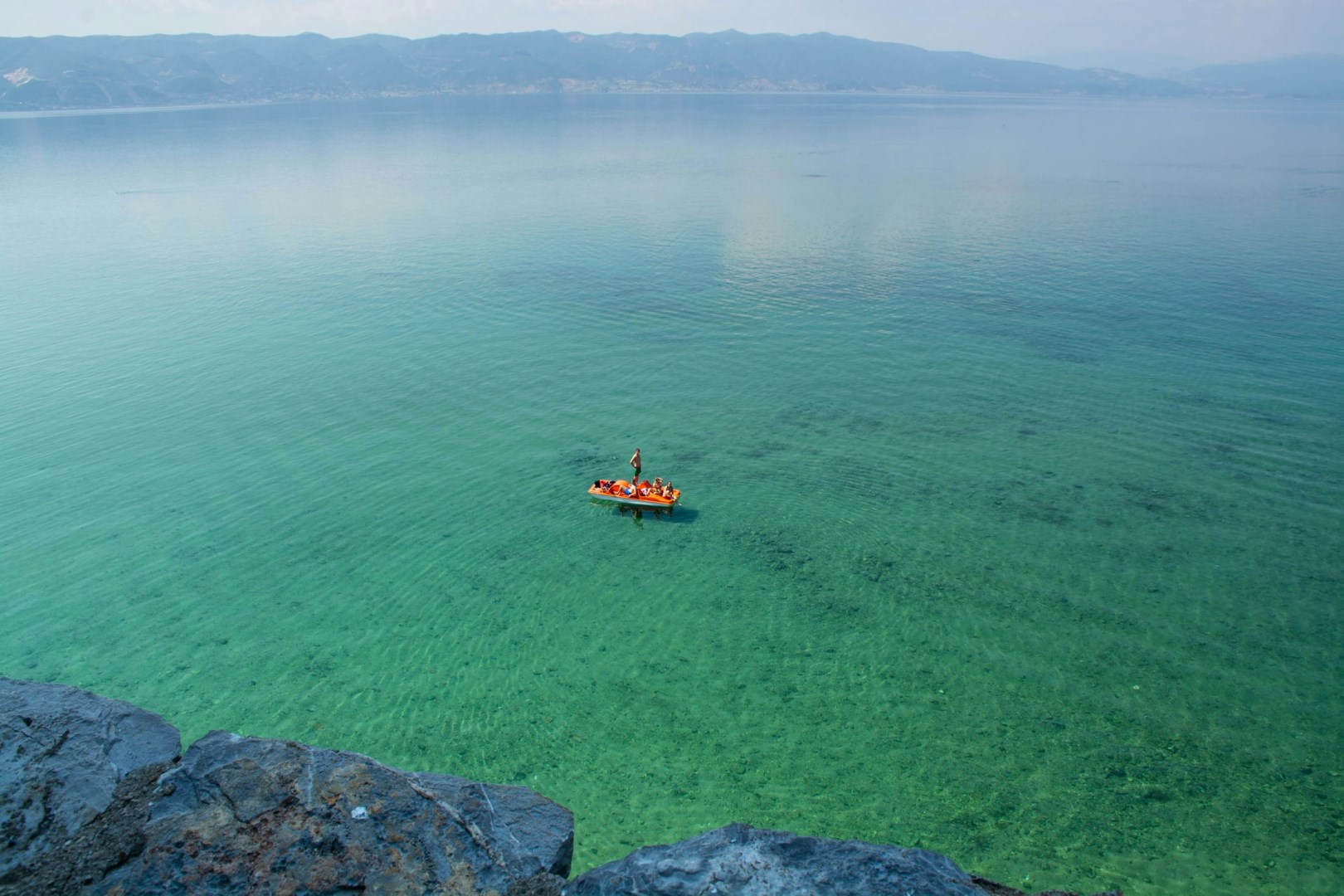
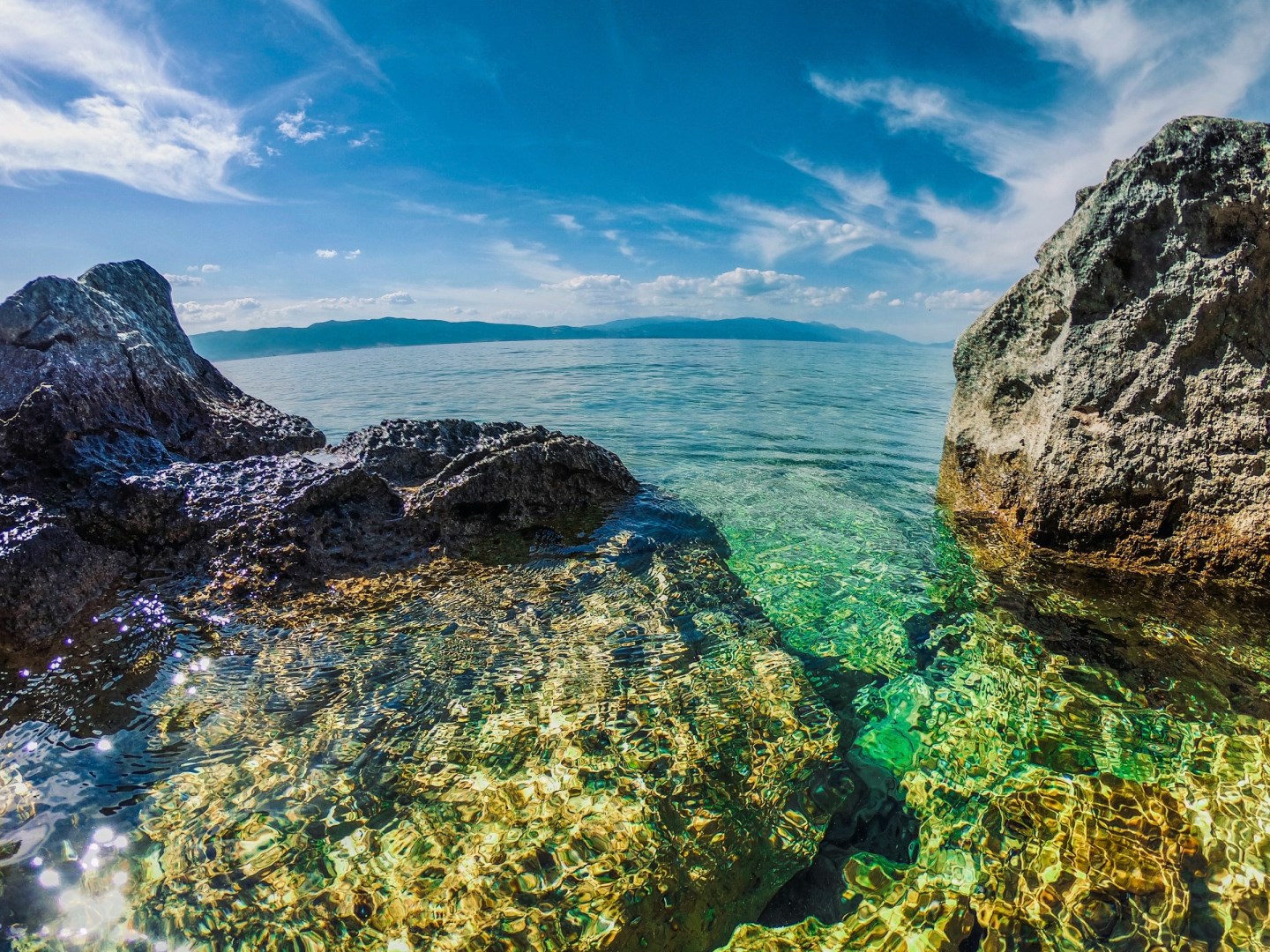

Lake Ohrid, a natural tectonic lake in the south-west corner of Macedonia, is the oldest lake in Europe and one of the oldest lakes in the world. Formed tectonically between four and ten million years ago, the lake is situated in limestone bedrock. Nestled amid mountains at an altitude of 2290 feet, the lake offers striking vistas of the surrounding beach and hills.
The ancient city of Ohrid, situated along the coast of the magnificent Lake Ohrid, is undoubtedly the most beautiful and most attractive Macedonian town, a pearl of old architecture and a treasury of valuable cultural and historical monuments. Located on the shores of Lake Ohrid, the town of Ohrid is one of the oldest human settlements in Europe.
The ancient city of Ohrid, situated along the coast of the magnificent Lake Ohrid, is undoubtedly the most beautiful and most attractive Macedonian town, a pearl of old architecture and a treasury of valuable cultural and historical monuments. Located on the shores of Lake Ohrid, the town of Ohrid is one of the oldest human settlements in Europe.
Other Popular Destinations in Macedonia

Skopje, the capital of North Macedonia, offers a fascinating blend of ancient history and modern transformation. A walk through the city reveals layers of Roman, Byzantine, and Ottoman influences, making it a treasure trove for history lovers. Begin your journey at the iconic Stone Bridge, a symbol of the city that dates back to the 15th century, linking the Ottoman Old Bazaar with Skopje’s modern city center.

Ohrid, nestled on the shores of Lake Ohrid in North Macedonia, is a city steeped in history and natural beauty. Often referred to as the "Jerusalem of the Balkans" due to its rich cultural and religious heritage, Ohrid boasts an impressive array of Byzantine-era churches, including the stunning Church of St. John at Kaneo. Perched on a cliff overlooking the lake, this church offers breathtaking views and a glimpse into the city's spiritual past.
