


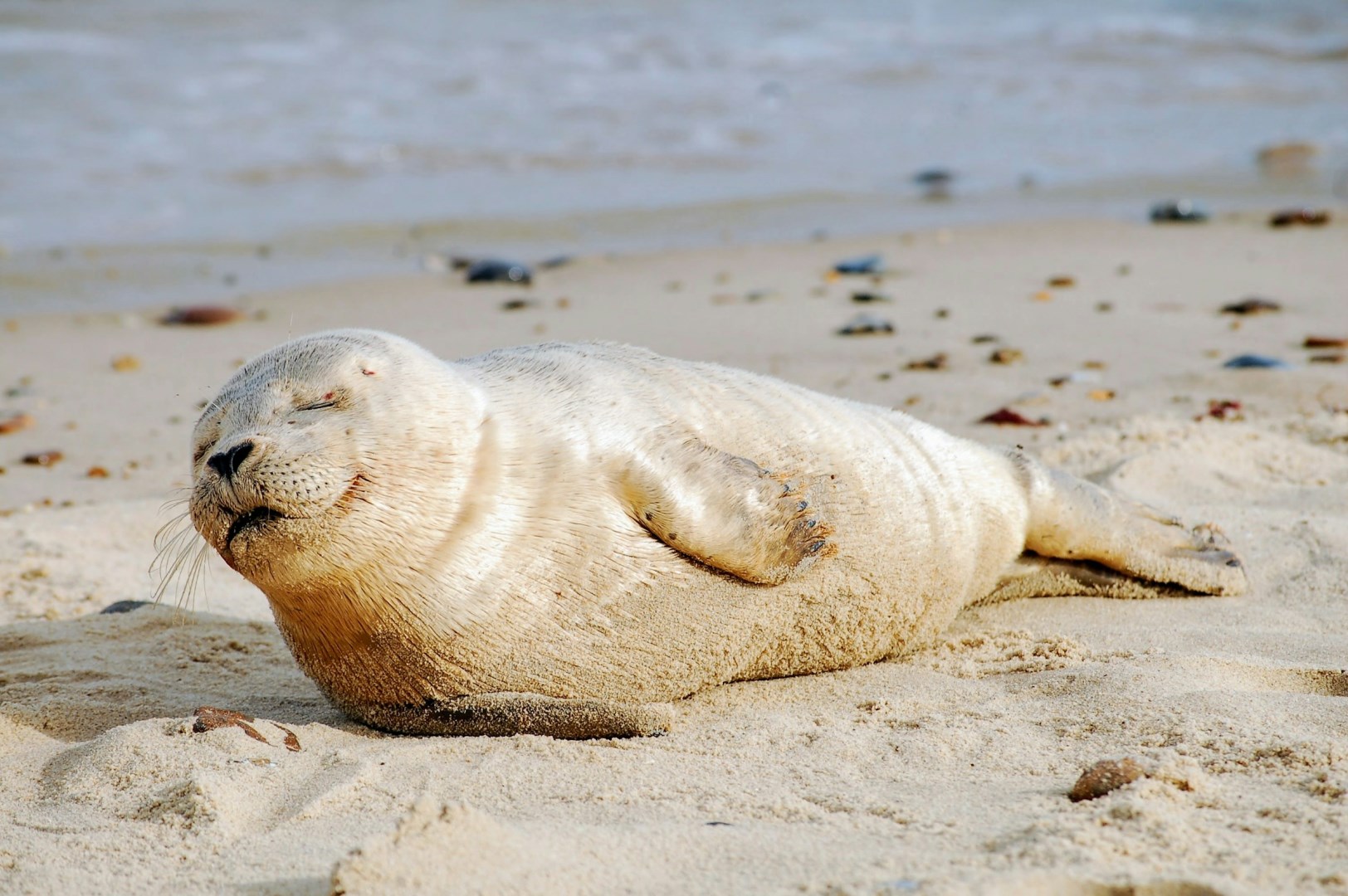
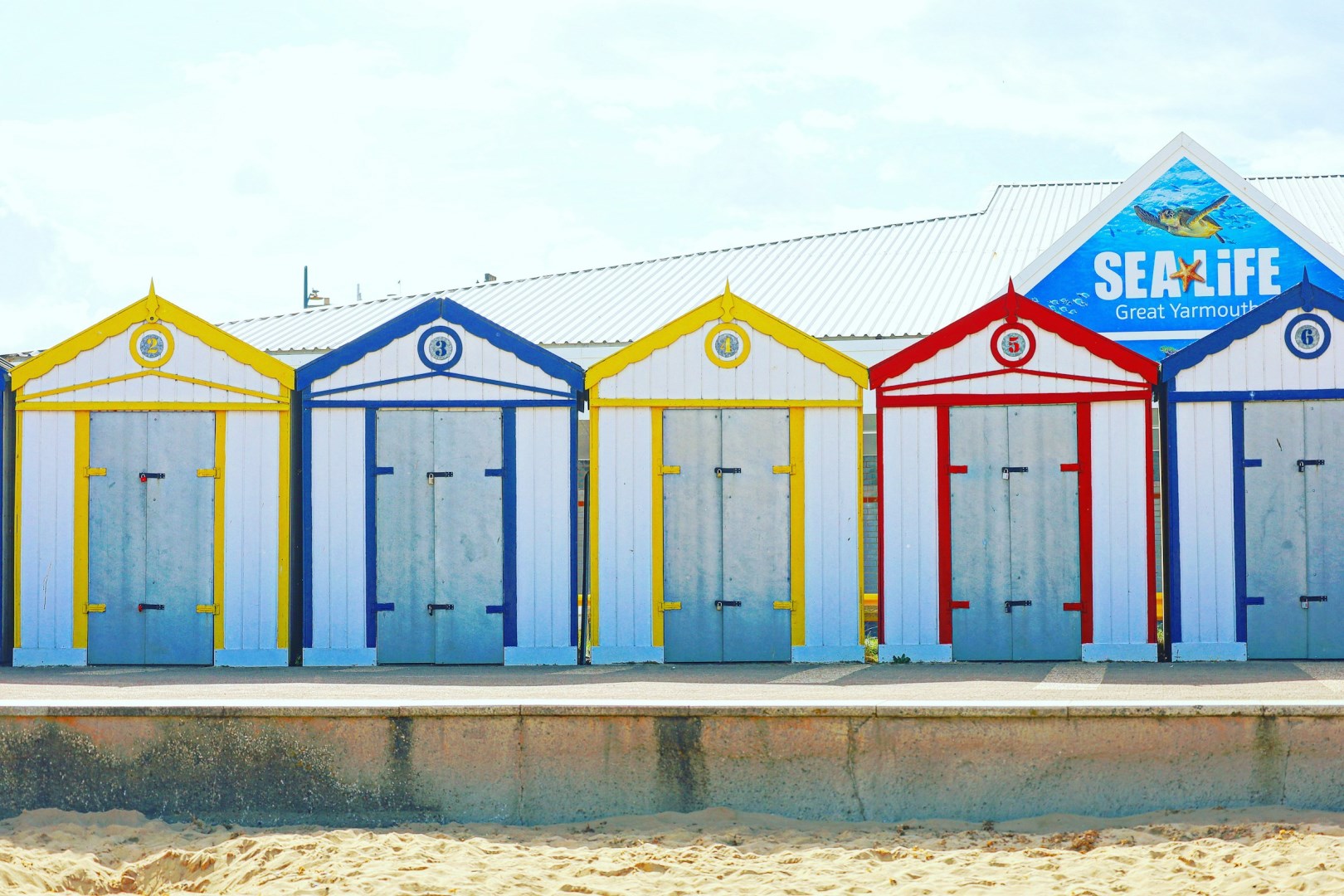

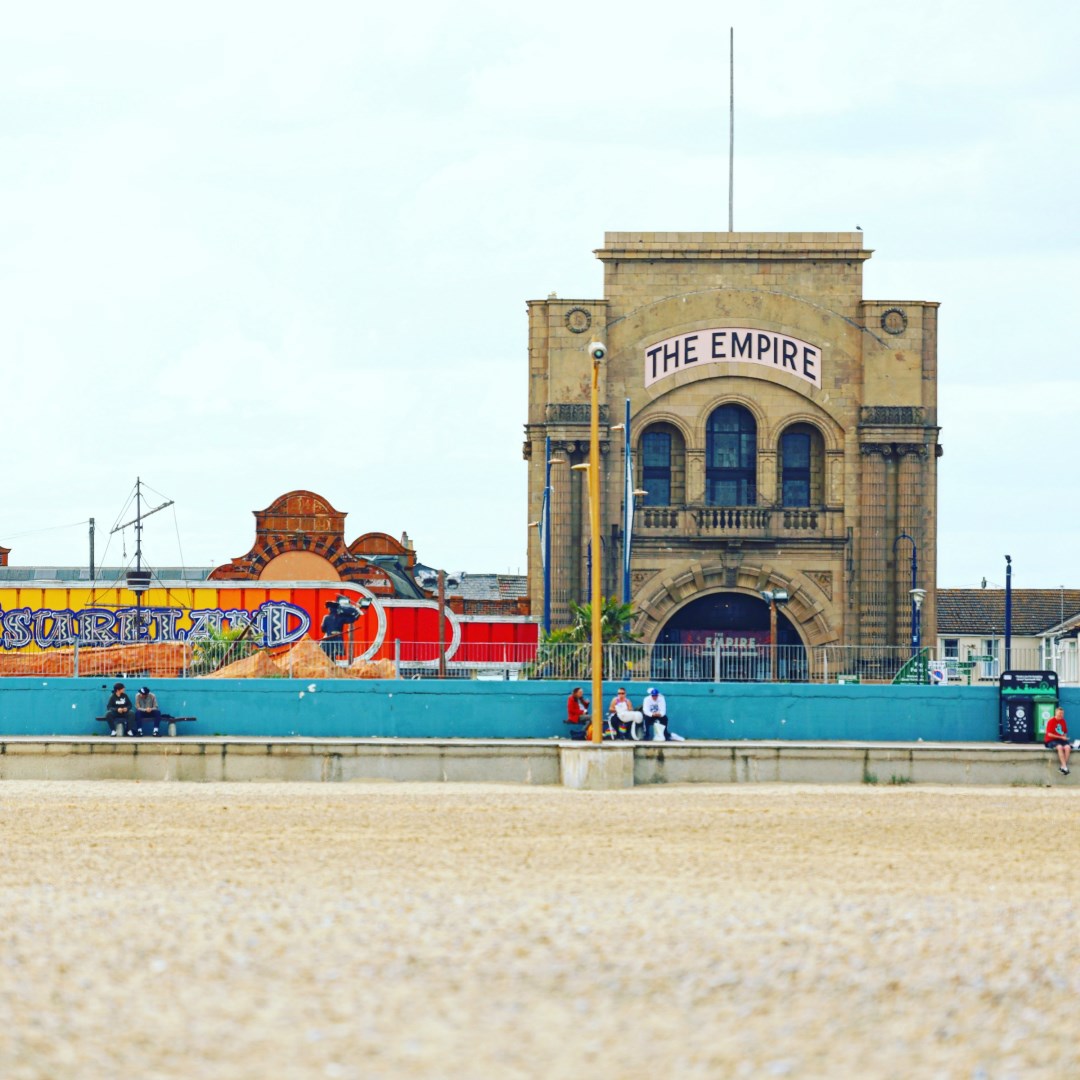
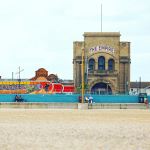


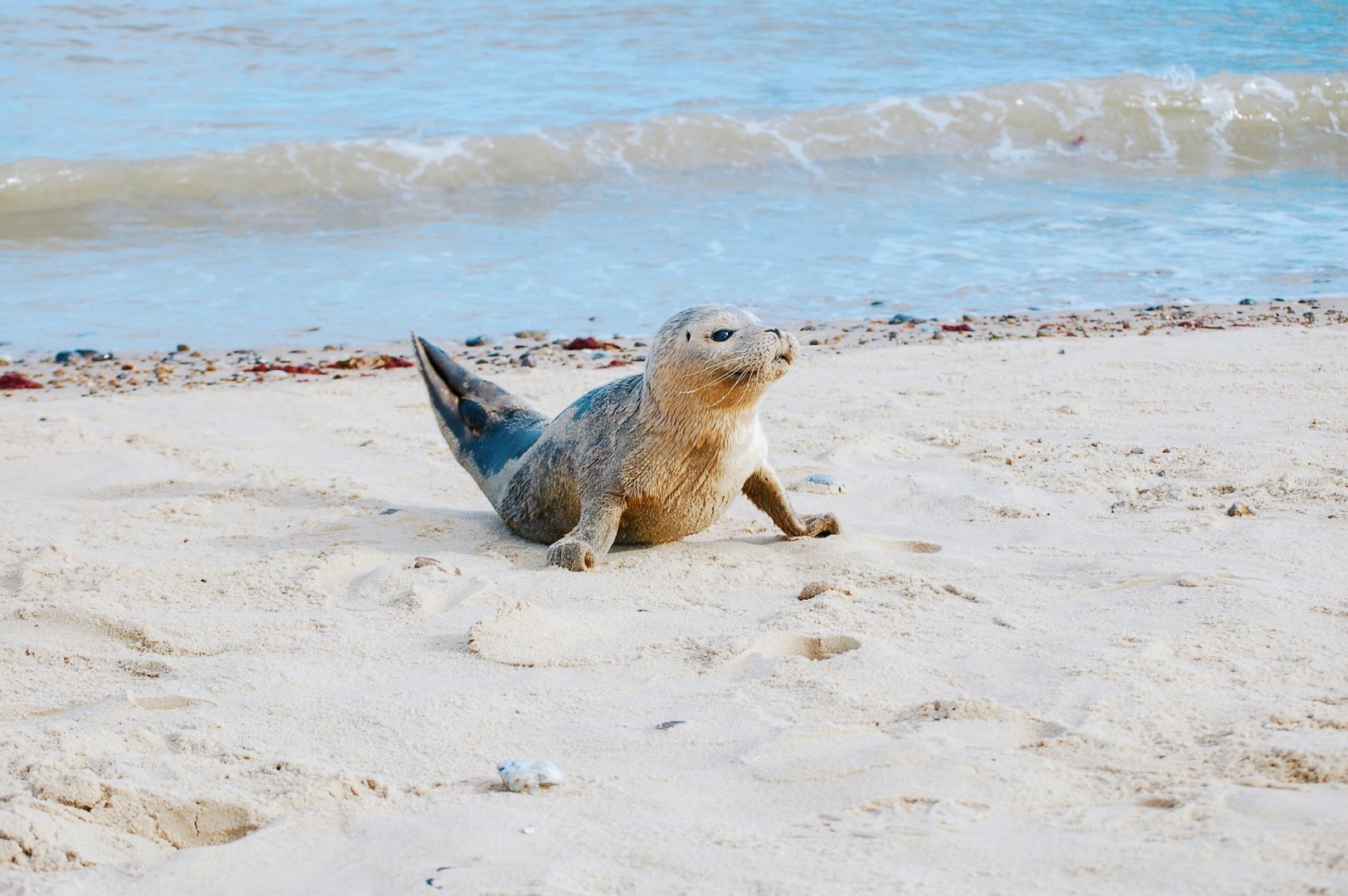

Great Yarmouth is a coastal town in Norfolk, eastern England, positioned where the North Sea meets the River Yare and the Broads. Its long sandy coastline and broad seafront have shaped the town's identity as a major seaside resort, while the harbour and waterfront retain strong links to fishing and maritime trade. The Golden Mile runs along the central seafront, with piers, amusement attractions, cafés, and theatres facing the beach. Inland, the town connects with the Norfolk Broads, creating a transition from open sea and sandy shore to rivers, wetlands, and rural landscapes.
Great Yarmouth has a long maritime history, with fishing, shipping, and trade playing important roles in the development of the town. Its medieval town wall is one of the most complete surviving examples in England, with eleven towers remaining from the original sixteen. The Time and Tide Museum, housed in a former herring-curing works, explores the town's fishing industry and the lives of local residents. Admiral Lord Nelson also had connections with Great Yarmouth and the port, while the historic Rows and former smokehouses provide further evidence of the town's working waterfront heritage.
The town's central beach stretches between Britannia Pier and Wellington Pier, forming the heart of the traditional seafront. Britannia Pier contains entertainment venues, while the Pleasure Beach provides amusement rides beside the coast. The Venetian Waterways offer a quieter setting of gardens, waterways, and boating lakes just inland from the seafront. Beyond the town, the Norfolk Broads provide access to rivers, lakes, wetlands, and wildlife habitats, while nearby Burgh Castle contains substantial Roman fortifications. The coastline also extends through neighbouring communities such as Gorleston-on-Sea, Caister-on-Sea, and Winterton-on-Sea.
Great Yarmouth's food traditions are closely connected to its fishing heritage, with seafood such as cod, haddock, crab, lobster, and locally caught fish appearing in restaurants and traditional seaside cafés. Fish and chips remain a familiar part of the town's coastal food culture, alongside contemporary British and international restaurants. The former herring industry left a particularly strong mark on local life, with smokehouses and tightly packed Rows once housing fishing families and workers. Another distinctive feature is the meeting of two landscapes: the open North Sea coastline on one side and the waterways and wetlands of the Broads on the other.
Other Popular Destinations in England


