
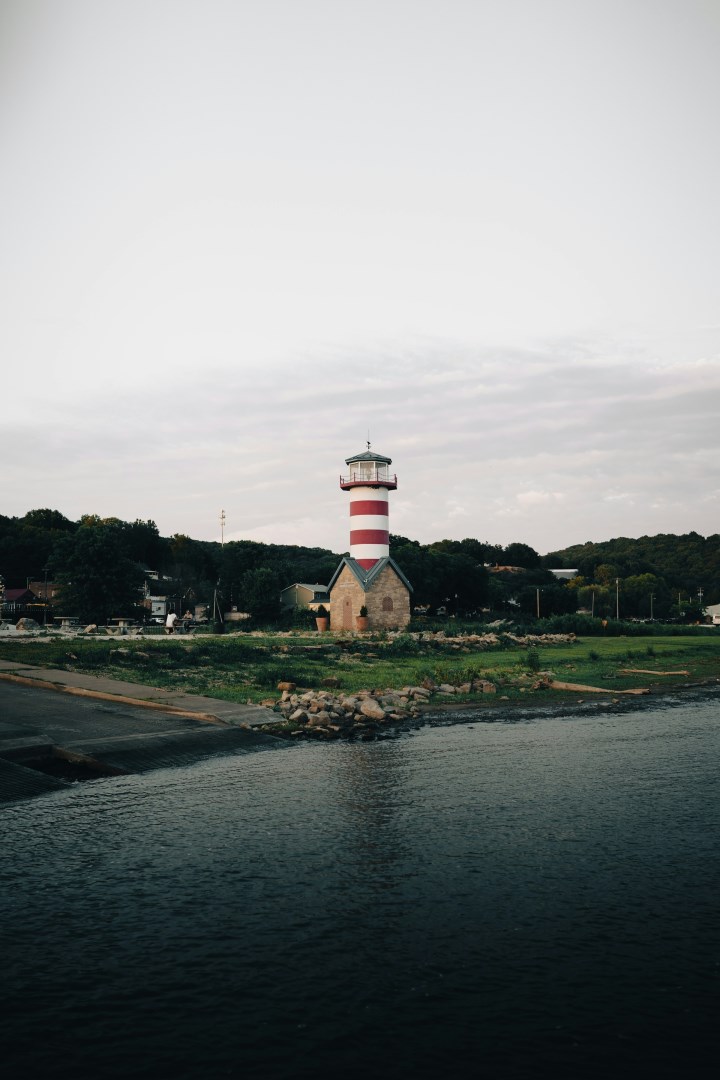

Alton is a historic Mississippi River city in southwestern Illinois, located about 25 miles north of St. Louis, Missouri. Its position along the river has shaped the community’s industry, transportation, architecture, and recreation. The city rises from the riverfront into wooded bluffs, creating a landscape of steep hills, limestone outcrops, and broad views across the Mississippi. Downtown Alton contains historic commercial buildings, local restaurants, galleries, and museums, while the riverfront provides access to walking trails, parks, fishing, and boating. Its location along the Great River Road also makes Alton an important stop for exploring the Mississippi Valley.
Alton has a significant history connected to abolition, river commerce, and religious life. The city was home to Elijah P. Lovejoy, an abolitionist newspaper editor who was killed while defending his printing press, and the Lovejoy Monument overlooks the Mississippi River from the site associated with his death. The National Great Rivers Museum explores the role of the Mississippi River in transportation, ecology, and regional communities. Alton’s historic districts contain nineteenth-century homes, churches, and commercial buildings that reflect the prosperity brought by river trade and manufacturing. The city also preserves connections to Robert Wadlow, recognized as the tallest person in recorded history.
The Mississippi River and surrounding bluffs define much of Alton’s natural environment. The Great River Road passes through the city and continues along the river through a landscape of wooded hills, limestone cliffs, wetlands, and agricultural land. The nearby Riverlands Migratory Bird Sanctuary, part of the U.S. Fish and Wildlife Service’s National Great Rivers Research and Education Center area, provides habitat for bald eagles, waterfowl, shorebirds, and other species. Pere Marquette State Park lies farther north along the Illinois River and offers hiking trails, overlooks, forests, and river scenery. Alton’s riverfront is also a popular place for fishing and observing passing barges.
Alton’s food scene includes classic Midwestern dishes, locally owned cafés, breweries, and restaurants serving seafood, steaks, sandwiches, and regional American fare. The city’s riverfront setting also connects it to the wider Mississippi Valley tradition of freshwater fishing and boating. One distinctive local event is the annual Great Rivers & Routes Bald Eagle Festival, which celebrates the large number of bald eagles that gather along the Mississippi during winter. Another unusual detail is Alton’s connection to Robert Wadlow, whose life and remarkable height are interpreted at the Alton Museum of History and Art. The combination of river commerce, historic architecture, bluffs, and wildlife gives Alton a distinctive character within southwestern Illinois.
Other Popular Destinations in Illinois