
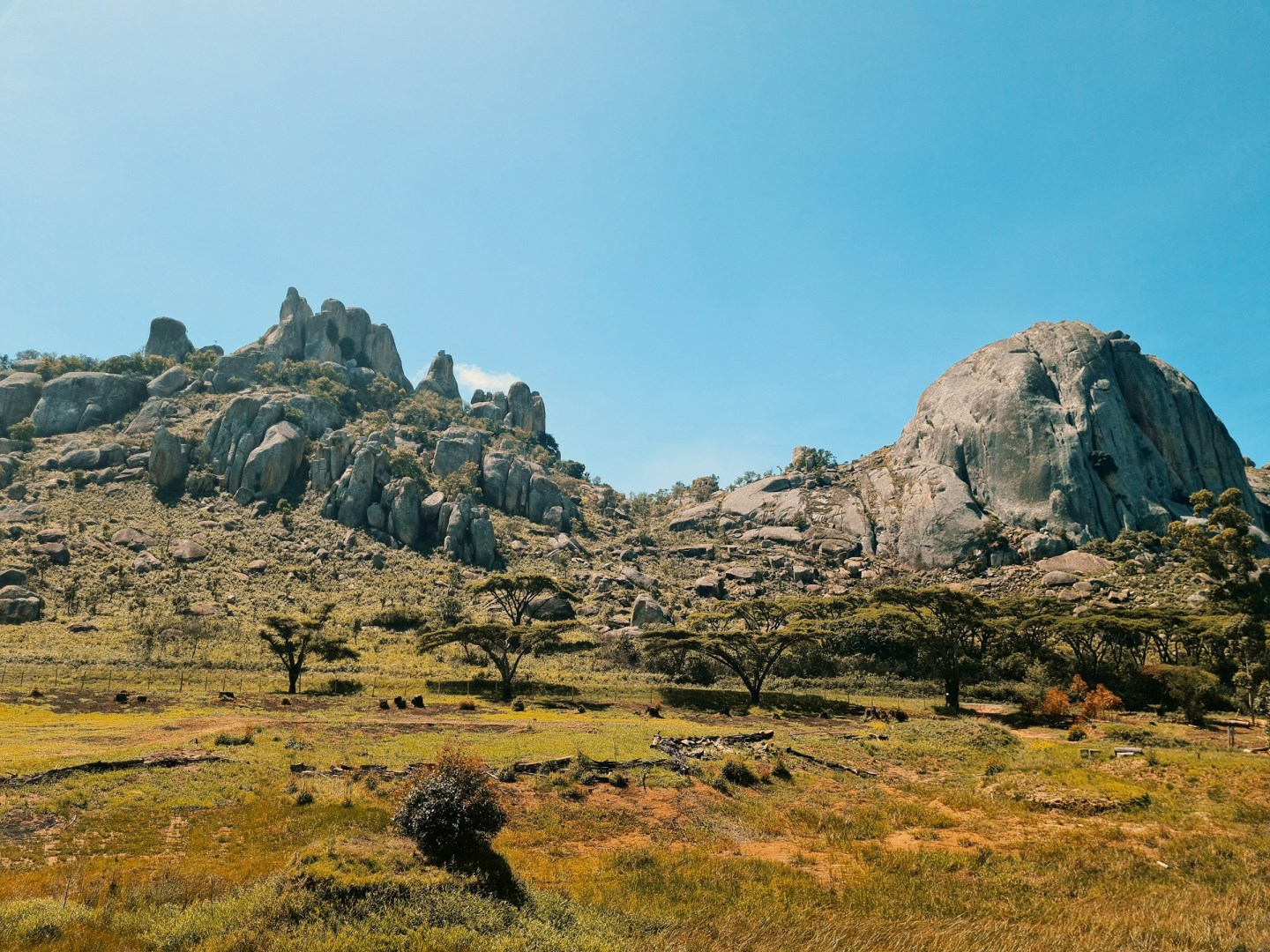


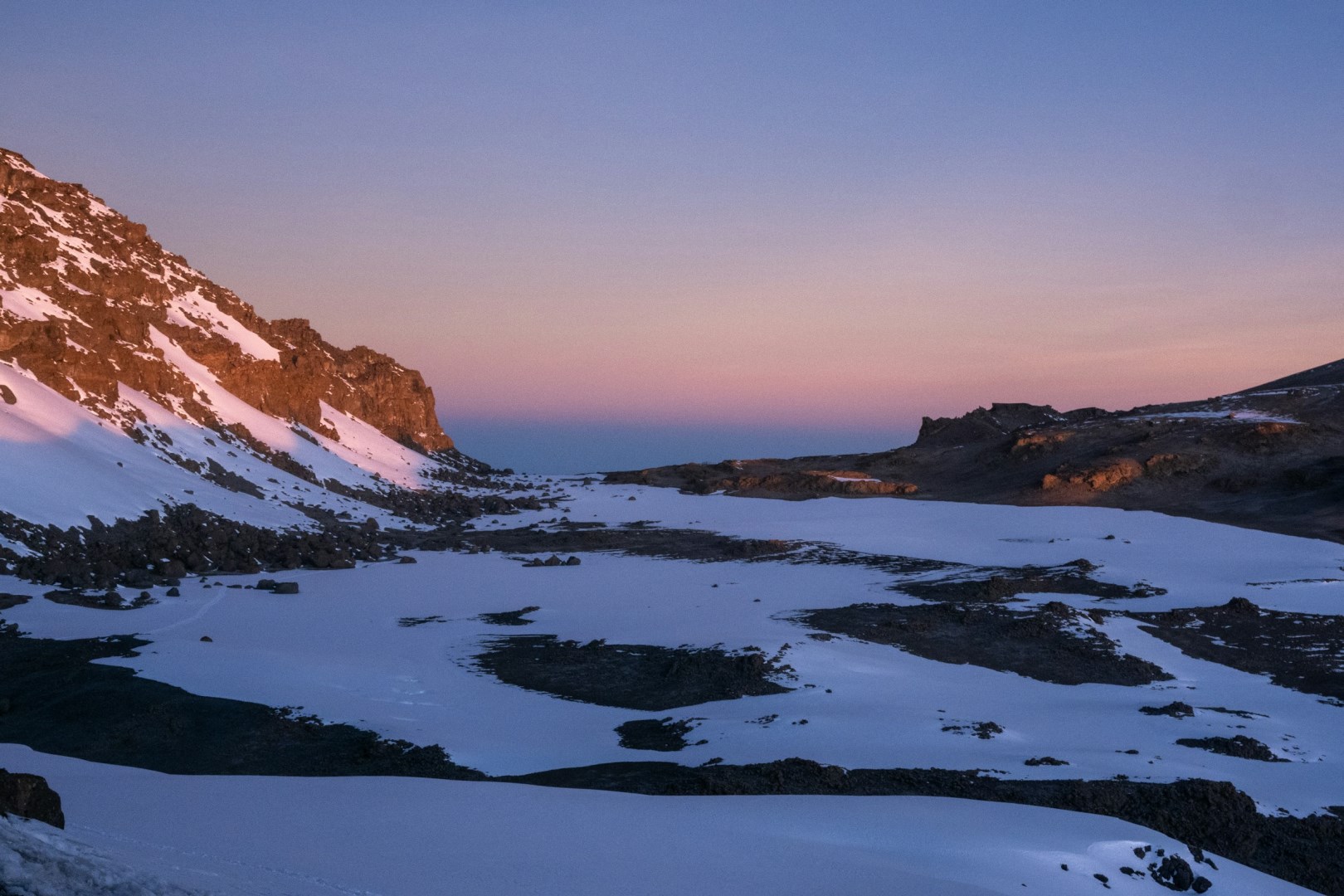
Uhuru Peak is the highest point on Mount Kilimanjaro in northern Tanzania, reaching 5,895 metres above sea level. It stands on Kibo, the mountain’s highest volcanic cone, and forms the summit of the highest free-standing mountain in the world. The route to the peak passes through several distinct ecological zones, beginning with cultivated land and montane forest before reaching moorland, alpine desert, and the high-altitude summit zone. The upper slopes are marked by volcanic rock, glaciers, snowfields, and wide views across the surrounding Tanzanian landscape when conditions are clear.
Mount Kilimanjaro has deep cultural significance for communities living around its foothills, particularly the Chagga people on the southern and eastern slopes. Chagga communities have traditionally cultivated fertile volcanic soils, growing crops such as bananas and coffee. The mountain also holds cultural importance in local traditions and has long been a defining feature of the region. Uhuru Peak received its present name in connection with Tanzania’s independence, with “Uhuru” meaning “freedom” in Swahili. Today, climbers from around the world reach the summit as part of guided expeditions managed within Kilimanjaro National Park.
The final ascent to Uhuru Peak typically begins from high-altitude camps on Kibo and crosses steep volcanic terrain toward the crater rim. Climbers pass landmarks such as Gilman’s Point and Stella Point before continuing along the rim to the summit. Kibo’s crater contains the Reusch Crater and the Ash Pit, a smaller volcanic feature within the summit area. The mountain’s upper slopes support sparse alpine vegetation, while lower elevations contain montane forest inhabited by elephants, buffalo, colobus monkeys, and numerous bird species. Climbers normally follow established routes with licensed guides and support crews.
Uhuru Peak’s environment changes dramatically with altitude, from tropical vegetation near the mountain’s base to an almost vegetation-free alpine desert close to the summit. The remaining glaciers and ice fields around Kibo are important indicators of changes in the mountain’s high-altitude climate. Mount Kilimanjaro is also notable for being a dormant stratovolcano composed of three volcanic cones: Kibo, Mawenzi, and Shira. Uhuru Peak is located on Kibo, whose summit crater remains volcanically dormant. The combination of volcanic geology, rapidly changing ecosystems, and a summit nearly six kilometres above sea level makes the peak one of Tanzania’s most distinctive high-altitude landscapes.
