
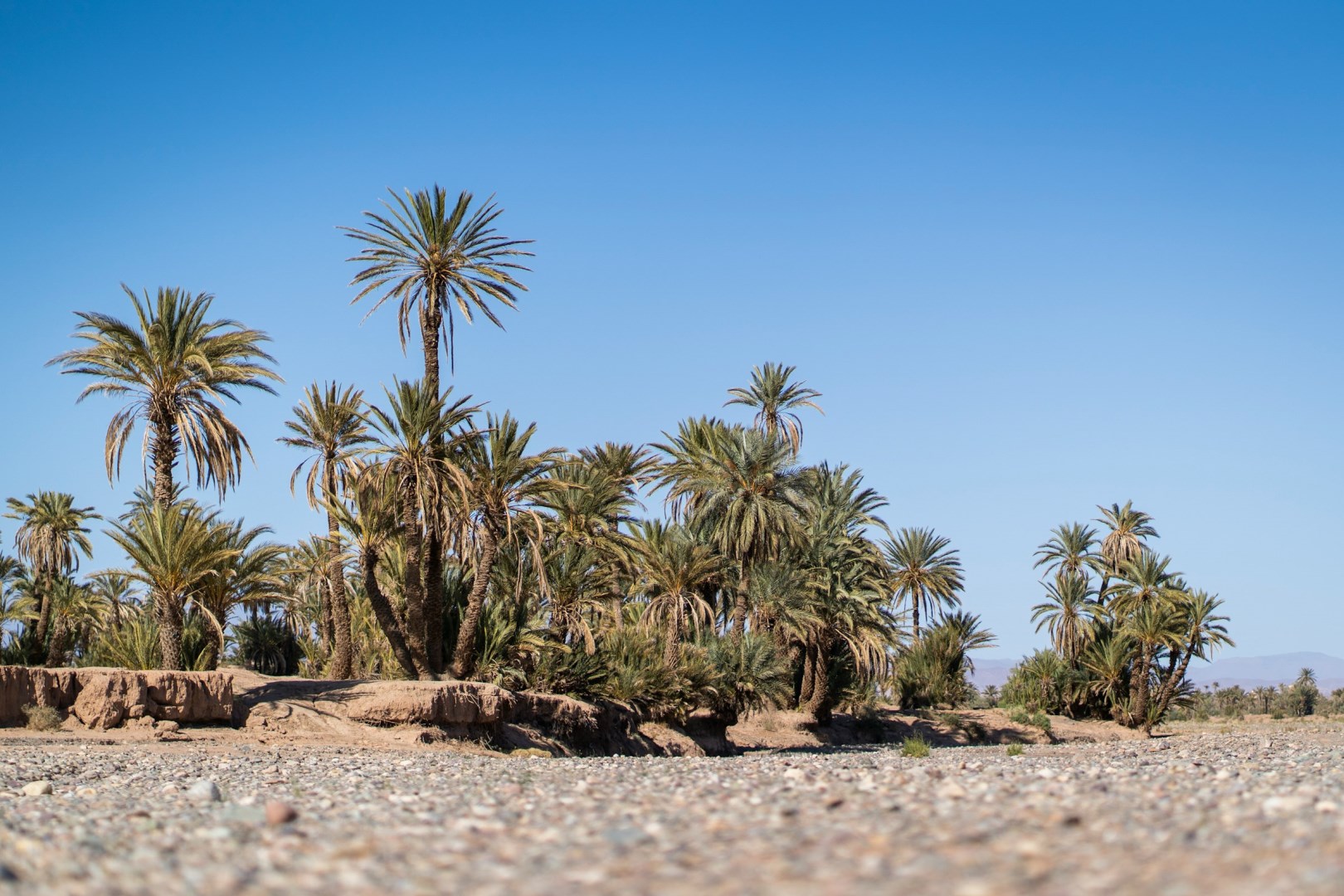
Skoura is an oasis town in southern Morocco, set between Ouarzazate and the Dadès Valley. Its defining feature is a broad palm grove where date palms, olive trees, fruit gardens, and traditional earthen buildings grow together. Unlike the dry terrain surrounding it, the oasis has a cultivated landscape supported by local irrigation systems. Skoura is particularly known for its concentration of kasbahs, including tall fortified residences built from rammed earth. The combination of palms, agricultural plots, and mud-brick architecture gives the area a distinctive appearance within the wider landscape of southern Morocco.
Skoura’s identity is closely connected to Amazigh traditions and oasis agriculture. Families have long used the palm grove for growing dates, olives, almonds, and other crops, with water distributed through traditional channels. The kasbahs reflect the social organization of oasis communities, combining living quarters, storage areas, defensive features, and spaces for household activities. Kasbah Amridil is the best-known example and is associated with the Nasiri family, whose religious and educational traditions are reflected in parts of the building. Local architecture also demonstrates how thick earthen walls and shaded interiors helped households adapt to the region’s hot, dry climate.
The Skoura palmeraie is the main attraction, with paths winding between palm trees, gardens, mud-brick walls, and scattered kasbahs. Kasbah Amridil is the most prominent landmark and preserves features such as traditional bread ovens, an olive press, storage areas, and carved architectural details. Other notable structures include Kasbah Aït Ben Moro and several smaller fortified residences throughout the oasis. The landscape changes beyond the palm grove, with the High Atlas visible in the distance and rocky terrain surrounding the cultivated oasis. Walking or cycling through the palmery offers a closer view of its irrigation channels and agricultural life.
Food in Skoura is closely tied to the produce of the oasis, particularly dates, olives, almonds, and seasonal fruit. Moroccan staples such as tagine, couscous, fresh salads, and mint tea are commonly served in local homes and guesthouses. The area’s date palms are especially important, providing both food and materials for traditional rural life. A lesser-known detail is that Kasbah Amridil functioned as more than a fortified residence: its surviving features reveal practical aspects of daily life, including food preparation, water management, storage, and agricultural work. This makes the kasbah an unusually useful place for understanding life within a Moroccan oasis.
Other Popular Destinations in Morocco