

East and Southeast Asia | Mongolia | Khongoriin Els
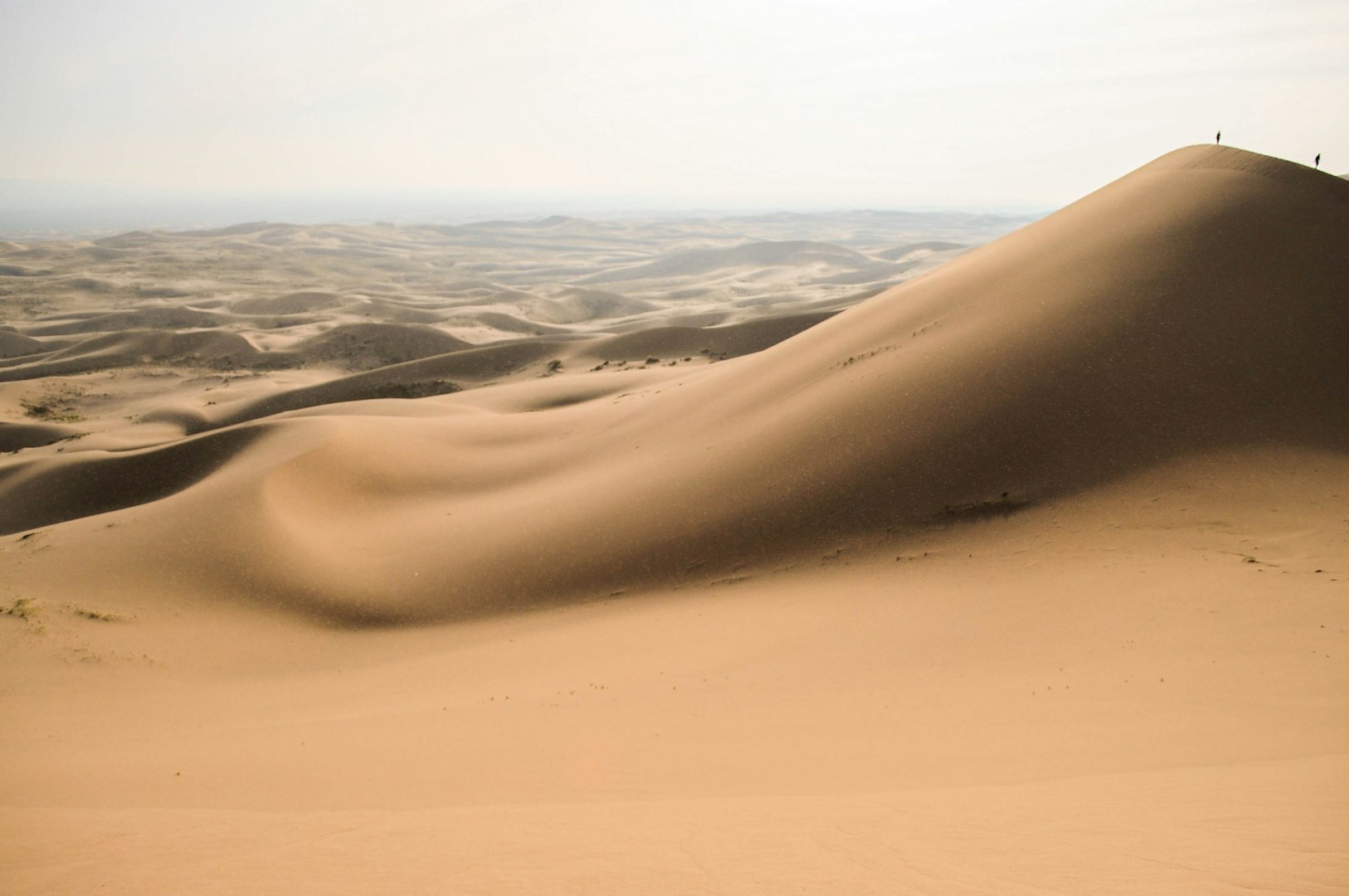
Khongoriin Els is one of the largest sand dune systems in Mongolia's Gobi Desert, located within Gobi Gurvansaikhan National Park in Ömnögovi Province. The dunes extend across a broad desert landscape between rocky mountains and dry plains, with some ridges rising more than 200 meters above the surrounding ground. Wind continually reshapes the sand, creating long lines and shifting slopes across the desert. The area is also known as the Singing Sands because wind moving across the dunes can produce a low humming or rumbling sound under certain conditions.
The region around Khongoriin Els is closely connected with Mongolian pastoral traditions. Nomadic herding remains an important part of life in the wider Gobi, with families raising animals such as camels, goats, sheep, and horses across seasonal grazing areas. Camels are particularly well suited to the desert environment and have long been important for transportation and livestock production. Visitors may encounter ger camps and herding families near the dunes, providing a glimpse of traditional mobile housing and desert livelihoods. The surrounding Gobi also holds an important place in Mongolian cultural identity and oral traditions.
Khongoriin Els forms a striking contrast with the surrounding rocky desert and mountain landscapes. The dunes are bordered by the Sevrei and Zuulun mountains, while the Khongor River runs along the northern edge of the sand system, supporting a narrow belt of vegetation in an otherwise dry environment. The river area provides habitat for birds and other wildlife, and the nearby desert supports species adapted to extreme conditions. Climbing the dunes offers broad views across the sand ridges and surrounding Gobi, while camel rides are a common way to explore the area.
Food around Khongoriin Els reflects the pastoral economy of the Gobi, with meat and dairy products forming important parts of the traditional Mongolian diet. Meals at ger camps may include buuz, khuushuur, mutton, noodles, and dairy products such as aaruul. Camel milk and other products from local livestock can also be found in the wider region. A distinctive feature of Khongoriin Els is the close relationship between the dunes and the Khongor River: the river supports vegetation and grazing along the edge of one of Mongolia's most extensive desert sand landscapes, creating a narrow green corridor beside the dunes.
Other Popular Destinations in Mongolia