





USA | California | Lone Pine
Lone Pine is a small community in California’s Owens Valley, located between the Sierra Nevada and the Inyo Mountains in Inyo County. The town sits beneath the dramatic eastern escarpment of the Sierra, with the summit of Mount Whitney rising to the west and the Alabama Hills nearby. The surrounding landscape combines high desert, dry lakebeds, rugged mountains, and open sagebrush country. Lone Pine serves as an important gateway to the eastern Sierra, with its location providing access to both mountain recreation and the distinctive desert scenery of the Owens Valley.
Lone Pine lies within the ancestral lands of the Paiute and Shoshone peoples, whose communities have long depended on the Owens Valley’s rivers, plants, wildlife, and seasonal resources. Later settlement brought ranching, mining, agriculture, and transportation through the valley. The Manzanar National Historic Site, located north of Lone Pine, preserves the remains and stories of the incarceration camp where Japanese Americans were confined during World War II. The Museum of Western Film History in Lone Pine also reflects the region’s long association with movie and television productions filmed among the nearby desert and mountain landscapes.
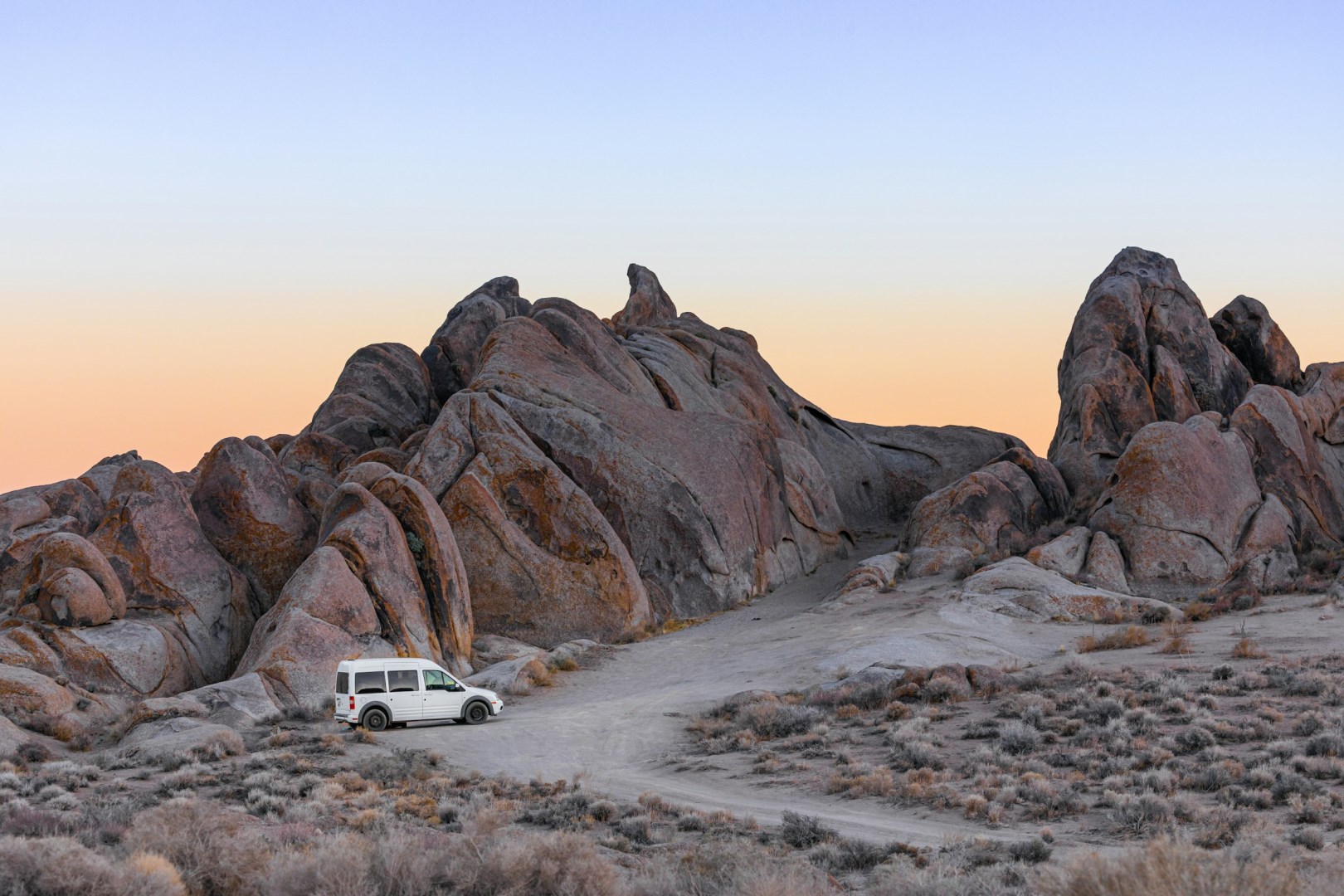
The Alabama Hills are one of Lone Pine’s most recognizable attractions, with rounded orange and brown rock formations set against the steep Sierra Nevada. Numerous roads and trails provide access to arches, boulders, and viewpoints across the area. Mount Whitney, the highest summit in the contiguous United States, rises west of town, while the Inyo National Forest and surrounding wilderness areas provide opportunities for hiking, climbing, fishing, and wildlife observation. Owens Lake, south of Lone Pine, is another important landscape, with extensive shallow wetlands and exposed lakebed supporting migratory birds and other wildlife.
Lone Pine’s food scene is modest and closely connected to its role as a small mountain-desert community, with cafés, diners, and restaurants serving travelers, outdoor recreationists, and local residents. The surrounding Owens Valley supports ranching and some agricultural production, while nearby communities contribute additional local products. The town’s most distinctive feature is its proximity to remarkably different environments: the high Sierra rises sharply to the west, while the dry Owens Valley and Inyo Mountains stretch eastward. Its connection to Western filmmaking, Indigenous history, mountain recreation, and desert geology makes Lone Pine an important stopping point along California’s eastern Sierra.
