





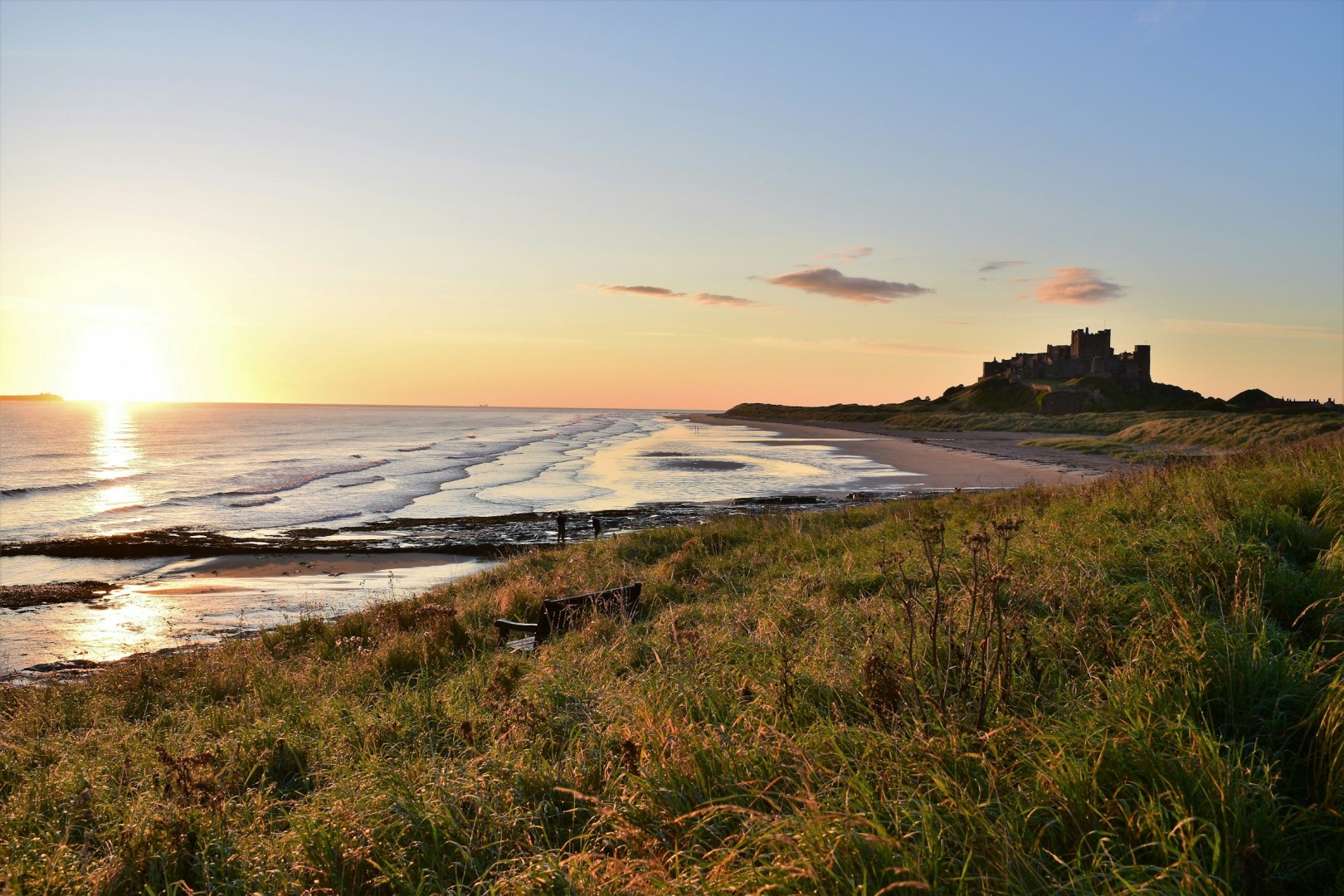

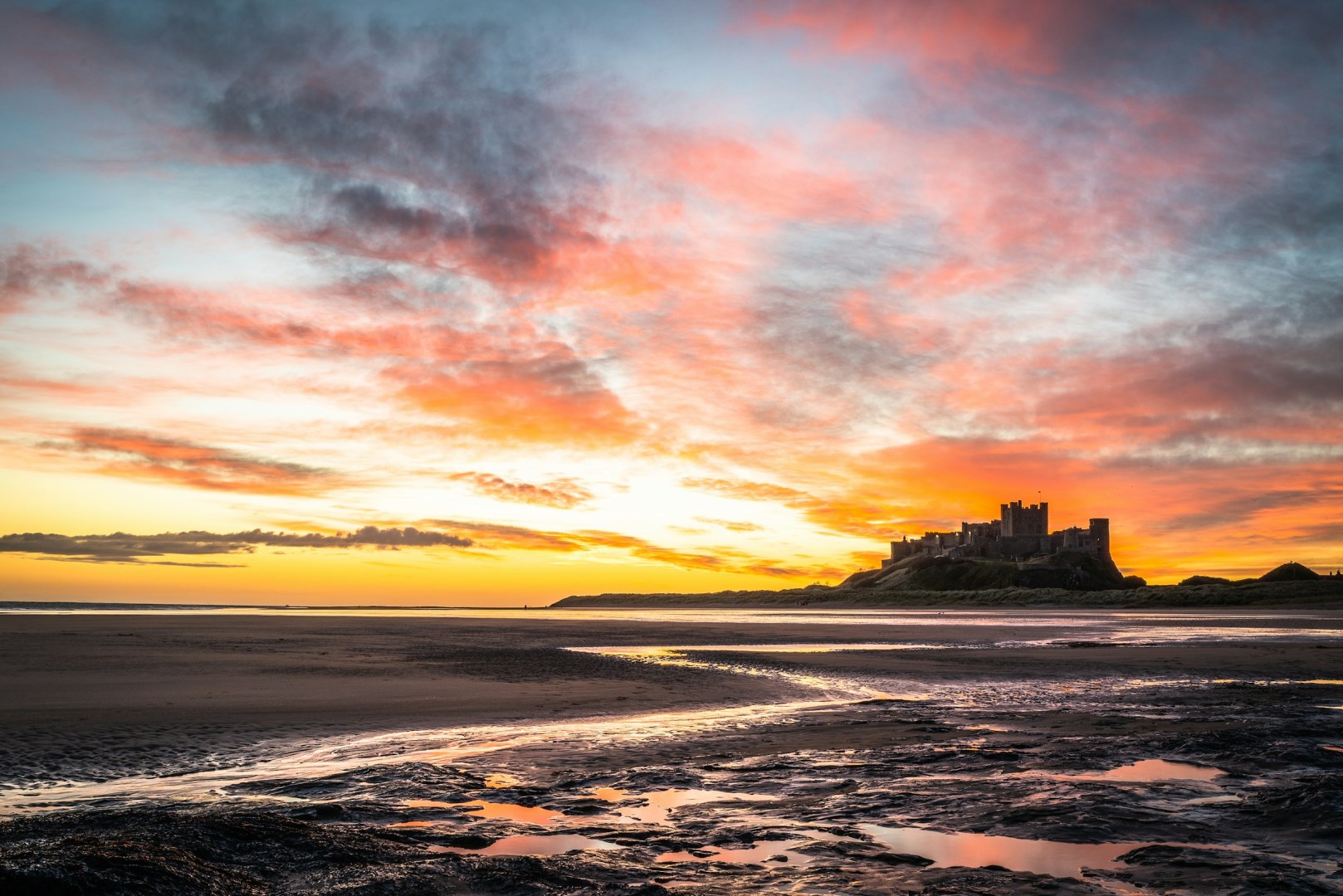

Bamburgh is a coastal village on the Northumberland coast of northeast England, overlooking the North Sea from a low rocky rise. Its most recognizable landmark is Bamburgh Castle, which dominates the village and stands above a wide stretch of sandy beach. The settlement is surrounded by open coastal scenery, dunes, and views toward the Farne Islands. Bamburgh has a compact historic center with stone buildings, small shops, churches, and traditional inns. Its location within the Northumberland Coast Area of Outstanding Natural Beauty gives the village a strong connection with the surrounding shoreline and countryside.
Bamburgh has deep connections with the history of the ancient Kingdom of Northumbria, and the castle occupies the site of an important early royal stronghold. The village is also associated with Saint Aidan and Saint Oswald, figures central to the Christian history of Northumbria. St Aidan’s Church contains memorials connected with the Percy family, who played a major role in the region’s history. Grace Darling, the local lifeboat heroine, is another important figure associated with Bamburgh. The RNLI Grace Darling Museum presents her story and the rescue that made her widely known in Britain.
Bamburgh Castle is the principal attraction, with rooms, collections, archaeological displays, and views across the coast from its elevated position. The castle grounds also contain evidence of earlier occupation of the site. Bamburgh Beach stretches south from the village and provides views toward Lindisfarne and the Farne Islands, while the dunes support coastal plants and wildlife. The nearby Farne Islands are an important habitat for seabirds and grey seals and can be reached by boat from the surrounding coast. The village also provides access to walking routes across beaches, dunes, farmland, and sections of the Northumberland coastline.
Local food reflects Northumberland’s coastal and agricultural traditions, with seafood, locally raised meat, cheeses, and seasonal produce appearing in village pubs, cafes, and restaurants. The surrounding region is known for Northumberland lamb, Cheviot beef, and seafood from the North Sea. Bamburgh’s distinctive character is also closely connected with its archaeological heritage. Excavations around Bamburgh Castle have revealed evidence of early settlement and craft activity, including metalworking. The combination of an inhabited historic village, a major fortified site, and an open coastline makes Bamburgh notable for how closely its archaeological and natural landscapes remain connected.
Other Popular Destinations in England


