


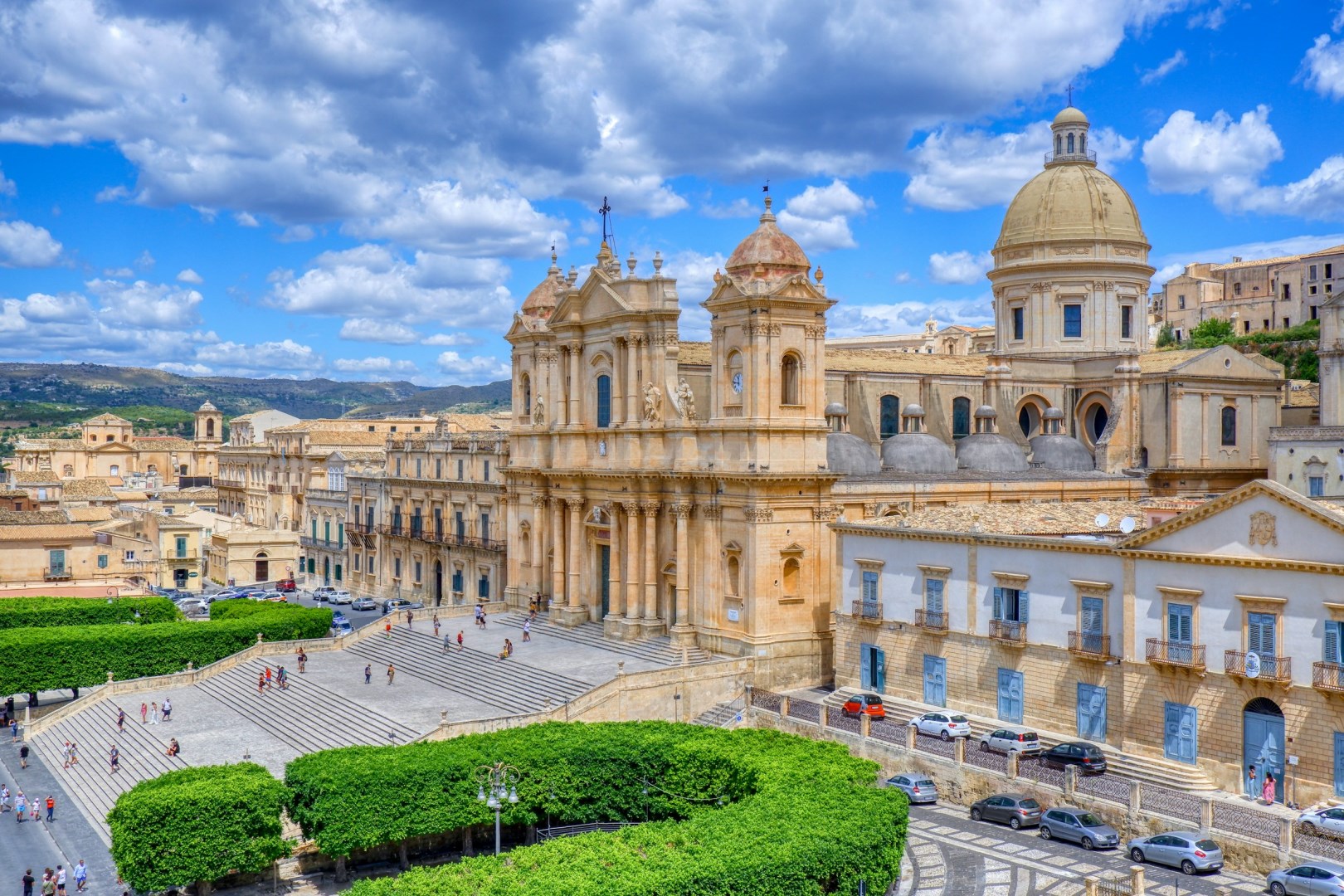
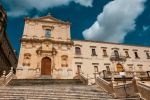
Noto is a hilltop city in southeastern Sicily, know for its carefully planned historic center and extensive use of warm-colored local limestone. Its main streets and squares are lined with churches, monasteries, palaces, and civic buildings whose carved facades create a unified architectural character. Corso Vittorio Emanuele forms the principal route through the historic center, connecting important spaces including Piazza Municipio and Piazza XVI Maggio. Beyond the built-up area, the surrounding landscape includes olive groves, almond trees, citrus orchards, and Mediterranean scrub, while the coast and nature reserves of southeastern Sicily are within reach.
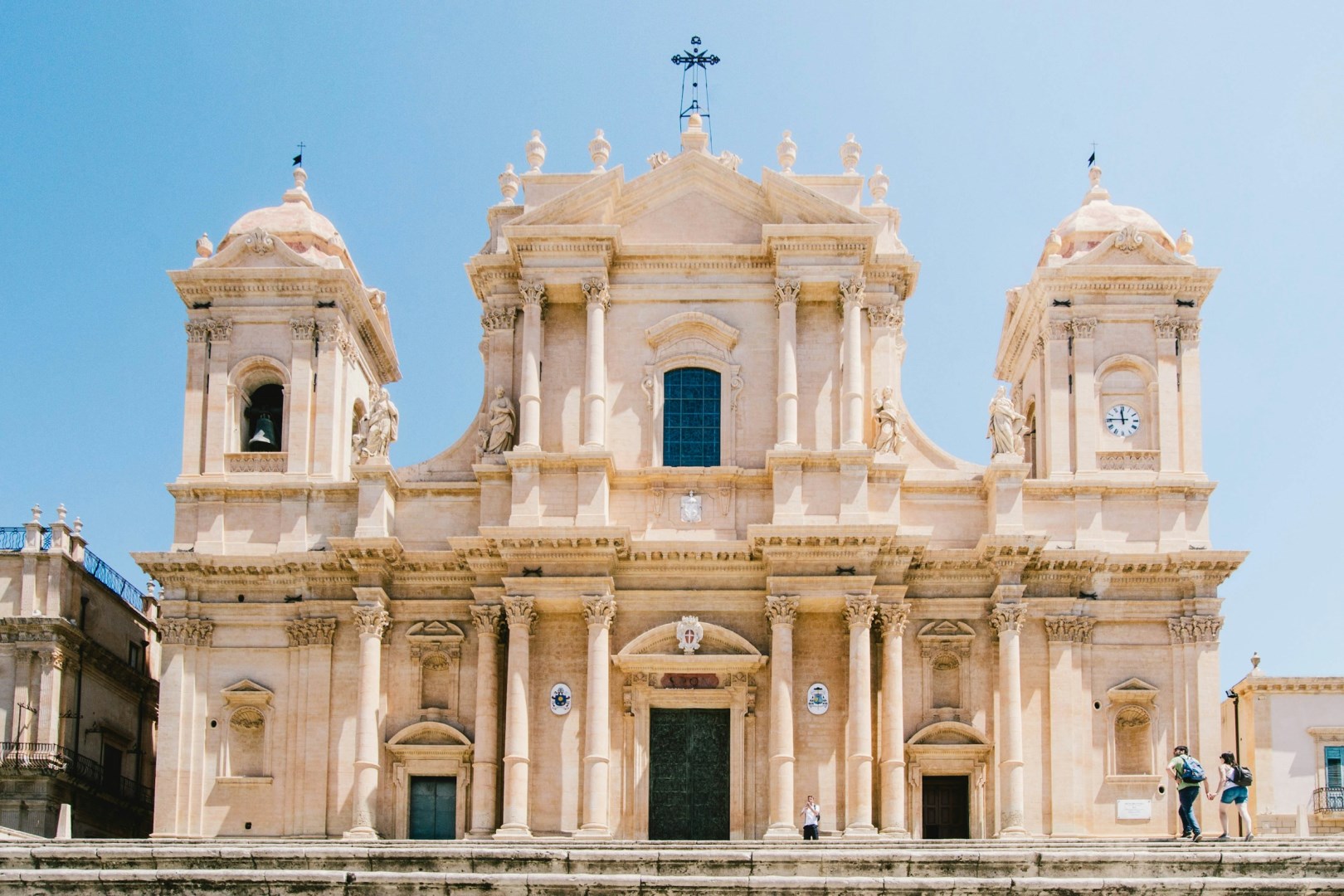
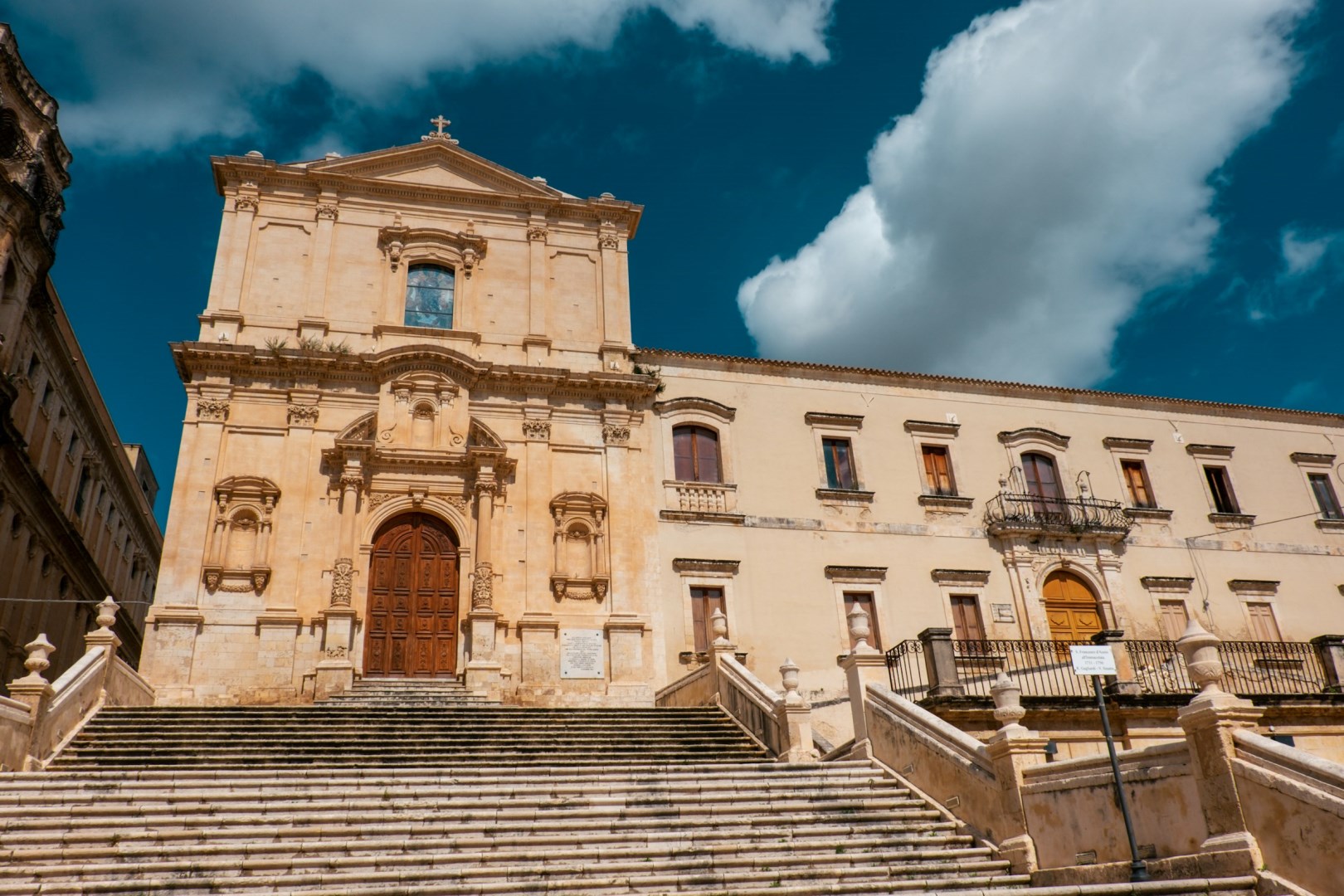
Noto’s cultural identity is closely associated with Sicilian Baroque architecture and the traditions of southeastern Sicily. The Cathedral of San Nicolò dominates Piazza Municipio, while the Church of San Francesco d’Assisi, the Church of Santa Chiara, and Palazzo Nicolaci add to the concentration of ornate buildings along the historic streets. Palazzo Nicolaci is particularly noted for its carved balconies supported by figures and decorative motifs. The city is also known for its religious festivals, including the Infiorata, when artists create large floral designs along Via Corrado Nicolaci. Local traditions combine Catholic celebrations with crafts, food, and community events.
The historic center is part of the UNESCO World Heritage property covering the late Baroque towns of the Val di Noto, recognized for their coordinated reconstruction and architectural character. Noto’s Cathedral, Palazzo Ducezio, Palazzo Nicolaci, and the churches along Corso Vittorio Emanuele are among its principal landmarks. Outside the city, the Vendicari Nature Reserve protects coastal wetlands, beaches, dunes, and rocky shoreline, providing habitat for migratory birds and other wildlife. The nearby ancient site of Noto Antica preserves remains of the earlier settlement on Mount Alveria, contrasting with the planned streets and architecture of the present city.
Noto’s cuisine reflects southeastern Sicily, combining locally grown produce with traditional island recipes. Almonds are an important agricultural product, while citrus fruits, olives, tomatoes, and vegetables are widely used in local cooking. Sicilian sweets such as almond-based pastries, granita, and cassata are also closely associated with the region. Noto is particularly known for its almond granita, often served with a brioche. Another distinctive detail is the local limestone itself: its warm golden tone changes in appearance with the light and gives the city’s churches and palaces a consistent visual character that is difficult to separate from Noto’s architectural identity.
Other Popular Destinations in Italy