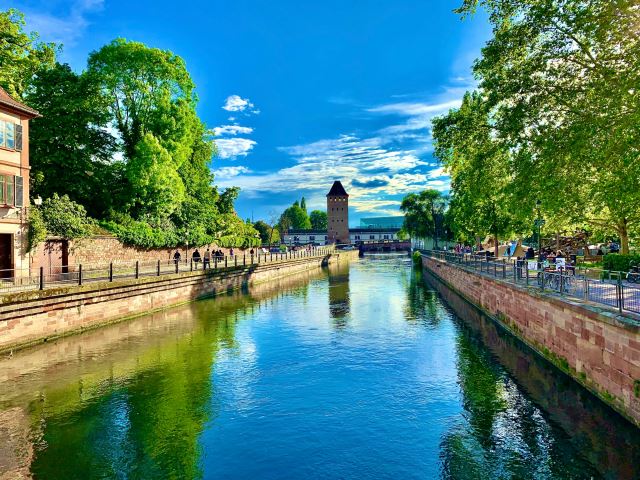


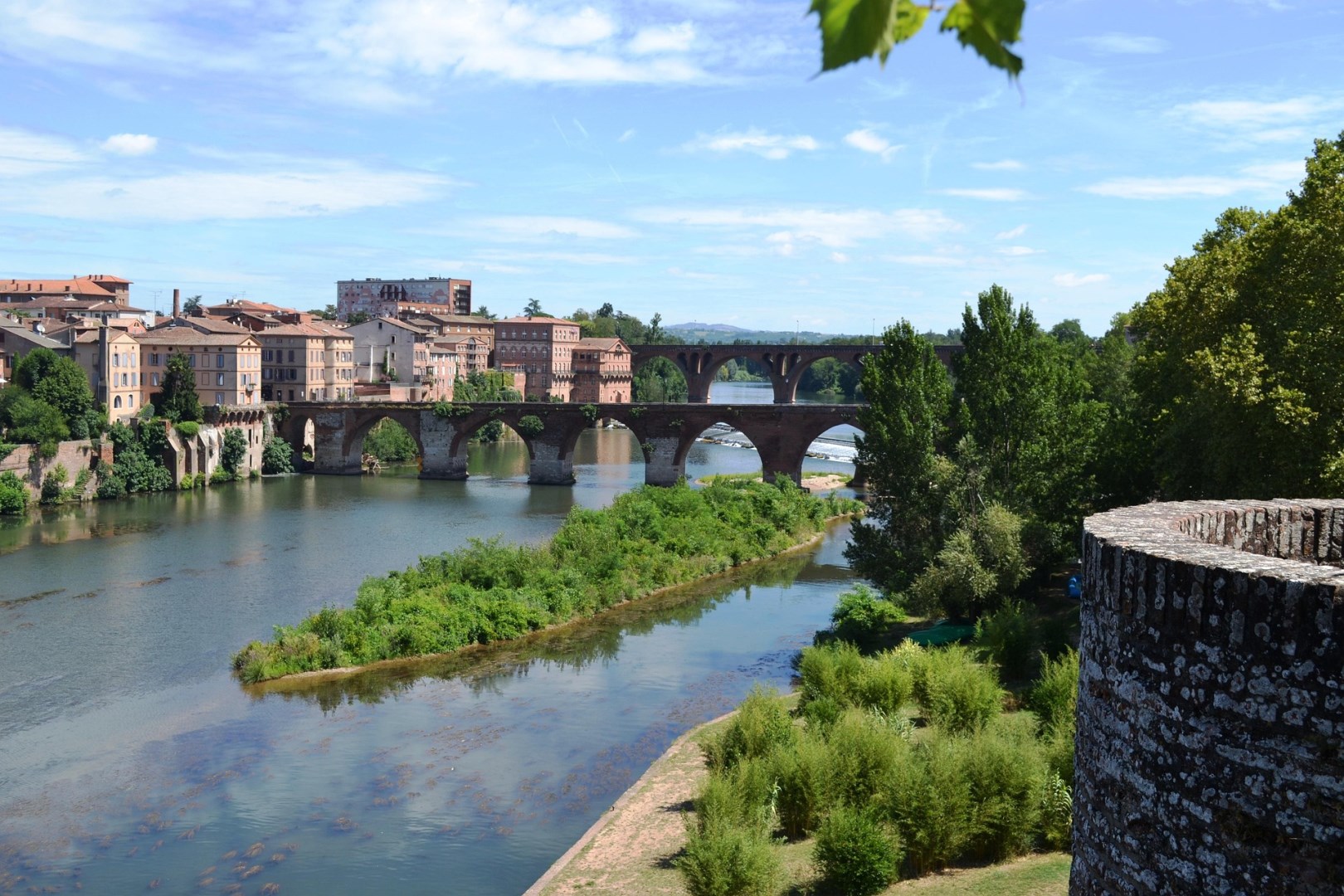
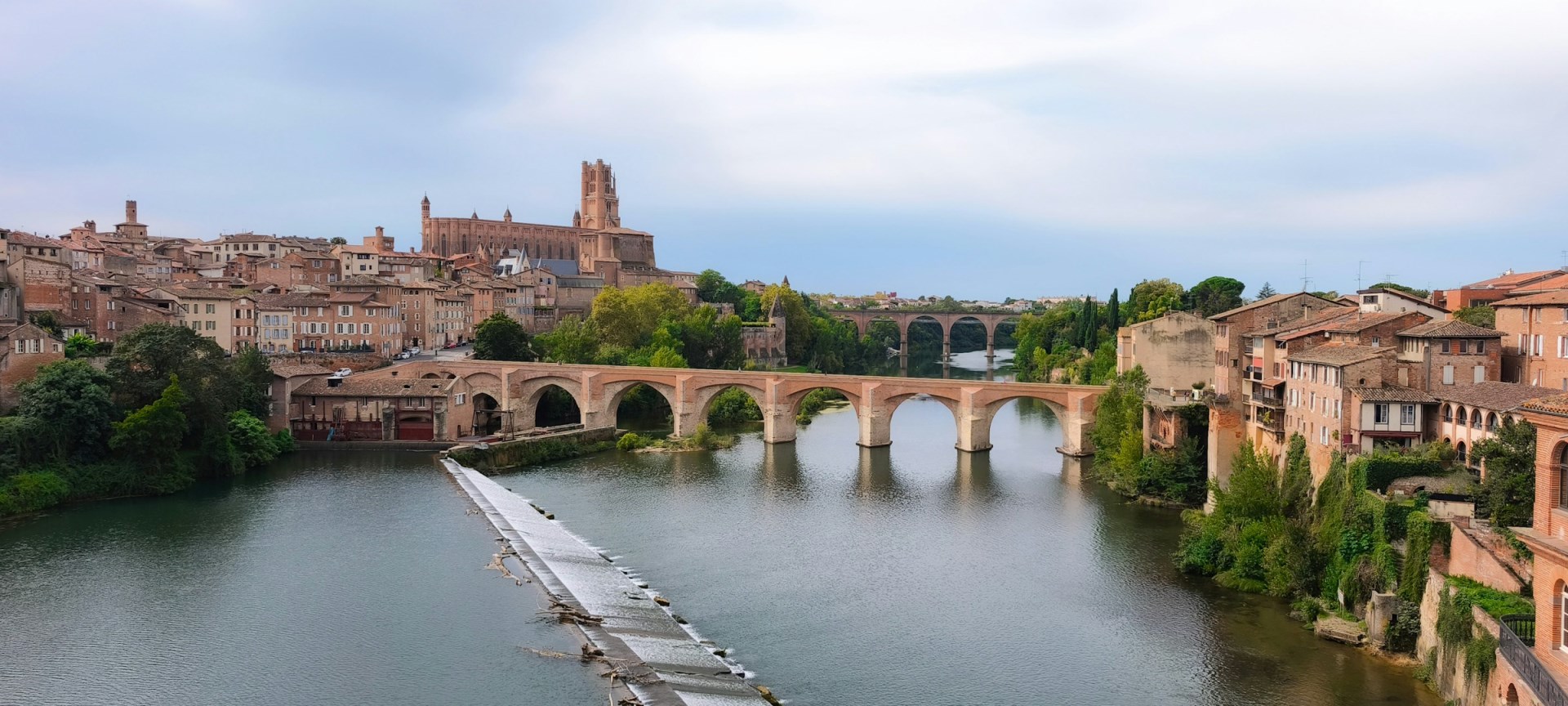
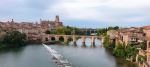
Albi is a city on the River Tarn in southwestern France, known for its distinctive red-brick architecture and compact historic centre. Its Episcopal City, a UNESCO World Heritage Site, brings together the imposing Sainte-Cécile Cathedral, the former Berbie Palace, the Saint-Salvi quarter, and the Pont-Vieux. The city is often called “Albi la rouge” because of the warm tones of its brick buildings. Beyond the monuments, Albi has riverside paths, public gardens, market streets, and neighbourhoods of narrow lanes that reveal a quieter side of the city away from its major landmarks.
Albi's history is closely linked to the power of its bishops and to the religious conflicts that shaped the wider region. The fortified Sainte-Cécile Cathedral and Berbie Palace form the centre of the historic Episcopal City, while the Saint-Salvi collegiate church and cloister preserve another important part of the old town. Albi is also associated with the cultivation and trade of pastel, a plant used to produce a blue dye that contributed to the wealth of the region. The city's cultural identity is further connected with Henri de Toulouse-Lautrec, who was born in Albi and is commemorated by a major museum in the Berbie Palace.
The main attractions are concentrated around the old city and the banks of the Tarn. Sainte-Cécile Cathedral is notable for its fortress-like exterior and richly decorated interior, while the Berbie Palace contains the Toulouse-Lautrec Museum and gardens overlooking the river. The Pont-Vieux crosses the Tarn beside the historic centre, and the Saint-Salvi cloister provides a quieter architectural setting nearby. Along the river, walking routes and green spaces offer different views of the brick-built city. Outside the centre, the Tarn Valley provides access to vineyards, countryside, and historic villages associated with the Albigeois area.
Albi's food reflects the traditions of Occitanie and the surrounding Tarn countryside. Local markets offer regional produce, cheeses, cured meats, vegetables, and products made with the area's characteristic pink garlic. Cassoulet is an important regional dish, although Albi lies within a wider culinary area where recipes vary between towns. The city is also associated with Gaillac wines, produced in vineyards along the Tarn northeast of Albi. A distinctive local detail is the continuing presence of pastel in regional culture: the plant's blue dye helped shape the area's history, and pastel-based products remain part of local crafts and commerce.
Other Popular Destinations in France