




Holy Island, also known as Lindisfarne, is a tidal island off the Northumberland coast in northeast England. It is connected to the mainland by a causeway that is covered by the sea at high tide, making careful tide planning essential for access. The island’s compact village contains stone cottages, small shops, churches, and the remains of Lindisfarne Priory. Lindisfarne Castle stands on a rocky hill above the harbor, while beaches, dunes, salt marshes, and open shoreline surround the settlement. The island’s changing relationship with the sea is central to both its landscape and daily life.
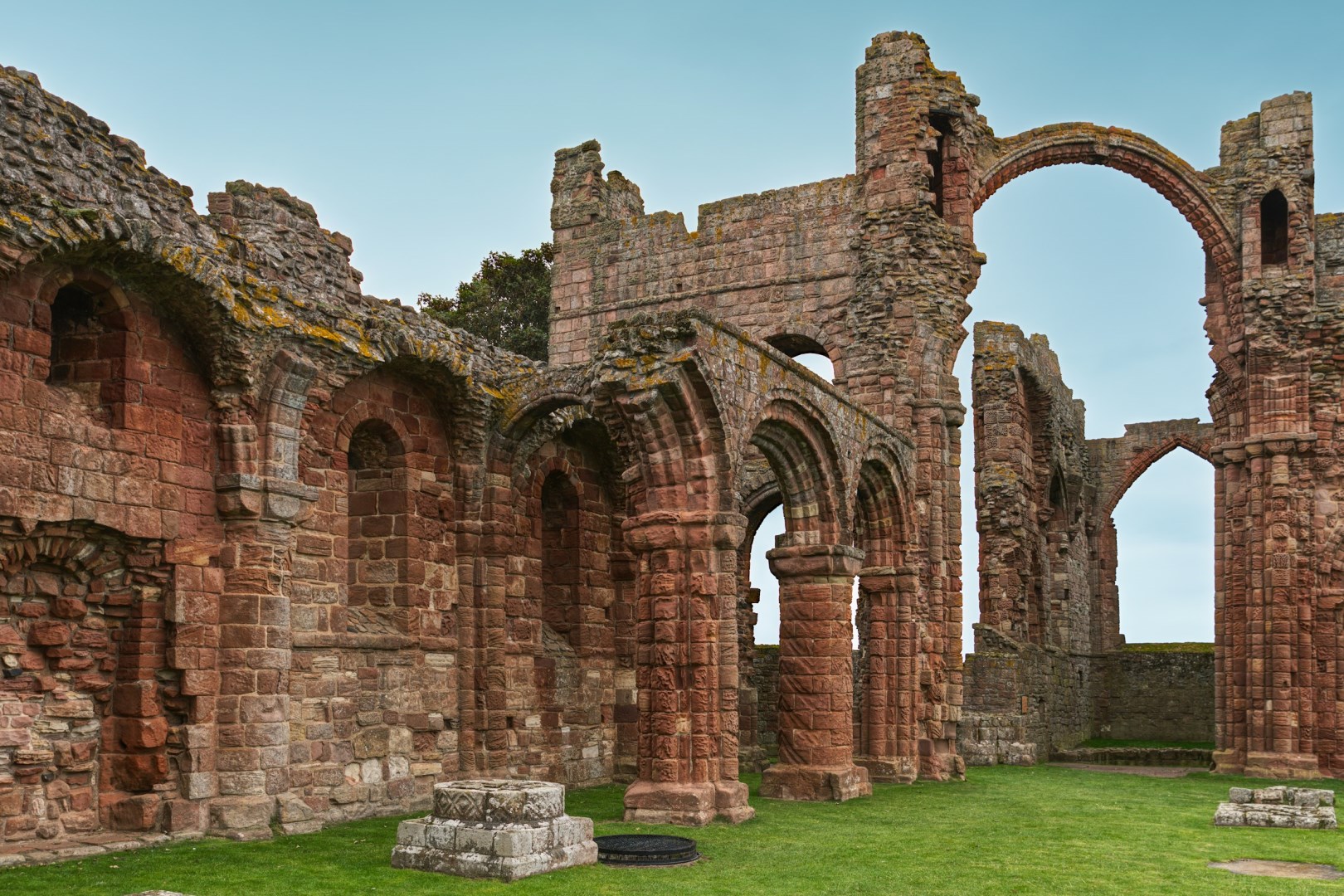
Holy Island is an important center of Christian heritage in northern England. Saint Aidan established a monastery here, and Saint Cuthbert later became closely associated with the island. Lindisfarne Priory developed as a major religious community, and the surviving ruins include the distinctive stonework of its church and monastic buildings. The island is also associated with the Lindisfarne Gospels, an illuminated manuscript created by monks at the monastery. Religious traditions remain important, with the island continuing to attract pilgrims. Its history is also reflected in the village church of St Mary the Virgin and the remains of medieval buildings scattered around the priory.
Lindisfarne Priory is the island’s principal historic site, with its dramatic stone ruins standing above the surrounding village and coastline. Lindisfarne Castle occupies a former defensive position on a rocky outcrop and contains rooms restored as a country house. The surrounding shore includes sandy beaches, dunes, mudflats, and salt marshes that support a range of coastal wildlife. The Lindisfarne National Nature Reserve is particularly important for birds, with the tidal habitats providing feeding and resting areas for migratory species. Walking routes around the island reveal changing views of the mainland, Farne Islands, North Sea, and exposed coastal landscape.
Holy Island has a small food scene shaped by Northumberland’s coastal and agricultural traditions. Seafood, locally produced meats, cheeses, breads, and seasonal produce feature in the island’s cafes, pubs, and shops, while traditional English baking is common. Lindisfarne mead is a distinctive local product made from fermented honey and associated with the island’s historic monastery, although the modern drink is produced by a local business rather than by the priory itself. Another unusual feature is the island’s causeway, which becomes impassable during high tides. Safe crossing times are published locally, and visitors must use the designated refuge points if unexpectedly caught by rising water.
Other Popular Destinations in England


