



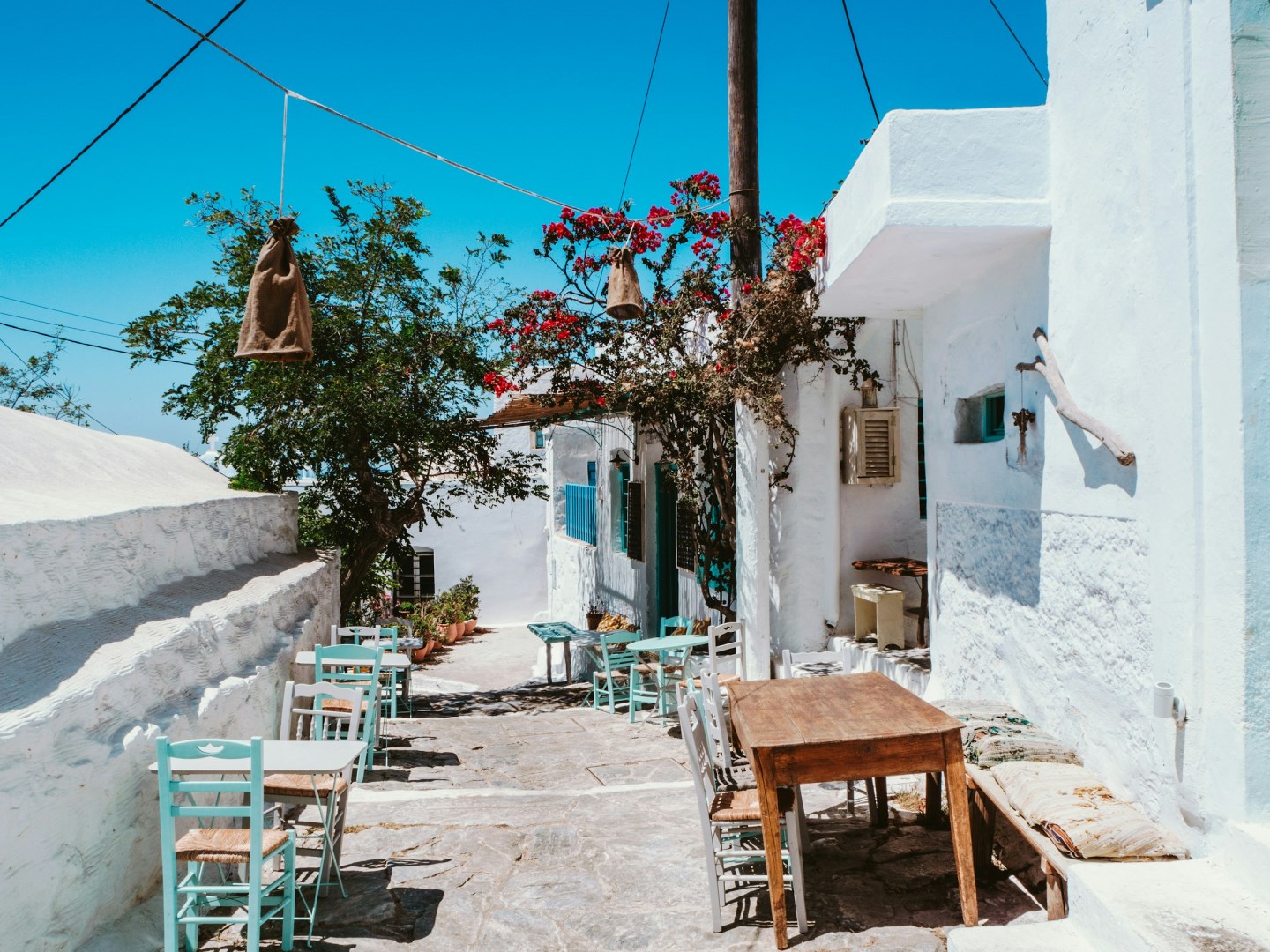
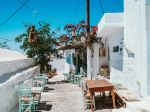
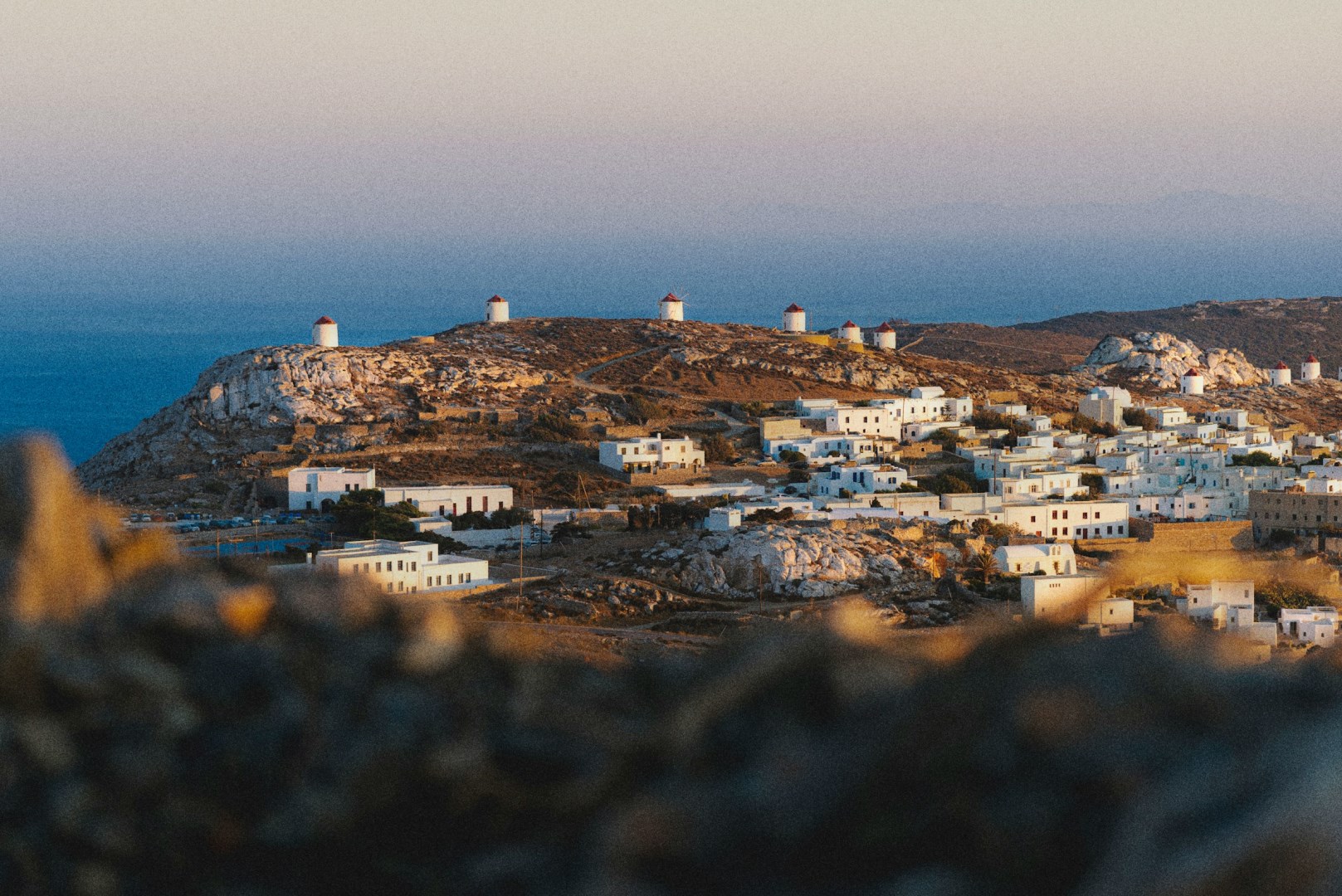
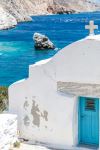
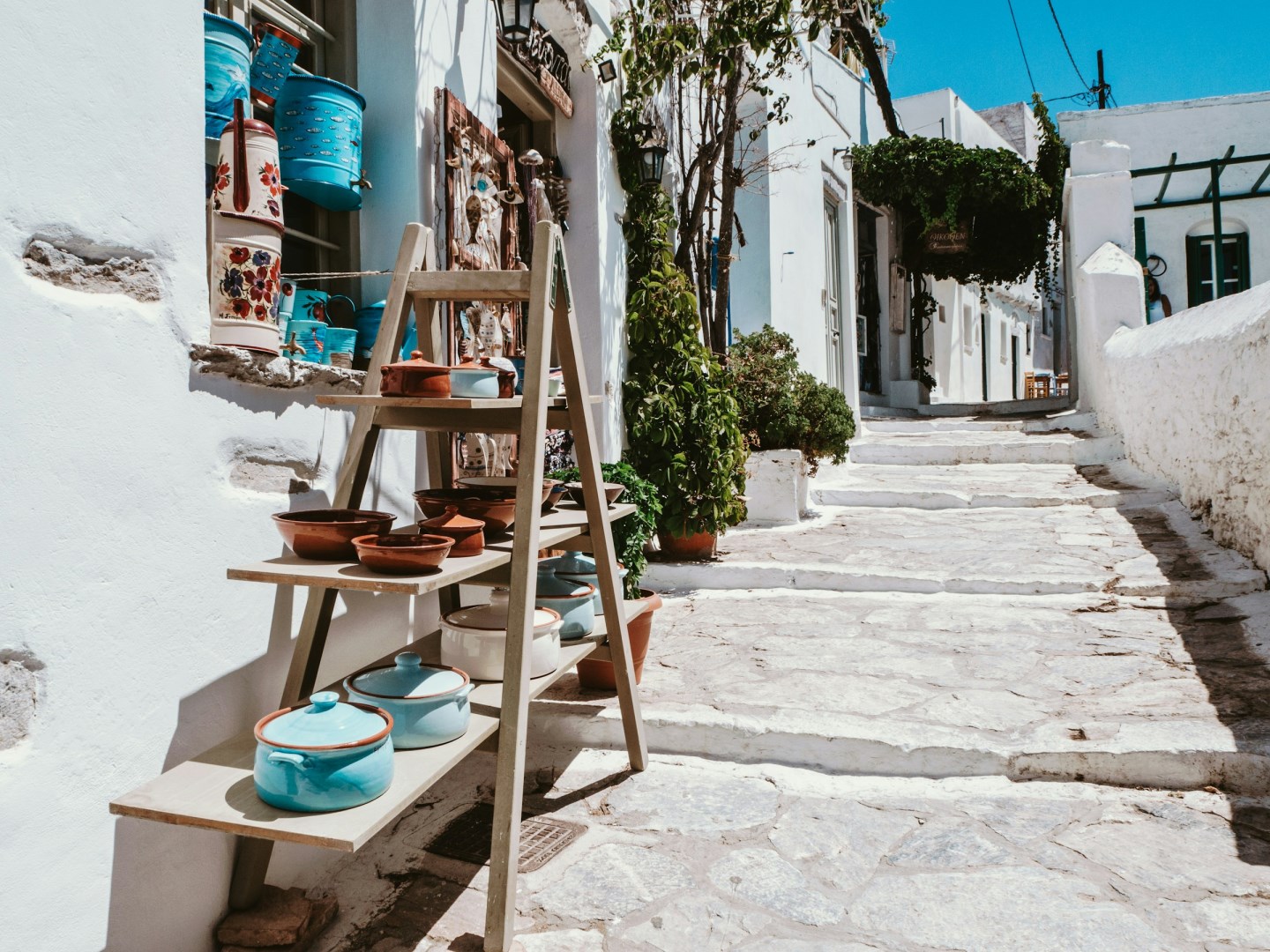
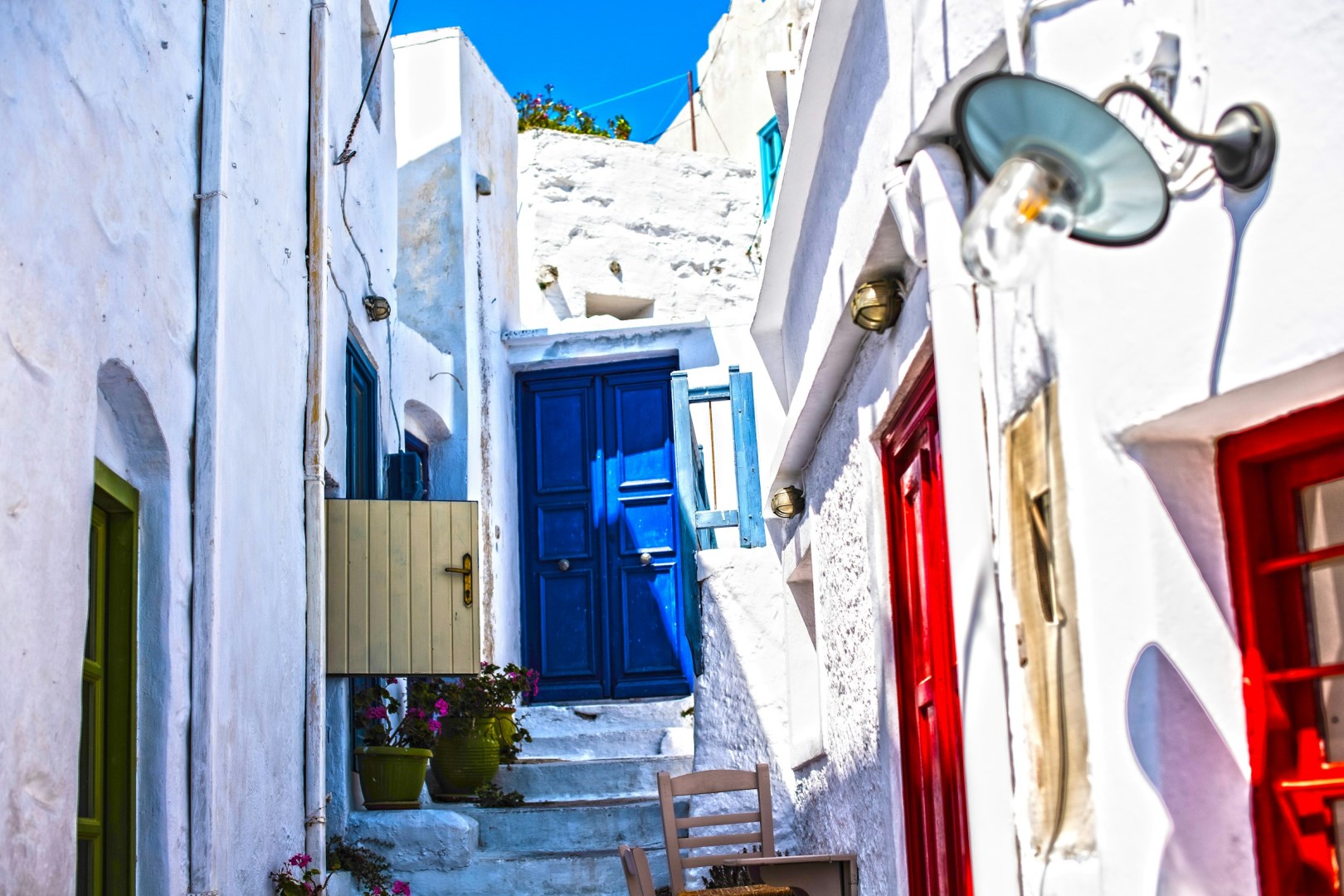
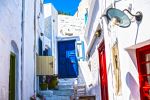
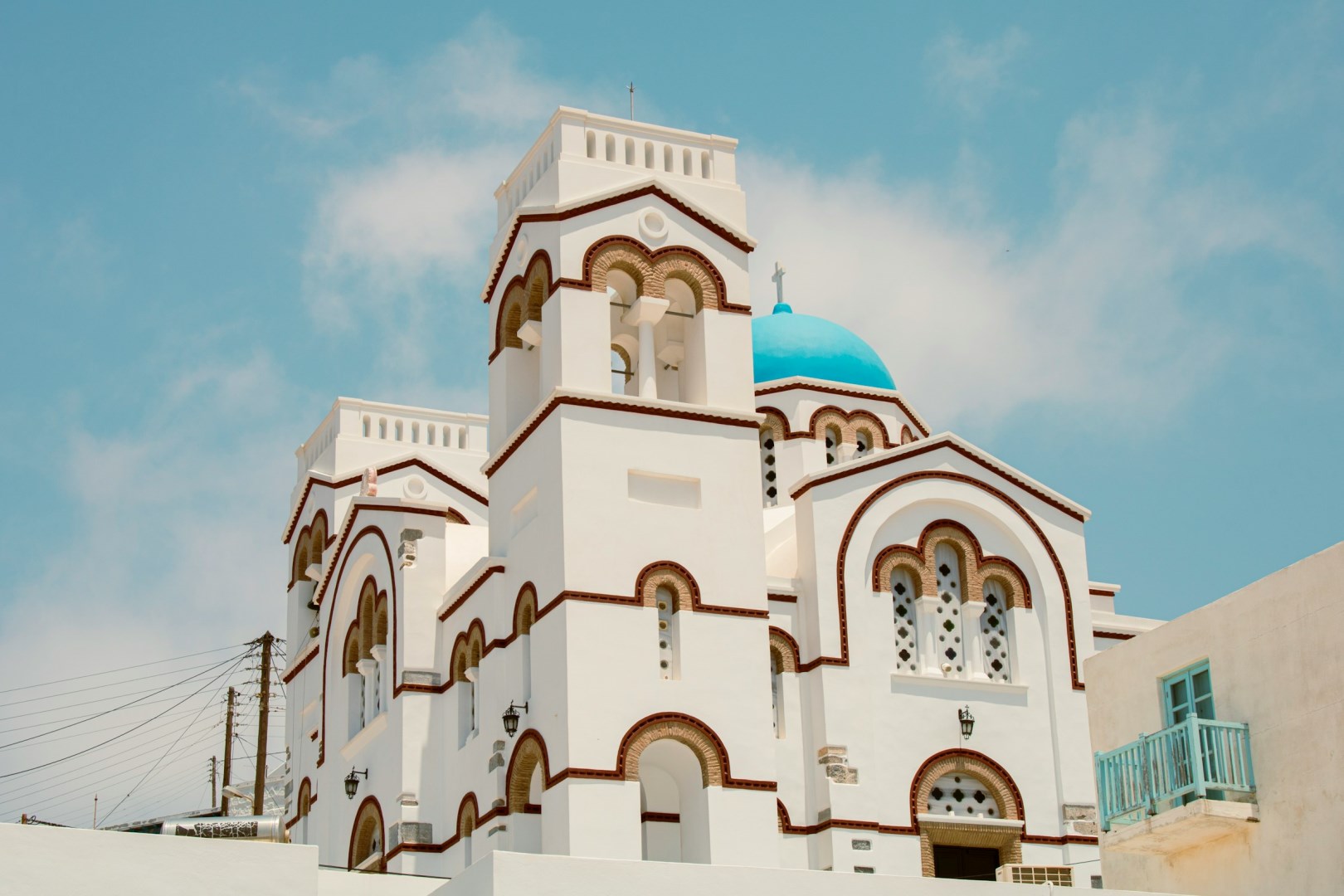
Amorgos is an island in the eastern Cyclades, known for its steep rocky coastline, whitewashed villages, stone paths, and broad views across the Aegean Sea. Unlike flatter Cycladic islands, much of Amorgos is mountainous, with Mount Krikelos reaching 821 metres and deep valleys separating its settlements. The main ports are Katapola and Aegiali, while Chora, the island’s inland capital, is built around narrow lanes, small squares, windmills, and traditional Cycladic houses. The island became widely recognized after appearing as a filming location for the French movie The Big Blue.
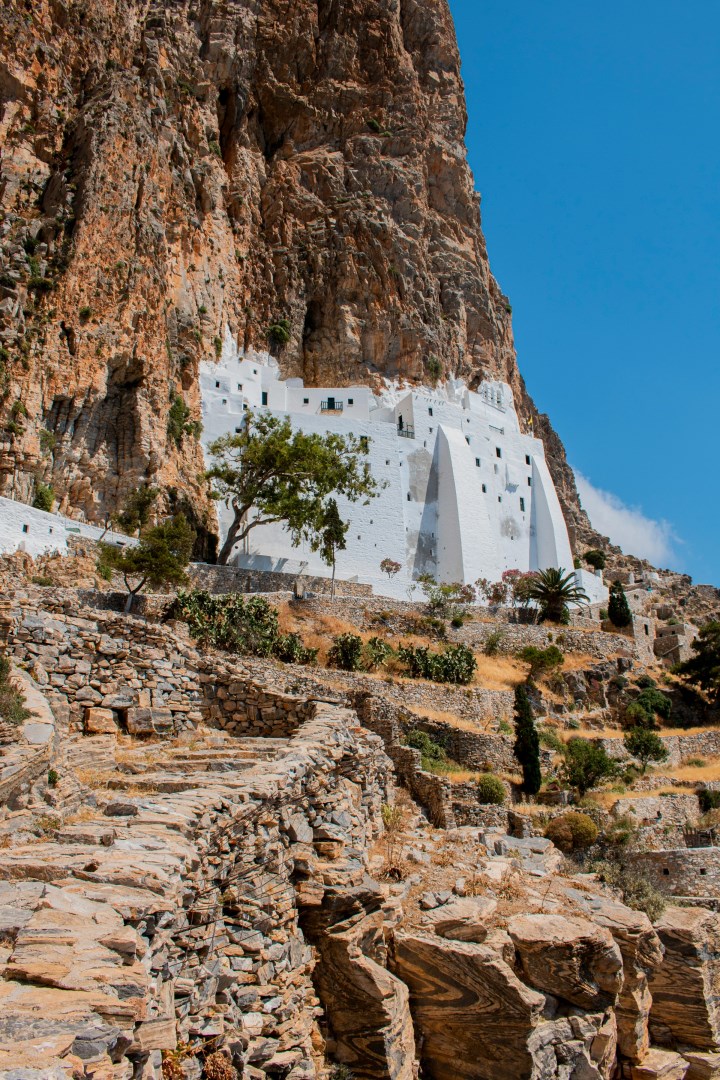
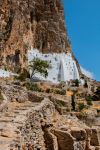
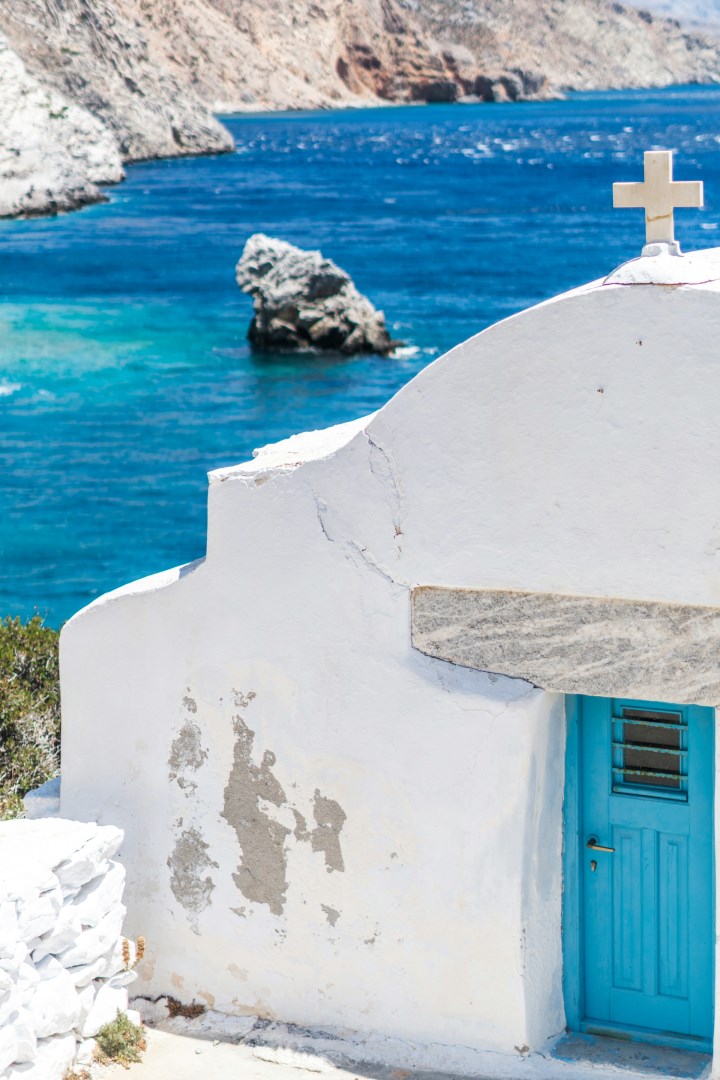
Amorgos has a long cultural history associated with ancient settlements at Minoa, Arkesine, and Aegiali. One of its most important religious landmarks is the Monastery of Hozoviotissa, built directly into a steep cliff above the Aegean and dedicated to the Virgin Mary. Local traditions remain closely connected to village festivals, religious celebrations, music, and communal meals. Katapola hosts a distinctive festival centered on baked raki, a sweetened drink prepared with raki, herbs, spices, and sometimes honey. Traditional windmills, chapels, stone houses, and old footpaths add further character to the island’s villages.
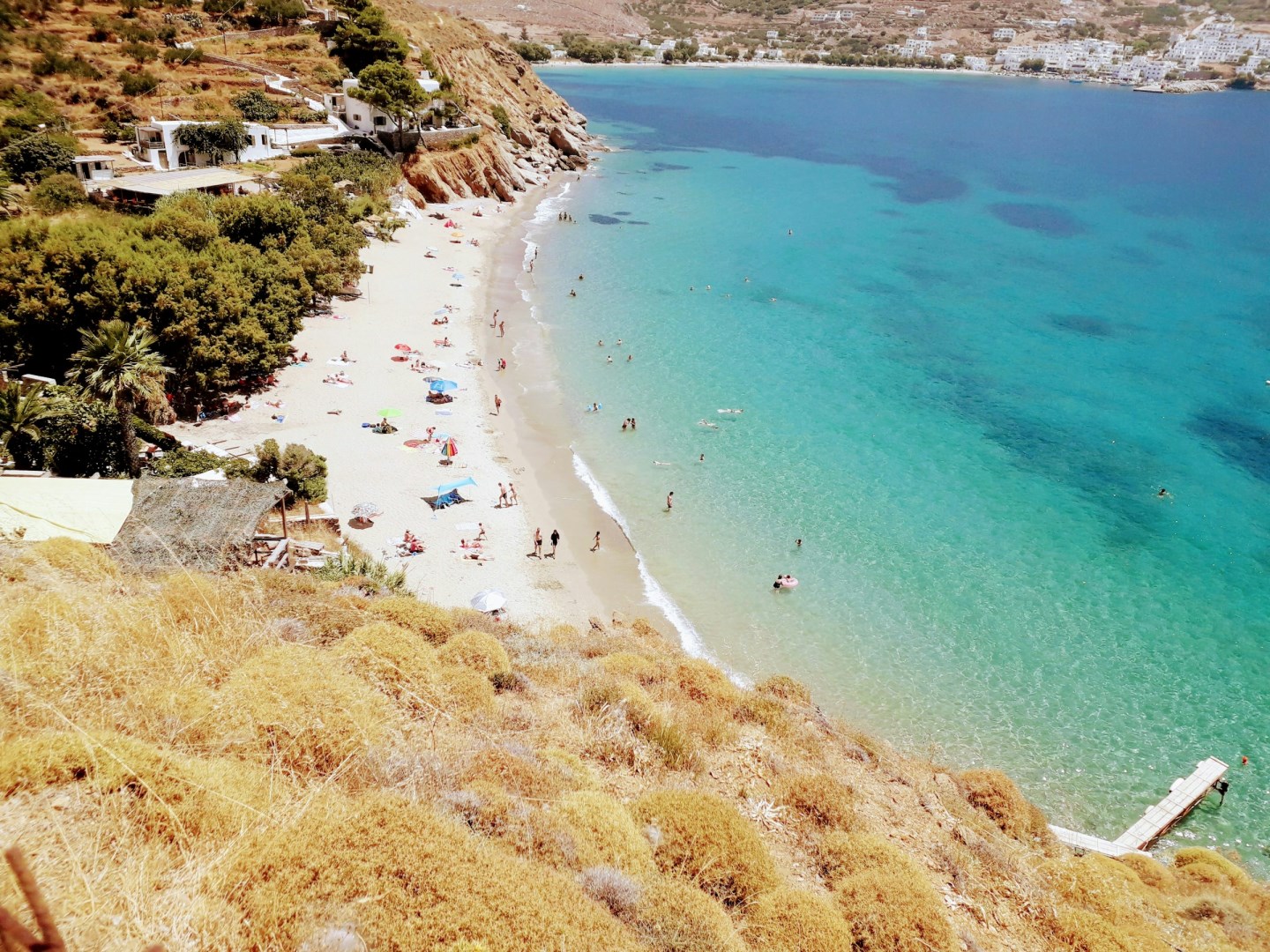
The coastline is marked by cliffs, coves, rocky headlands, and beaches reached by foot or boat. Agia Anna is one of the island’s best-known beaches and consists of small pebbled coves beneath the Hozoviotissa Monastery, while Mouros has clear water surrounded by large rock formations. Aegiali has Amorgos’s largest sandy beach and provides access to trails leading toward Levrossos, Lagada, and Tholaria. The island also has an extensive network of hiking routes, including Palia Strata, which connects Chora with the monastery and Aegiali through mountainous terrain.
Amorgos has a distinctive cuisine shaped by livestock farming, fishing, and small-scale agriculture. Patatato, a traditional dish of lamb and potatoes cooked in a red sauce flavored with cinnamon, is commonly associated with weddings and village festivals. Local cheeses include amorgiano, malaka, and xinotyro, while katsouni, a local pea variety, is used to make Amorgian fava and pea fritters. Thyme honey is another notable product, and psimeni tsikoudia, a warm raki drink flavored with honey and spices, is closely associated with local hospitality. These foods remain part of the island’s village celebrations and everyday dining.
Other Popular Destinations in Greece


