
Africa | South Africa | Langebaan
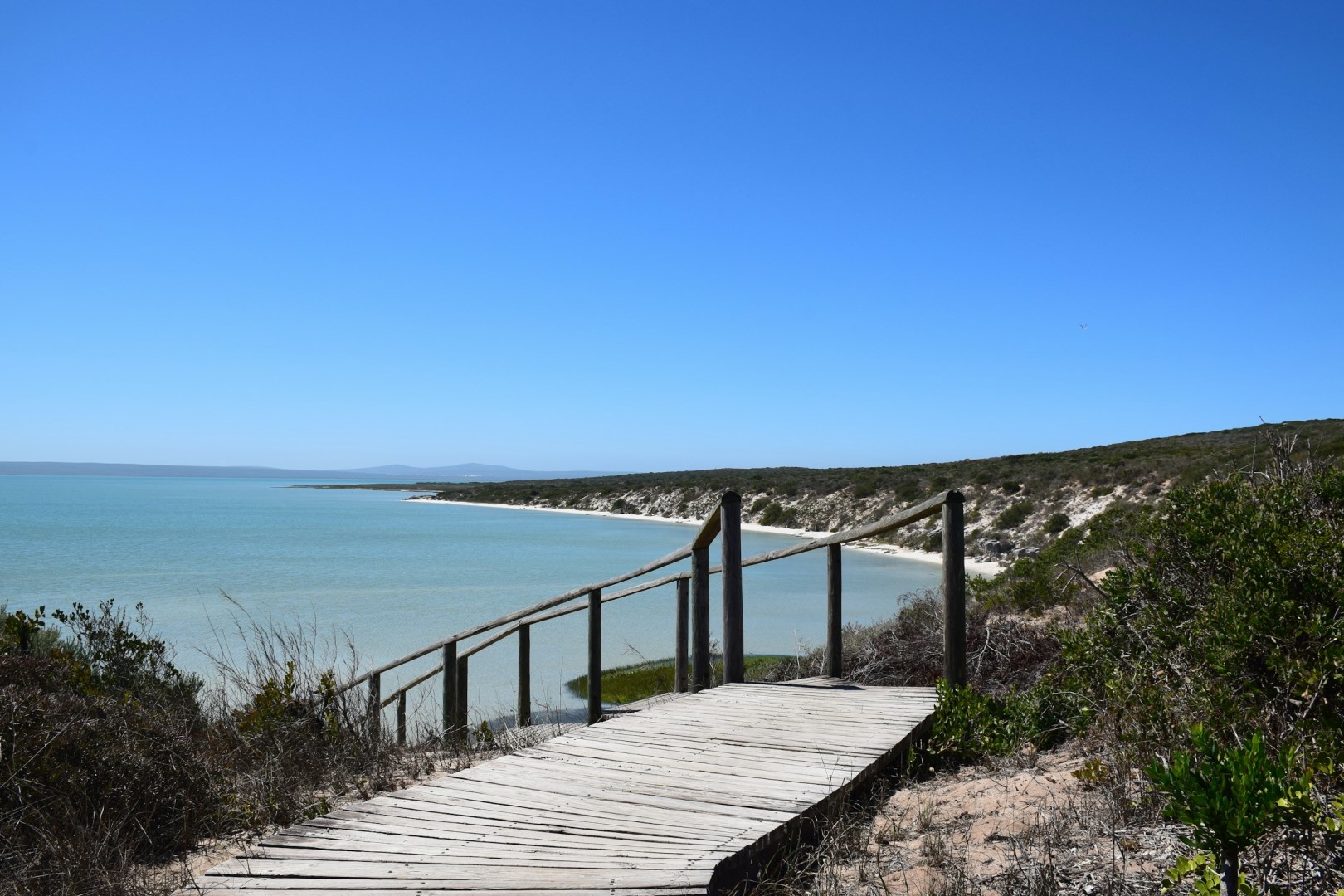
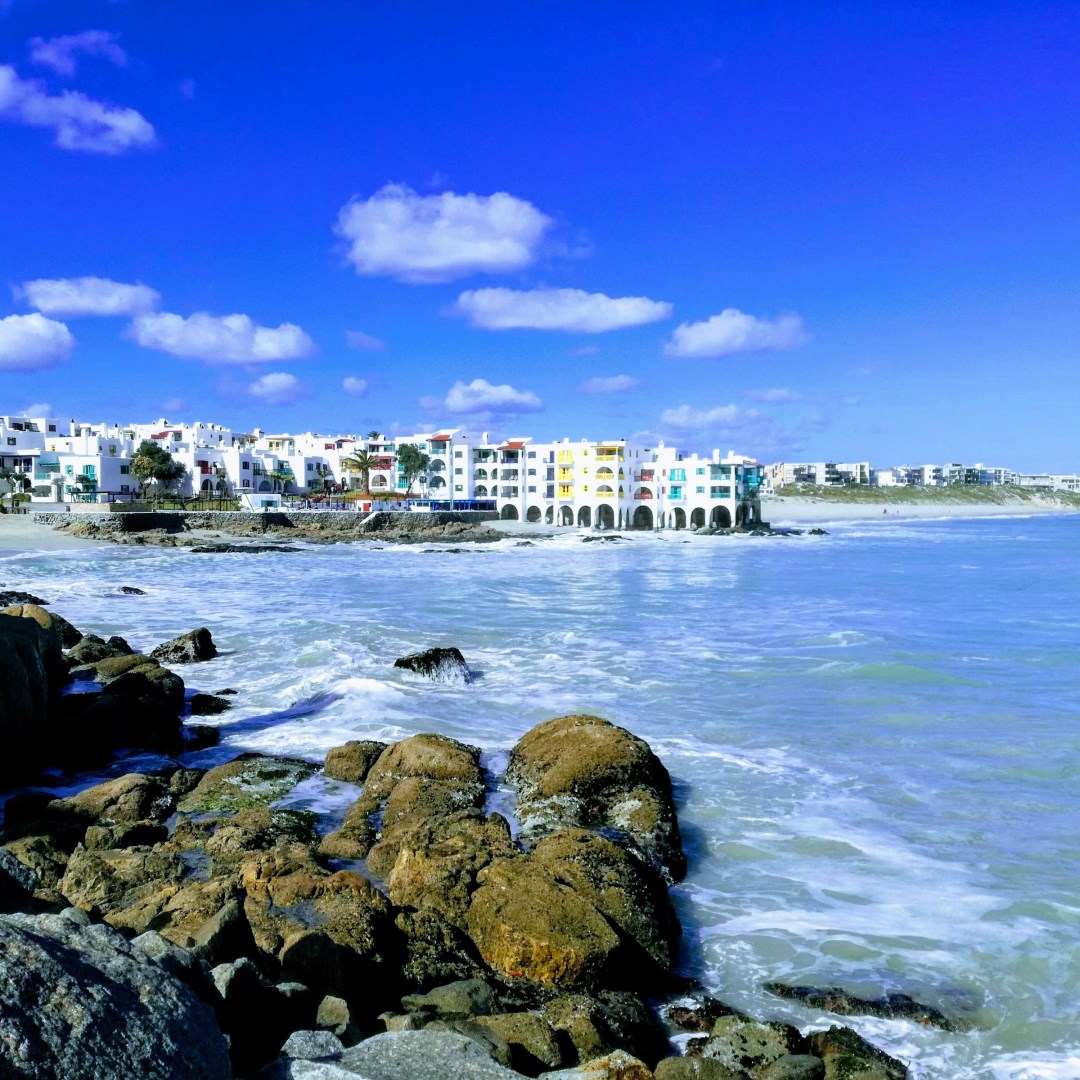
Langebaan is a coastal town in South Africa’s Western Cape, set along the eastern shore of Langebaan Lagoon about 120 kilometres north of Cape Town. The lagoon forms the town’s defining feature, with sheltered blue-green water contrasting with the dry strandveld vegetation of the Cape West Coast. Langebaan adjoins West Coast National Park and serves as its nearest town and northern gateway. Its protected waters are widely used for sailing, kayaking and kiteboarding, while the surrounding region combines residential neighbourhoods and holiday facilities with extensive areas managed for wetland, marine and terrestrial conservation.
Langebaan developed around the resources and maritime traditions of the West Coast, a region where fishing has long shaped settlement and local food. Its setting also contains evidence of much earlier human presence. Fossilized human footprints discovered near Kraalbaai, commonly called Eve’s Footprints, are represented by a replica at the Geelbek Visitor Centre in West Coast National Park. The wider area retains a strong Afrikaans and fishing-community identity, while nearby Saldanha Bay remains an important working harbour. Traditional West Coast foods, local braais and seafood continue to reflect the close relationship between communities and the Atlantic coast.
West Coast National Park surrounds much of Langebaan Lagoon, protecting salt marshes, strandveld, dunes, wetlands and offshore islands. The lagoon and islands form a Ramsar wetland of international importance and provide habitat for large numbers of migratory wading birds. Kraalbaai has a sheltered sandy shoreline, while Seeberg Viewpoint overlooks the lagoon from a granite outcrop. The park’s Postberg section is known for seasonal displays of indigenous wildflowers. Schaapen Island, just offshore from Langebaan, supports seabirds, and the lagoon itself contains rich populations of marine algae, molluscs, crustaceans and juvenile fish.
Seafood is central to the food culture around Langebaan and the wider Cape West Coast. Snoek, mussels and locally caught fish commonly appear in regional cooking, often prepared over open fires or served with simple accompaniments. Bokkoms, small mullet that are salted and dried in bunches, are a particularly distinctive West Coast specialty. The lagoon is also notable because no river flows into it, giving it an entirely marine character with relatively stable salinity. Its extensive salt marshes account for a significant share of South Africa’s total salt-marsh habitat, adding ecological importance to a landscape closely linked with recreation and fishing.
Other Popular Destinations in South Africa