



East and Southeast Asia | Indonesia | Mount Bromo
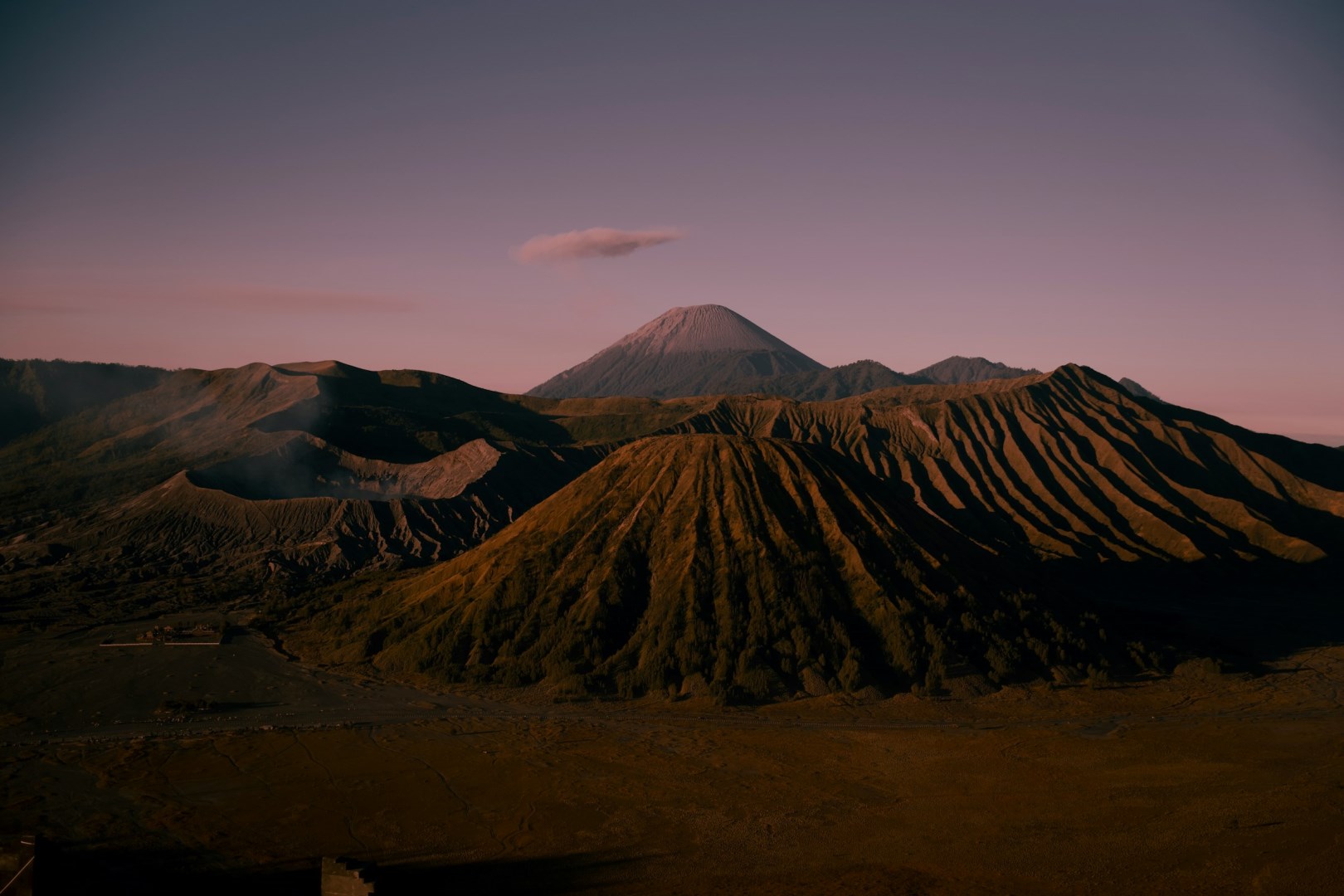
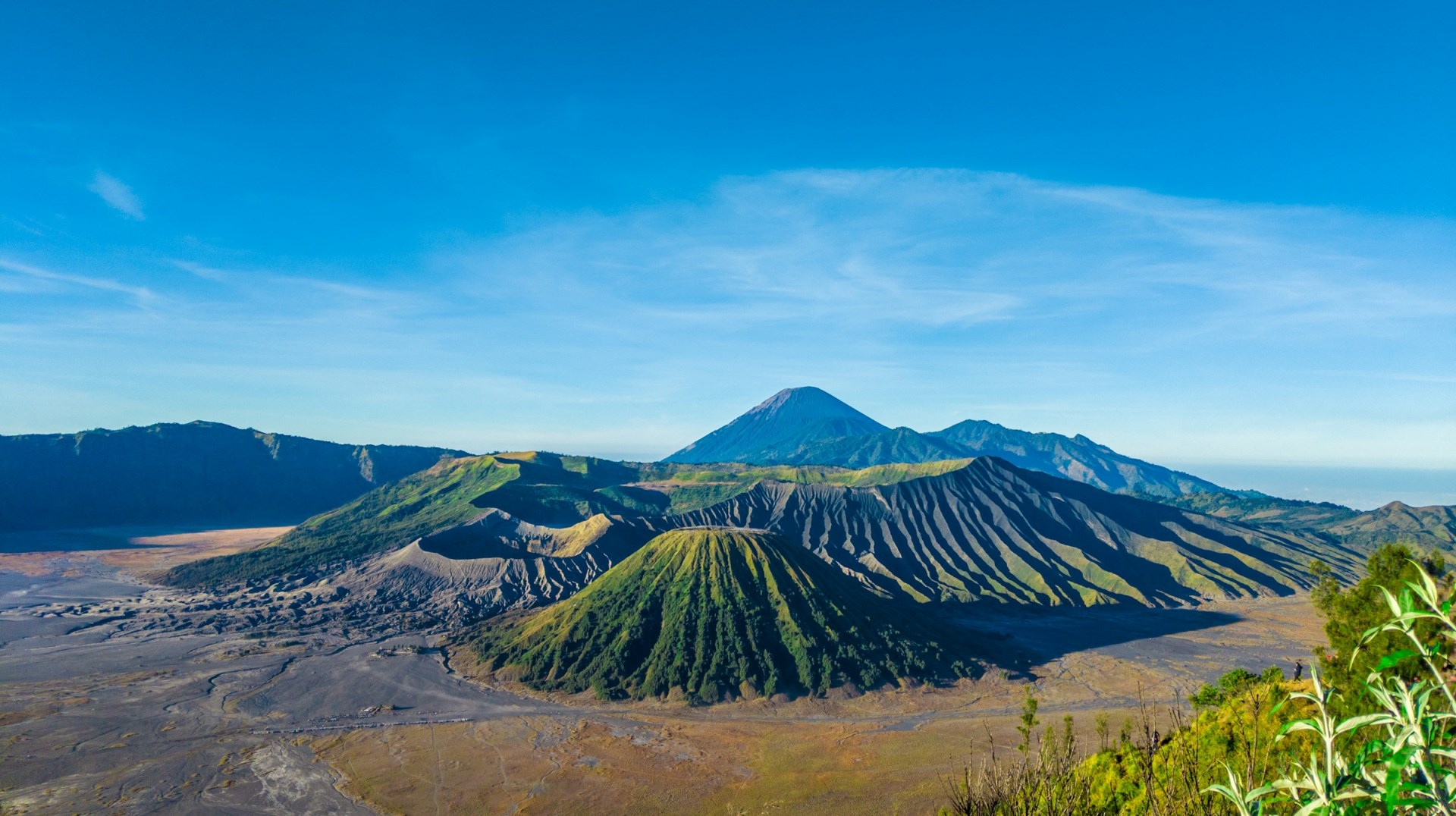
Mount Bromo is an active volcano in East Java, located within Bromo Tengger Semeru National Park. Rising to 2,392 meters, it stands inside a vast volcanic caldera surrounded by the Tengger Sea of Sand and several other volcanic peaks. The mountain is part of one of Java’s most distinctive highland landscapes, where dark volcanic terrain contrasts with green hills and open savanna. Its accessible crater and surrounding viewpoints have made Mount Bromo an important destination for visitors exploring East Java, with routes commonly approaching from villages such as Cemoro Lawang, Tosari, and Ngadas.
The area around Mount Bromo is closely associated with the Tenggerese people, an Indigenous community whose Hindu faith and traditions remain an important part of local identity. Pura Luhur Poten, a Hindu temple at the foot of the volcano, serves as an important place of worship. The Tenggerese also hold Yadnya Kasada, a major religious ceremony in which offerings such as vegetables, fruit, flowers, livestock, and money are presented at the volcano’s crater. Nearby Ngadas is another Tenggerese community where traditional customs and highland village life remain visible.
The landscape around Mount Bromo includes the Tengger Sea of Sand, Mount Batok, savanna, volcanic ridges, and views toward Mount Semeru, Java’s highest mountain. Visitors can cross the sand sea on foot or by horseback before climbing the stairs toward Bromo’s crater rim. Mount Penanjakan is a well-known viewpoint for seeing the volcanoes and surrounding caldera in the early morning. Other nearby attractions include Madakaripura Waterfall and the savanna areas around Bromo. The park also contains forests, lakes, waterfalls, and other volcanic environments beyond the immediate Bromo area.
Food around Mount Bromo reflects the agricultural traditions of East Java’s highlands, where crops such as potatoes, cabbage, carrots, and onions are grown in the cool mountain environment. Local eateries in villages around the park commonly serve Indonesian dishes suited to the colder climate, including soups, rice dishes, and hot drinks. A distinctive feature of the area is the combination of volcanic geography and active religious traditions: the same landscape that supports farming and tourism also provides the setting for Tenggerese ceremonies. The relationship between the volcano, surrounding villages, and local beliefs remains central to the region’s identity.
