




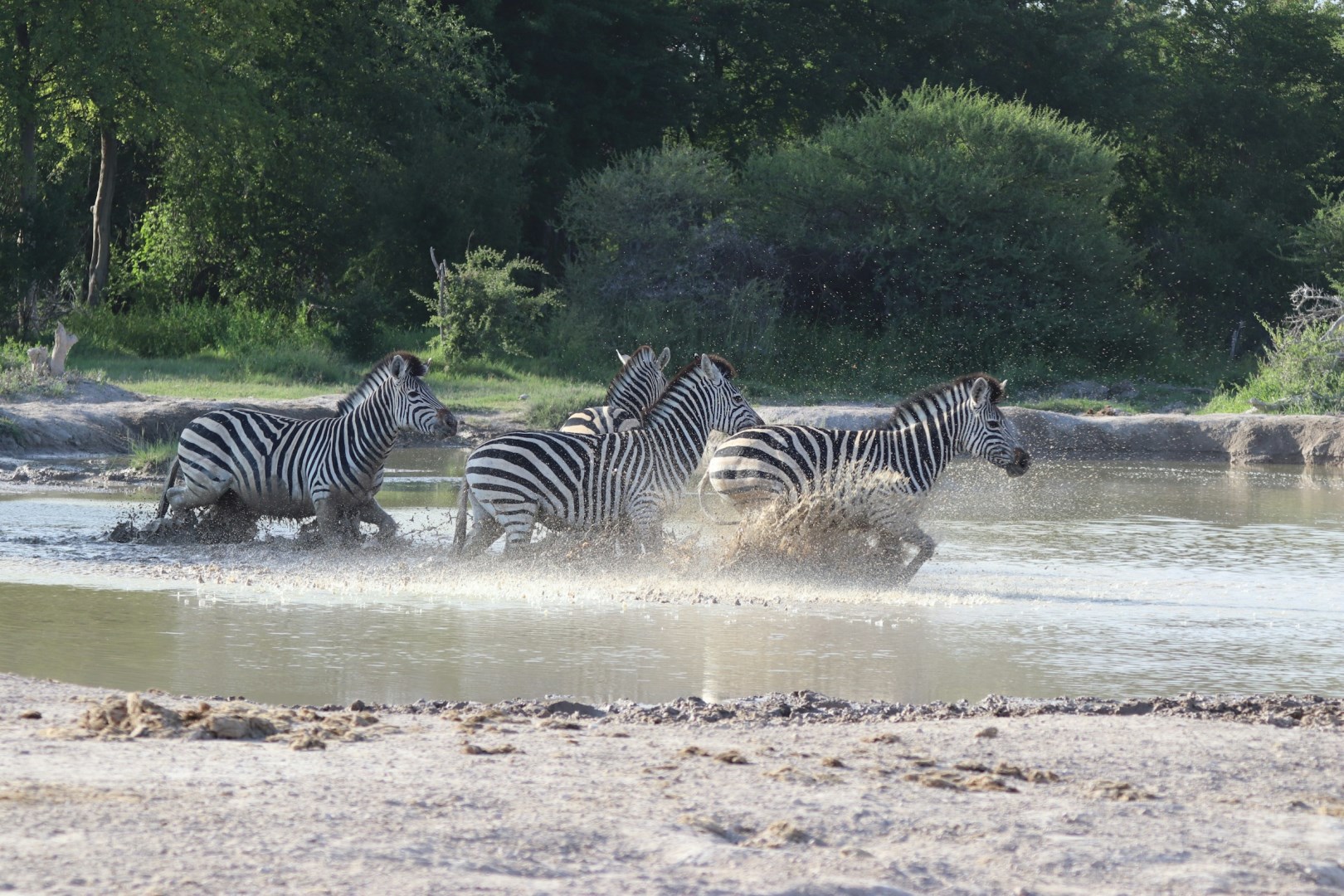
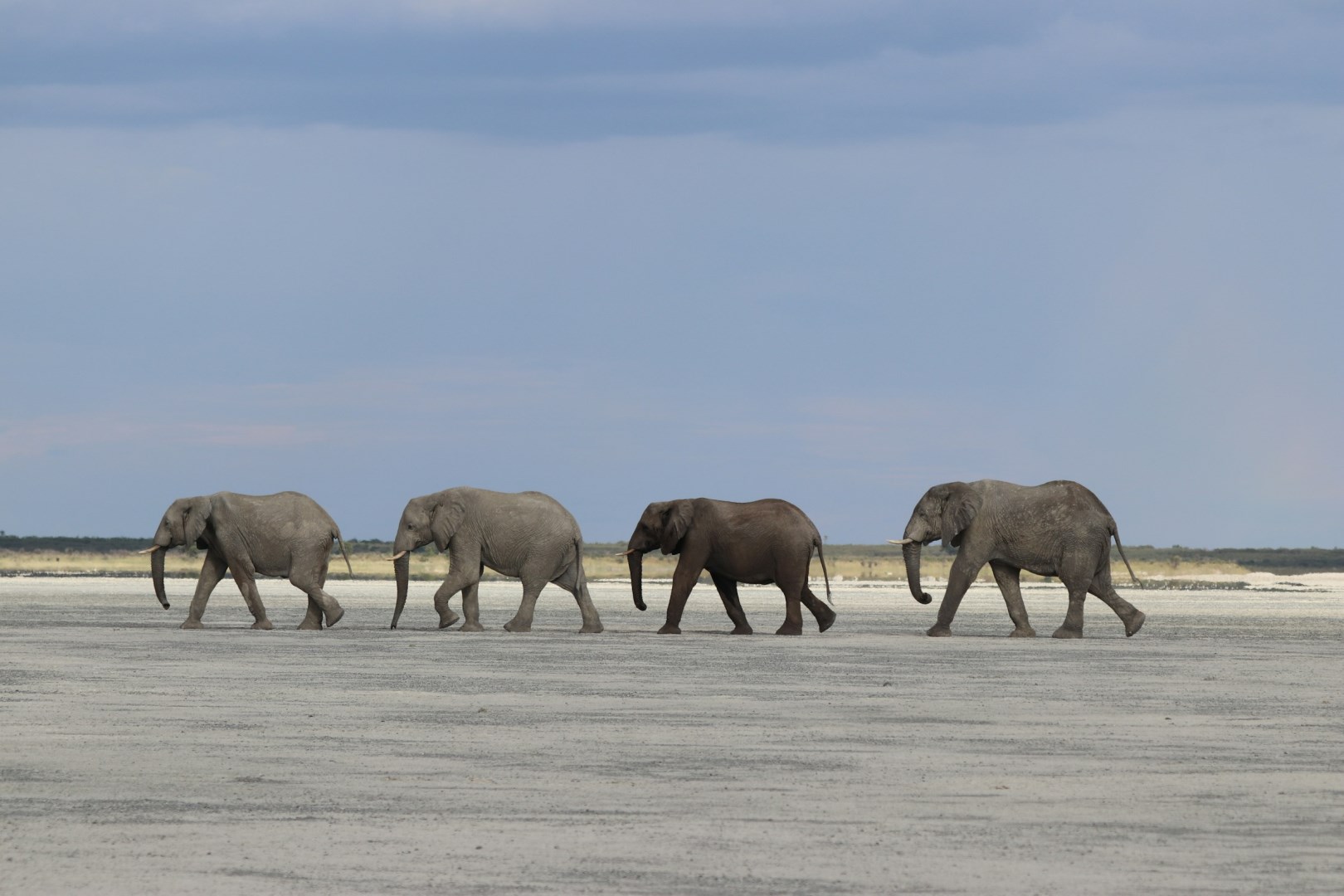
Nxai Pan National Park lies in northern Botswana as part of the wider Makgadikgadi pans landscape, covering about 2,100 square kilometers of grass-covered pans, acacia woodland, and open plains. The park occupies former salt lakes within the ancient Makgadikgadi basin, and its character changes significantly with rainfall. During the wet season, smaller pans hold water and attract large concentrations of wildlife, while the surrounding grasslands support grazing animals. Nxai Pan is crossed by an important zebra migration route and provides habitat for zebra, wildebeest, springbok, giraffe, gemsbok, lion, cheetah, wild dog, and other species.
Wildlife viewing in Nxai Pan varies with seasonal rainfall and animal movements. After good rains, the grasslands provide fresh grazing for large herds of zebra and wildebeest, while predators follow the concentrations of prey. During drier conditions, wildlife gathers around available water sources, including permanent or supplemented water points. The park also supports birdlife associated with its seasonal wetlands and grasslands. Its position along the Nata–Maun road makes it relatively accessible compared with some other remote areas of the Makgadikgadi region, although visitors generally explore the park by four-wheel-drive vehicle.
One of Nxai Pan’s most recognizable landmarks is Baines’ Baobabs, a group of seven large baobab trees beside Kudiakam Pan. The trees are named after explorer and artist Thomas Baines, who recorded and painted them during his travels through the region. Their position on a small raised area beside the pan creates a distinctive landscape of enormous trunks against the open horizon. The surrounding Makgadikgadi landscape also preserves evidence of a much larger prehistoric lake system, while archaeological discoveries indicate long-standing human use of the region. The park therefore combines wildlife habitat with geological and cultural significance.
The vegetation and wildlife of Nxai Pan are closely tied to Botswana’s alternating wet and dry seasons. Rain transforms parts of the park into green grassland and temporary wetlands, supporting grazing herds and attracting migratory birds, while prolonged dry periods leave the pans largely bare and concentrate animals around remaining water. Common plant communities include grasses, acacias, and other drought-adapted vegetation. Visitors can explore the park on guided or self-drive game drives where permitted, with Baines’ Baobabs providing a particularly notable excursion. The park’s relationship with the broader Makgadikgadi system makes it an important part of Botswana’s northern wildlife landscape.
