



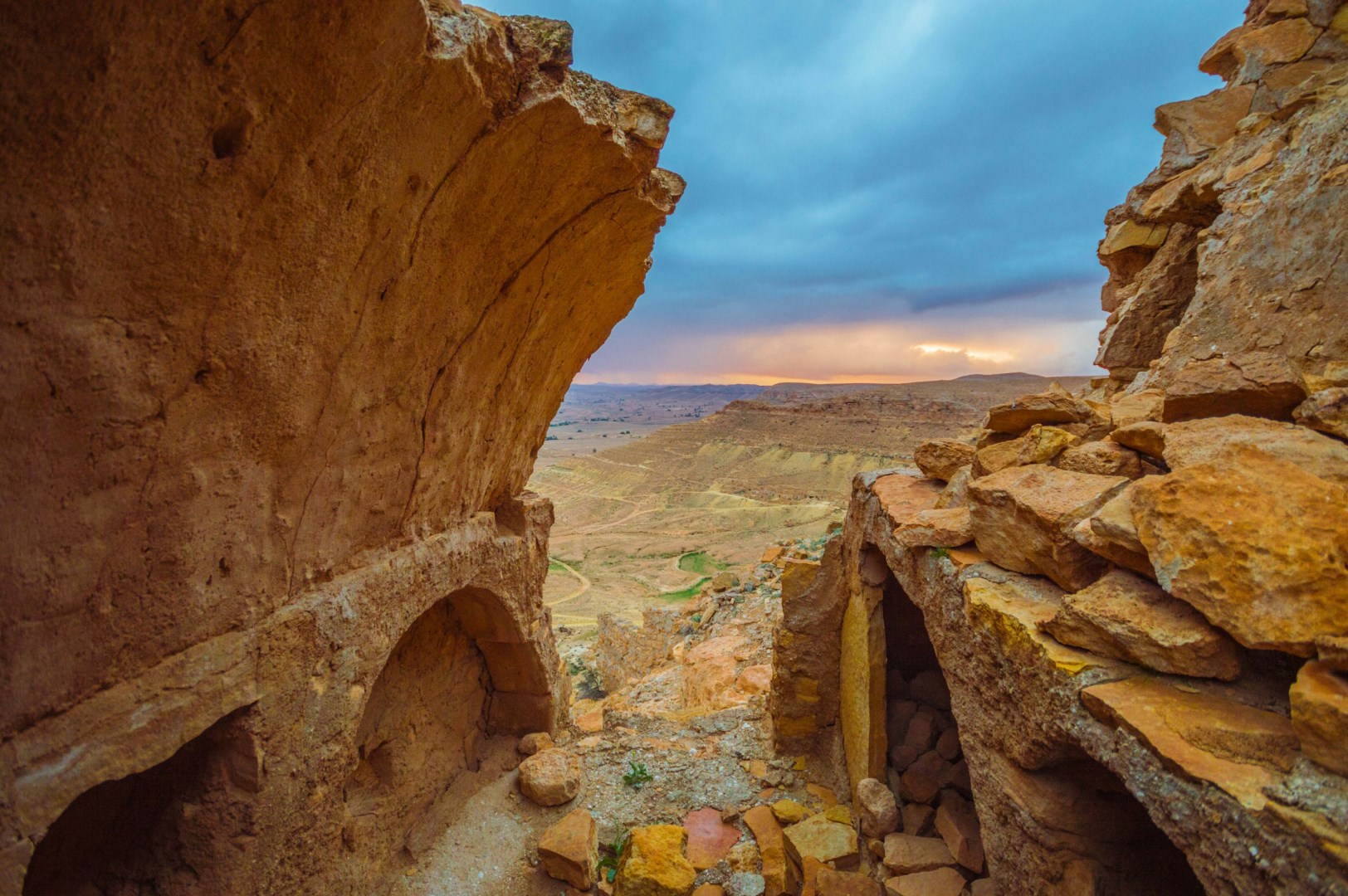
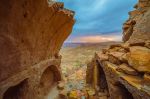
Douiret is a historic Berber village in southern Tunisia, set high among the rocky mountains and desert plateaus of the Tataouine region. The settlement is built along a steep mountain ridge, where old stone structures and partially abandoned homes blend into the surrounding rock. Douiret is best known for its traditional ksar, a fortified complex that once provided communal storage for agricultural harvests. The village’s remote setting, rugged terrain, and distinctive architecture reflect how communities adapted to a dry environment where water was scarce and settlement space was limited.
Douiret forms part of the Berber cultural landscape of southeastern Tunisia, where the Berber language remains in use alongside Arabic. Traditional homes were partly excavated into the rock, creating sheltered spaces with more stable temperatures than exposed buildings. The village also contains ghorfas, small storage chambers used to protect crops, reflecting the communal organization of earlier rural life. One of Douiret’s notable cultural landmarks is its underground mosque, built into the rocky settlement. Traditional weaving remains associated with the wider region, including the production of flij, long woven strips used in the construction of nomadic tents.
The old village is the principal attraction, with paths leading among ruined homes, storage chambers, rock-cut spaces, and the remains of the hilltop ksar. The surrounding landscape consists of bare mountains, rocky plateaus, steep ridges, and dry valleys, making the village a useful starting point for walks through the Tataouine highlands. Nearby Chenini and other ksour form part of the same cultural landscape, while the wider region contains prehistoric rock art and unusual geological formations. Traditional water-management systems known as jessour capture runoff from infrequent rains and allow crops to be cultivated on terraces.
Food in Douiret reflects the agricultural traditions of the surrounding drylands, where locally grown products have historically been important to household life. Semolina bread, olive oil, figs, pomegranates, honey, and couscous are among the foods associated with the region, while lamb and mutton are commonly used in traditional meals. The village’s architecture is particularly distinctive because underground and rock-cut rooms provided protection from the extreme heat of the surrounding mountains. Another notable detail is the relationship between the settlement and its terraces: jessour systems retain scarce rainwater, allowing olives, fruit, and other crops to grow despite the arid conditions.
