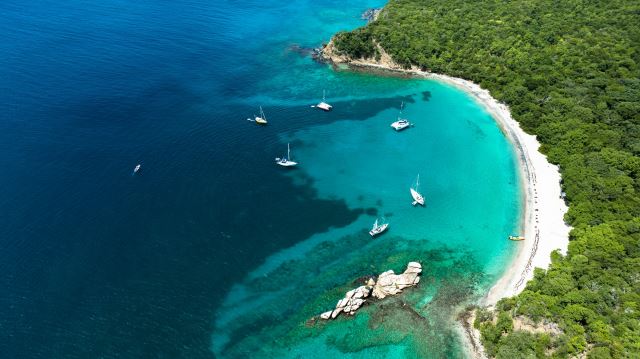


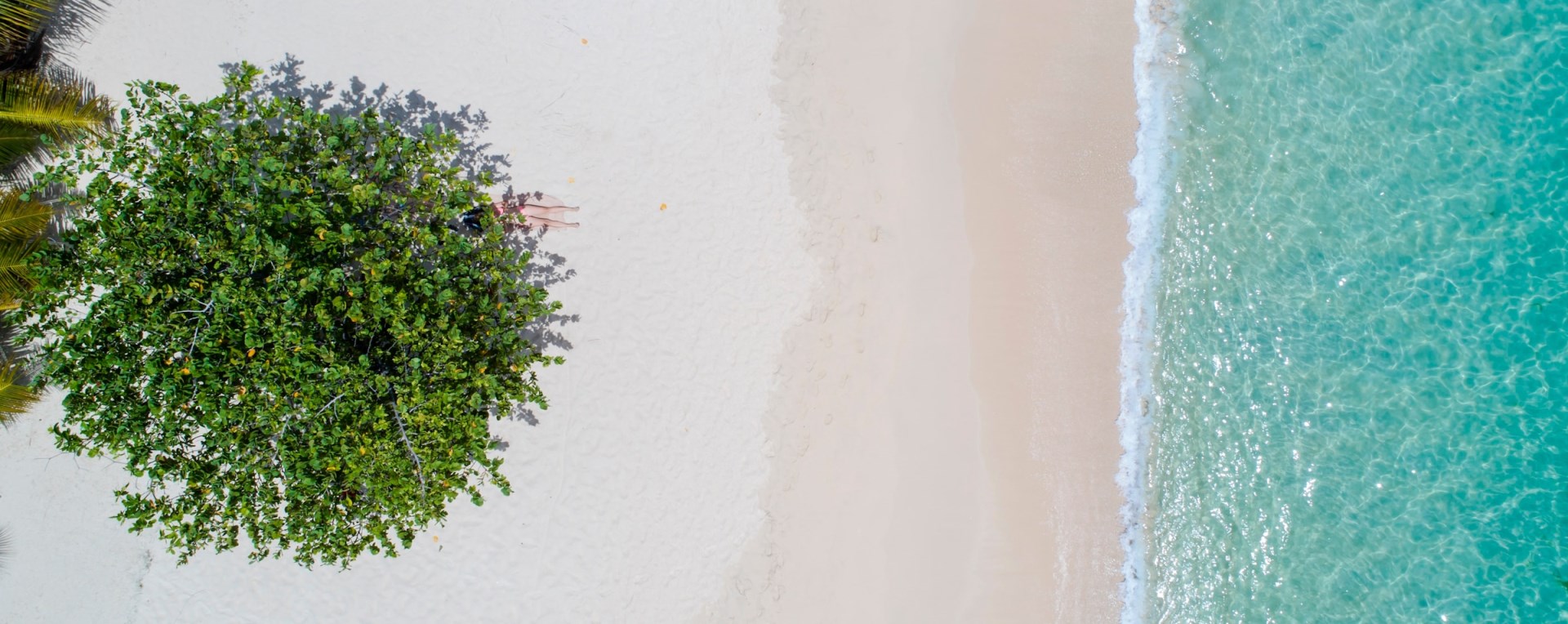

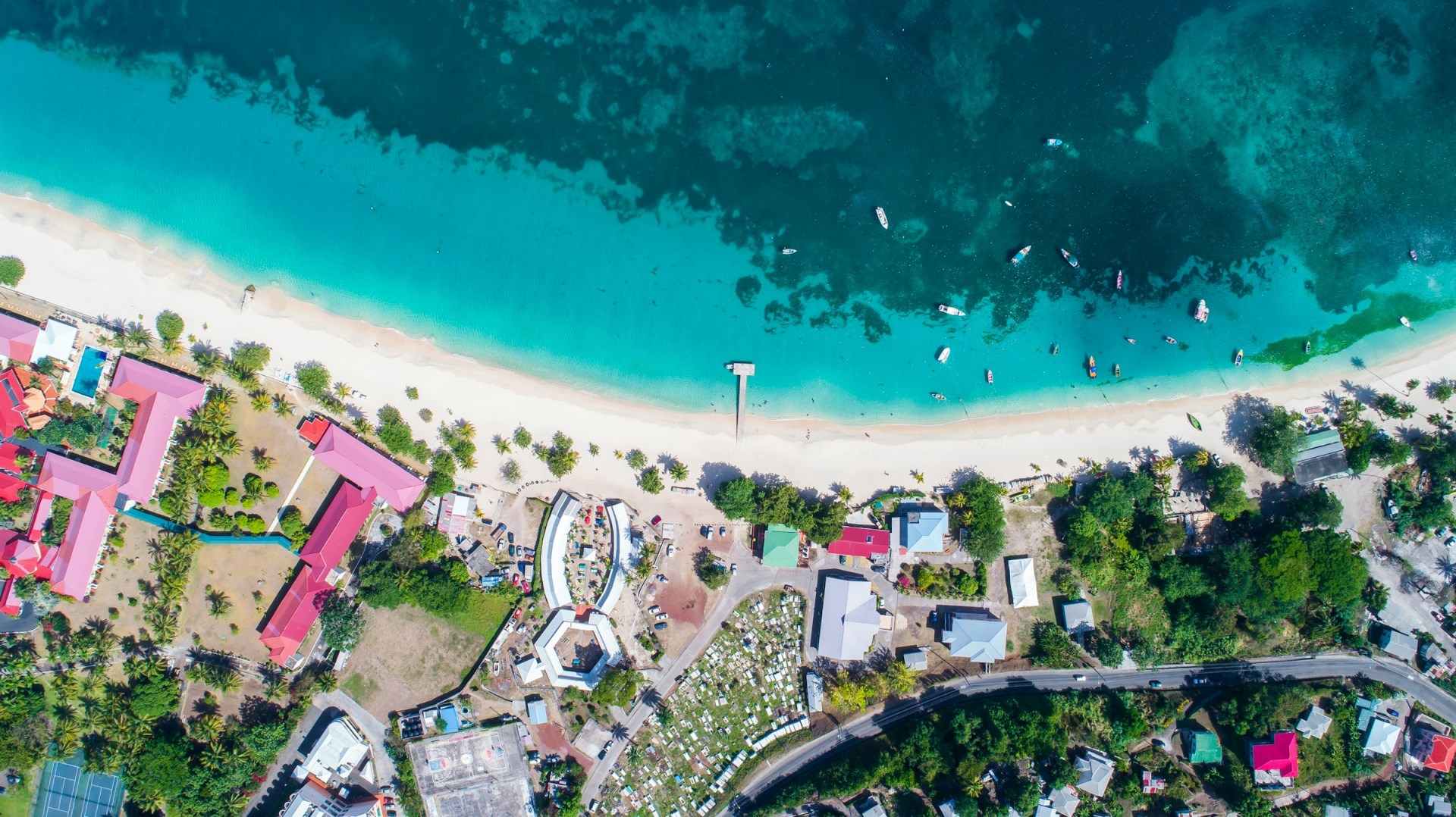
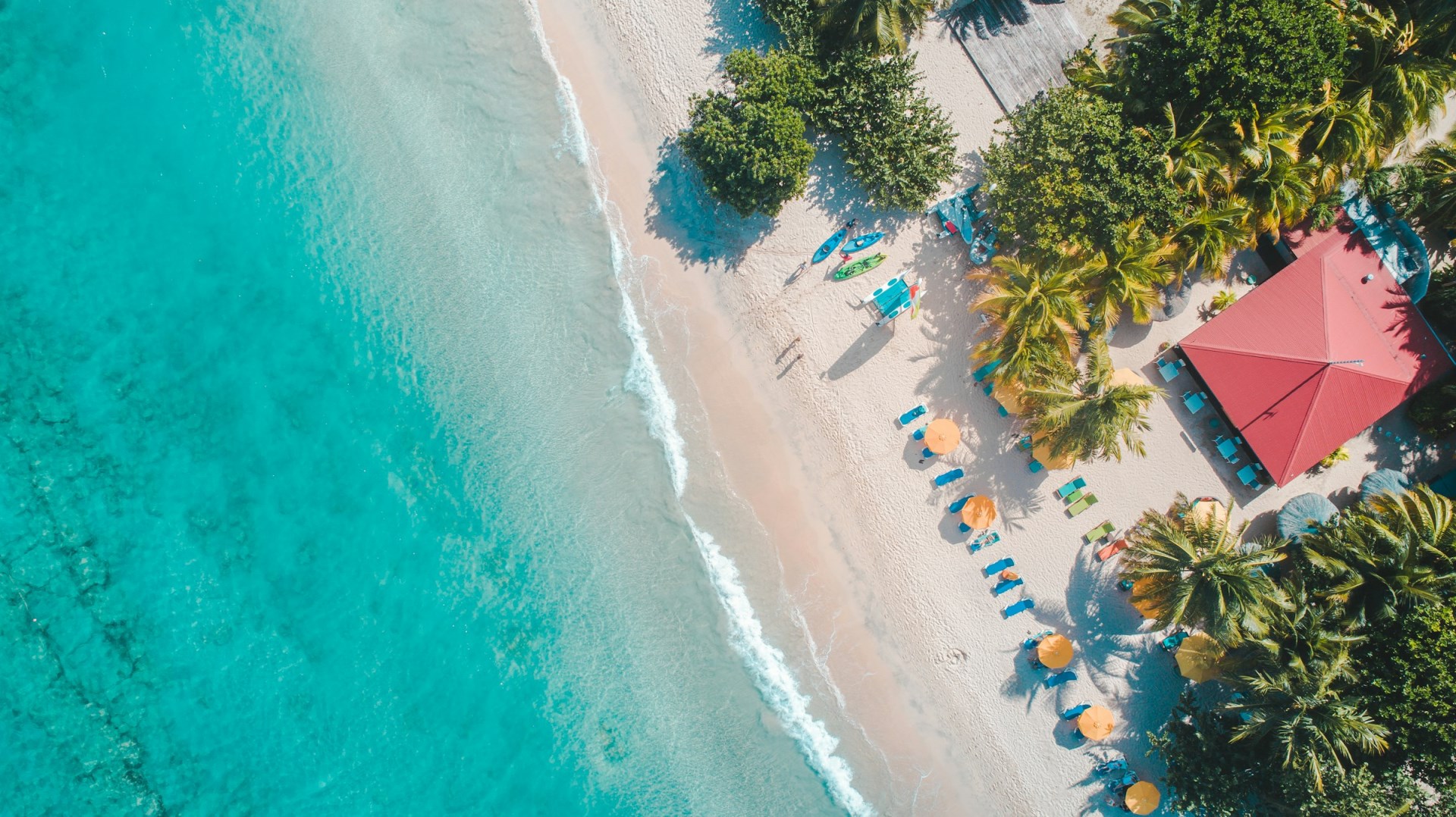

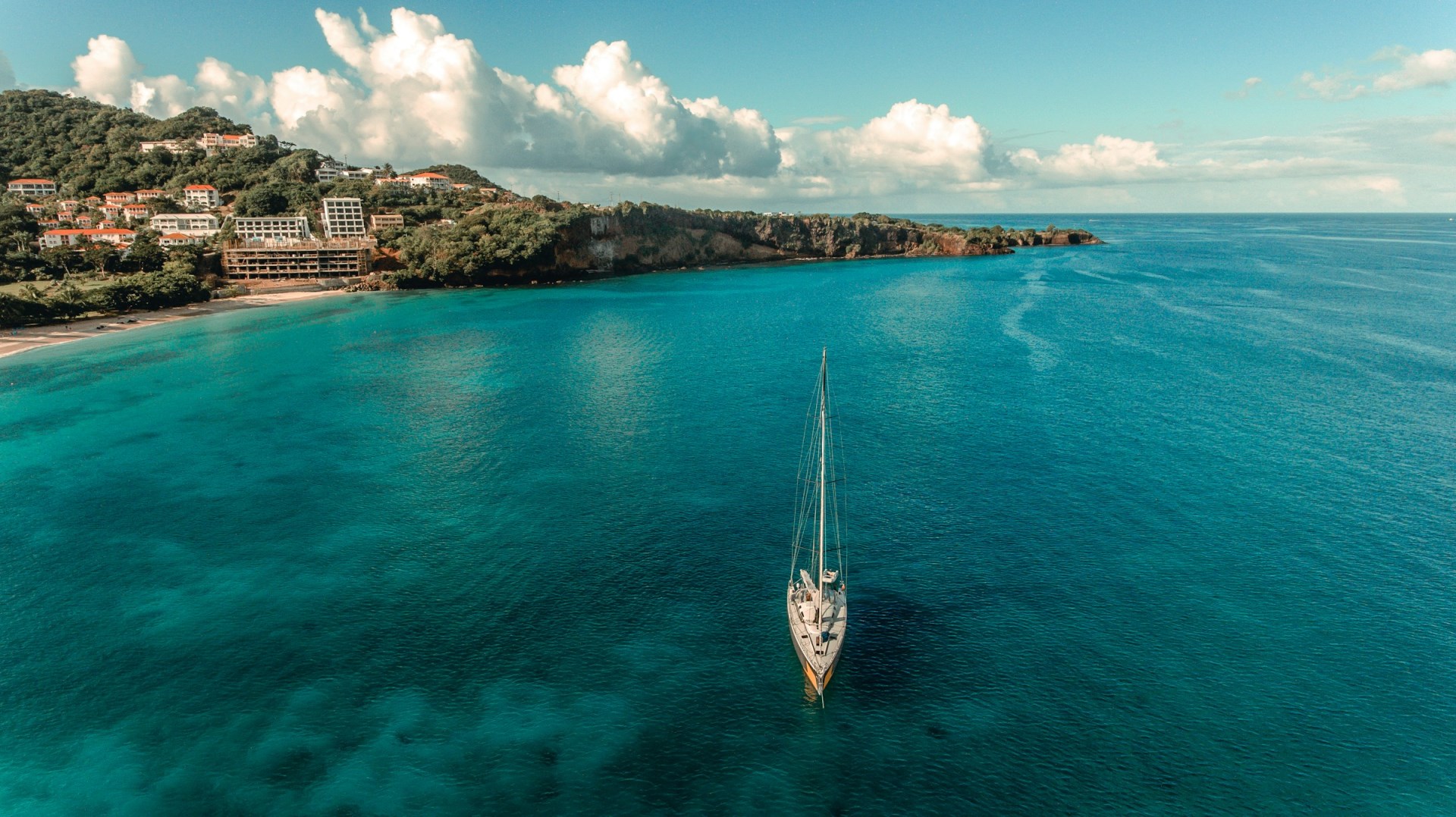
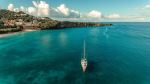
Grand Anse Beach is a long crescent of pale sand on the southwestern coast of Grenada, overlooking the Caribbean Sea. The beach stretches for roughly three kilometres and is backed by hotels, guesthouses, restaurants, shops, and residential areas, while much of the shoreline remains open for public use. Its sheltered position creates generally calm, clear water that is suitable for swimming and other water activities. Grand Anse is close to St. George’s and forms part of Grenada’s most developed coastal area, but the broad beach and views toward the surrounding headlands give it a distinctly open setting.
Grand Anse reflects Grenada’s wider Caribbean culture, where African heritage, European influences, fishing traditions, agriculture, music, and community celebrations have shaped local identity. The nearby communities maintain strong connections with the sea, while Grenadian culture is expressed through calypso, soca, steelpan music, dance, and annual festivals. The area around Grand Anse developed alongside Grenada’s growing tourism industry, but local businesses and residents remain part of the beach community. Grenadian cuisine and hospitality are particularly visible along the shoreline, where locally owned restaurants and small vendors operate alongside larger hotels and visitor facilities.
The beach provides access to swimming, snorkeling, paddleboarding, kayaking, sailing, and other marine activities. Its calm western-facing waters are particularly suited to exploring the shallow coastal zone, where tropical fish and other marine life can be found. Morne Rouge Beach, commonly known as BBC Beach, lies just south of Grand Anse and offers another sheltered stretch of sand. Fort George overlooks the wider southwestern coastline from the hills above St. George’s, while Grand Anse itself provides views toward the capital and nearby coastal headlands. Water taxis also connect the beach with St. George’s, adding a practical link between the two areas.
Food around Grand Anse includes many of Grenada’s best-known dishes, with fresh fish, lobster, conch, plantains, rice, breadfruit, and locally grown vegetables appearing on menus. Oil down, Grenada’s national dish, combines ingredients such as salted meat or fish, coconut milk, breadfruit, dumplings, and vegetables in a single pot. Nutmeg and mace are also important Grenadian ingredients, reflecting the island’s agricultural heritage. Grand Anse is sometimes called one of the Caribbean’s best-known beaches, but its more distinctive feature is its role as a shared coastal space where swimming, fishing, dining, water transport, and everyday community activities meet along the same shoreline.
Other Popular Destinations in Grenada