



Russia & Northwest Asia | Georgia | Gori
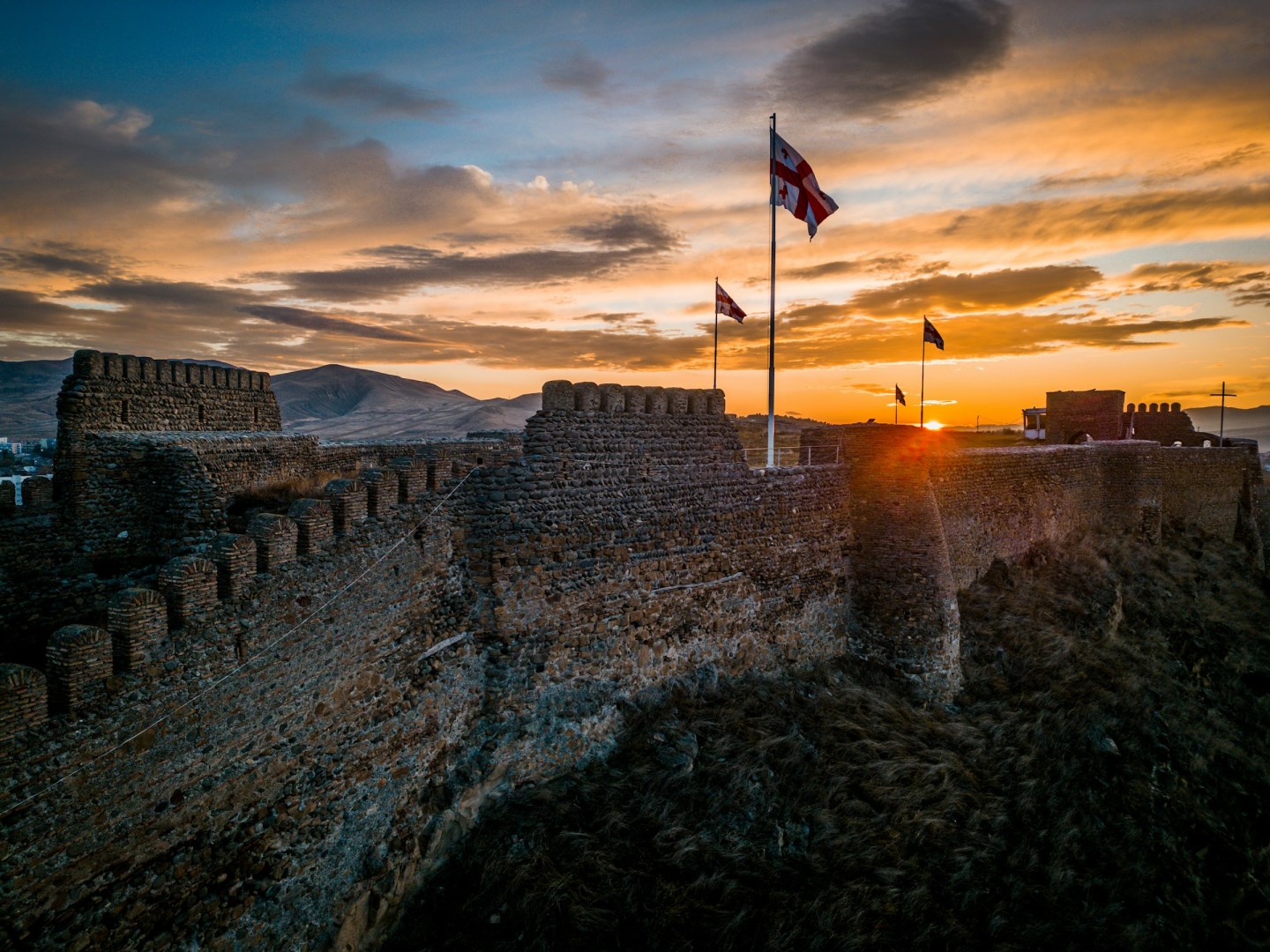

Gori is a city in central Georgia, located where the Mtkvari and Liakhvi rivers meet and surrounded by the hills of the Shida Kartli region. The city is dominated by Gori Fortress, a stone stronghold positioned on a rocky hill above the center. Gori also serves as a gateway to several important archaeological and cultural sites in central Georgia. Its setting combines a fertile agricultural plain with low hills and river valleys, while the surrounding region contains some of the country's most significant examples of ancient settlement, medieval architecture, and Georgian religious heritage.
Gori has a long history as a regional center, and its cultural landscape includes Georgian Orthodox churches, traditional neighborhoods, and historic defensive architecture. Gori Fortress is the city's principal historic monument, with surviving walls and towers following the contours of the hill. The Stalin Museum is another prominent site, dedicated to Joseph Stalin, who was born in Gori. Its exhibitions present objects, photographs, documents, and other materials related to his life and political career. The museum's interpretation has generated different perspectives, making it a notable part of the city's modern historical landscape.
Beyond the city center, Uplistsikhe is one of the most important attractions near Gori. The ancient rock-hewn settlement is carved into sandstone cliffs above the Mtkvari River and contains chambers, streets, religious spaces, and other structures connected by pathways through the rock. The Ateni Valley south of Gori provides a contrasting landscape of wooded slopes and vineyards, with Ateni Sioni Church standing among the hills. Gori Fortress itself offers broad views over the surrounding plain and toward the Caucasus foothills, while nearby archaeological sites reveal the depth of human settlement in the region.
Food in Gori and the wider Shida Kartli region reflects central Georgian cooking, with dishes based on vegetables, meat, cheese, walnuts, herbs, and locally grown produce. Kartli is also an important agricultural area, producing peaches, apples, grapes, and other fruits. Ateni is known for its wine, particularly wines made from the Chinuri grape. Local tables commonly include khachapuri, khinkali, lobio, and mtsvadi, while seasonal fruit appears in desserts, preserves, and churchkhela. Gori's location within an agricultural plain means that its food traditions remain closely connected to the farms, vineyards, and orchards surrounding the city.
