





Central Asia | India | Thar Desert
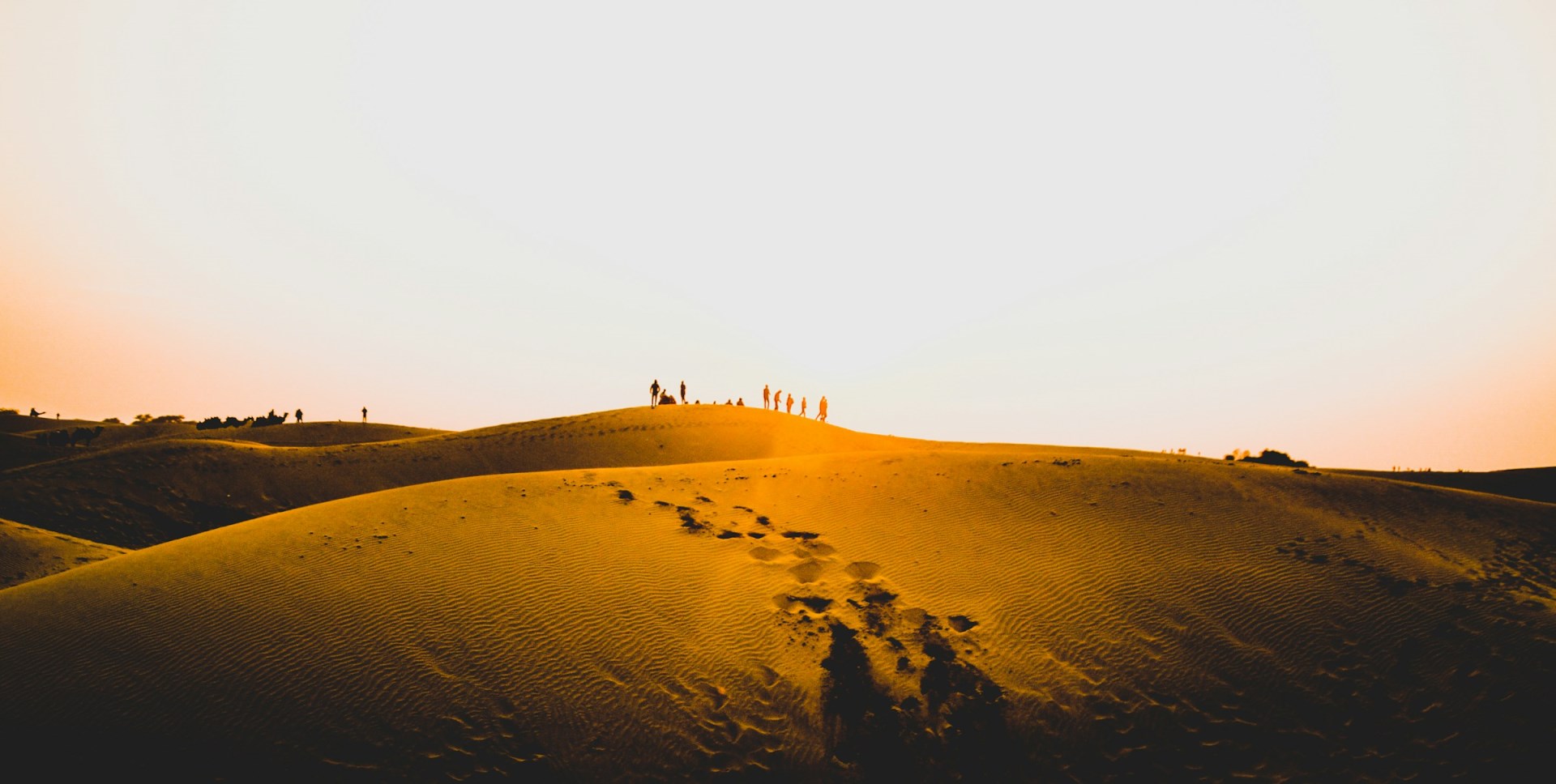

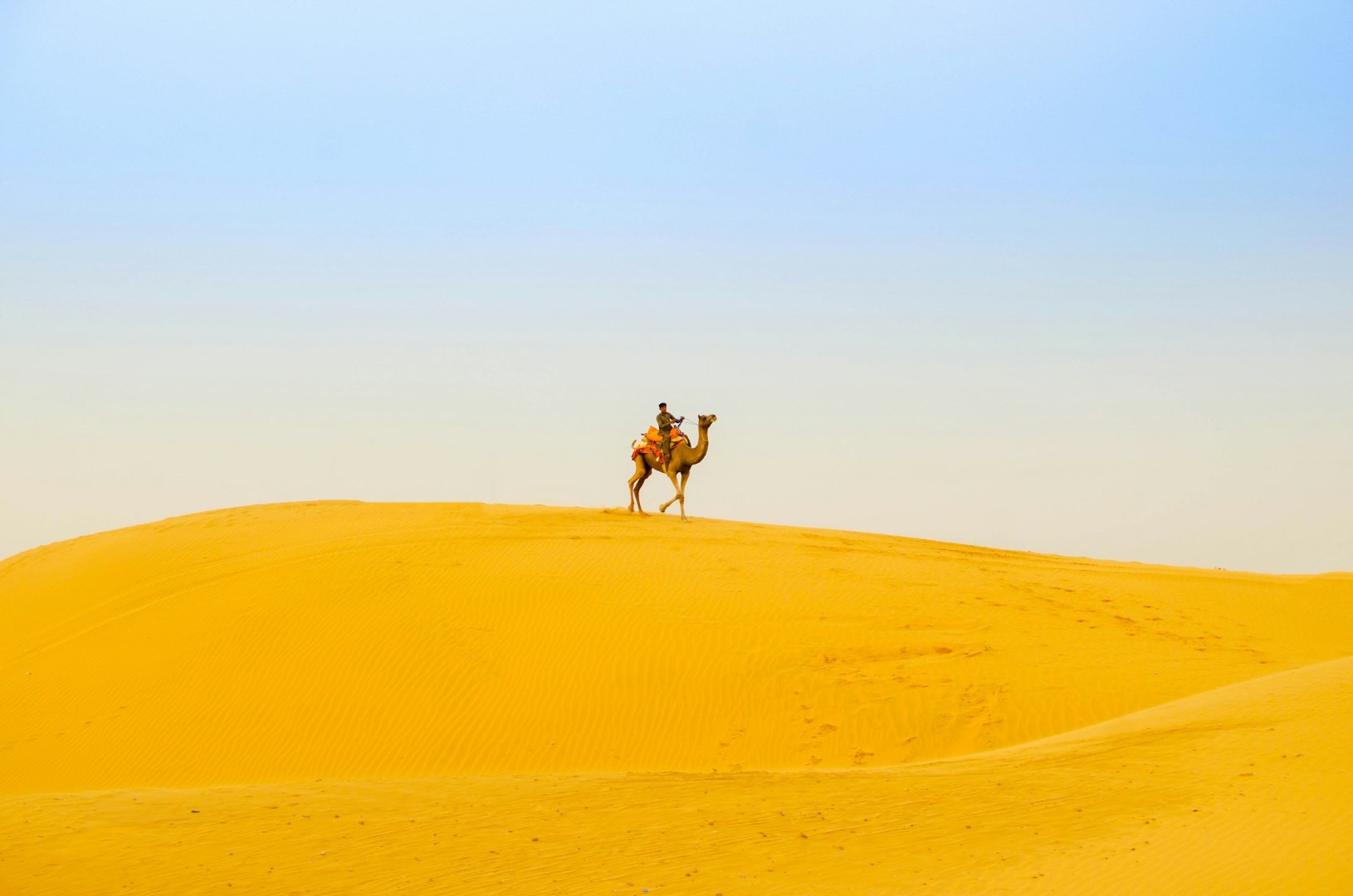
The Thar Desert stretches across northwestern India, with its largest Indian expanse lying in Rajasthan and extending toward the borders of Gujarat, Punjab, and Haryana. It is a dry landscape of sand dunes, gravel plains, rocky ground, thorn scrub, and scattered grasslands rather than an entirely sandy wilderness. Jaisalmer, Jodhpur, and Bikaner are among the best-known gateways to the desert, while smaller settlements reveal how people have adapted to scarce water and extreme temperatures. The desert also extends into Pakistan, forming a broad arid region across the India-Pakistan border.
The Thar is a lived-in cultural landscape where desert communities have developed distinctive traditions of music, dress, crafts, architecture, and pastoral life. Villages and small settlements are often organized around limited water sources, while traditional houses use locally available materials and designs suited to the hot, dry climate. Camel herding has long been important in desert life, and camels remain closely associated with transport and tourism. Rajasthan’s folk traditions include instruments such as the kamayacha and performances by Manganiyar and Langa musicians, whose musical heritage is strongly connected with communities of western Rajasthan.
The landscape changes considerably across the desert, from high dunes around Sam and Khuri near Jaisalmer to gravelly plains and rocky areas farther east. The Desert National Park, near Jaisalmer and Barmer, protects representative Thar habitats and provides important refuge for wildlife including chinkara, desert foxes, and the endangered Great Indian Bustard. The park also contains the Akal Wood Fossil Park, where fossilized remains provide evidence of ancient forests and environmental conditions. Camel safaris are a familiar way to explore the dunes, while Jaisalmer Fort and nearby havelis demonstrate how major settlements developed along historic desert routes.
Food in the Thar reflects limited water, locally available crops, and the need for ingredients that can be stored for long periods. Rajasthani specialties such as dal baati churma, ker sangri, gatte ki sabzi, and bajra roti are closely associated with the region’s cuisine. Ker and sangri, made from hardy desert plants, are particularly suited to the arid environment. A notable ecological detail is the importance of the khejri tree, which provides fodder, food, shade, and other resources and is traditionally protected by communities including the Bishnois. These adaptations demonstrate how desert life depends on careful use of scarce natural resources.
Other Popular Destinations in India


