

Russia & Northwest Asia | Kazakhstan | Charyn Canyon National Park
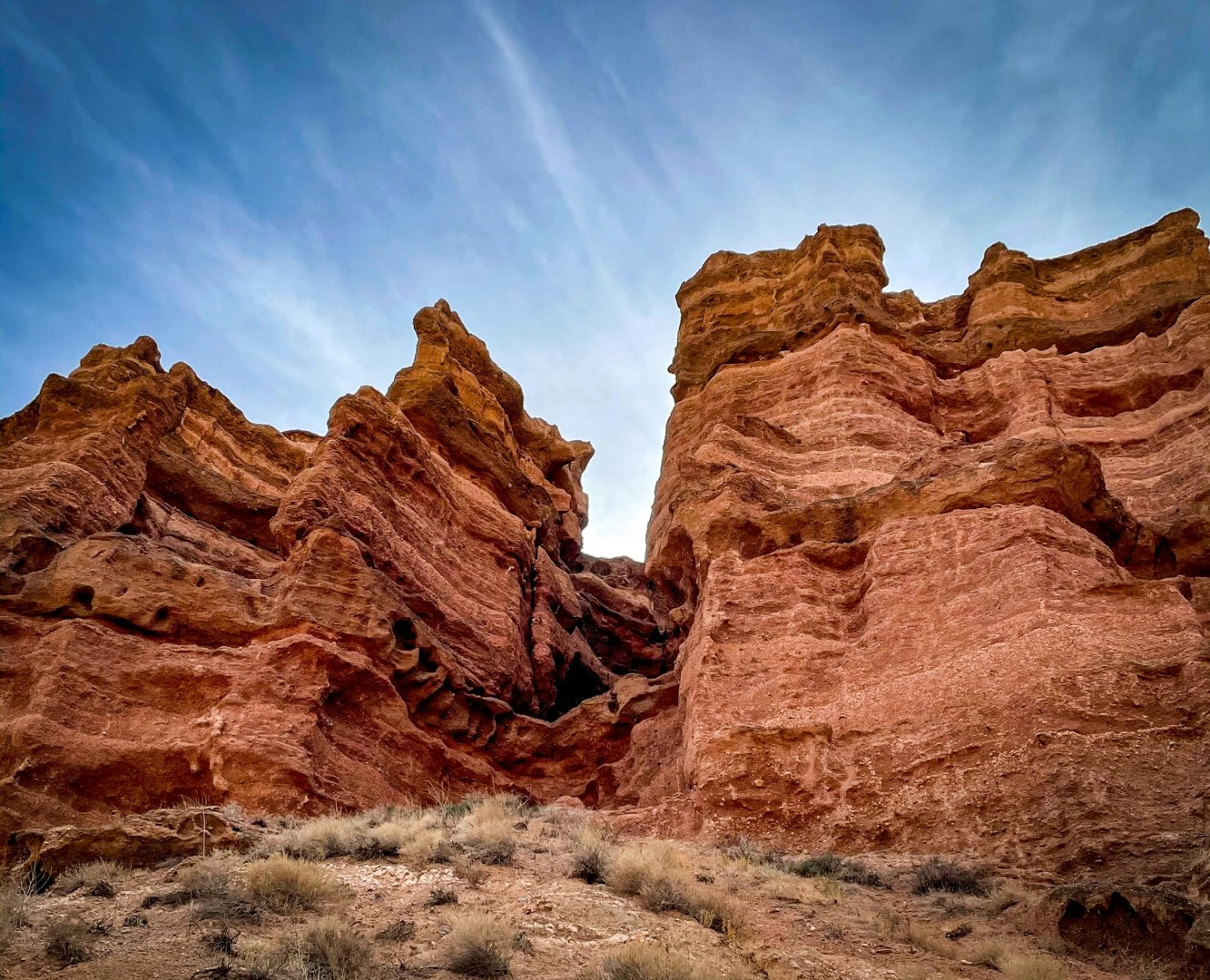
Charyn Canyon National Park is a protected area in southeastern Kazakhstan, east of Almaty, centered on the dramatic Charyn Canyon carved by the Charyn River. The park covers a landscape of deep gorges, dry valleys, cliffs, and semi-desert plains at the edge of the Tian Shan. Charyn Canyon is the park's best-known feature, with layers of sedimentary rock exposed along steep walls shaped by erosion. The area is sometimes compared with larger canyon landscapes elsewhere, but its geology, vegetation, and location within southeastern Kazakhstan give it a distinct character.
The Charyn region has long been connected with the movement of people through southeastern Kazakhstan, where routes crossed the valleys between the steppe and mountain regions. Local Kazakh traditions are reflected in place names and stories associated with the landscape. The Charyn River is also important to the area's ecological and cultural geography, providing water in an otherwise dry environment. Nearby settlements maintain traditional Kazakh food and hospitality practices, while the national park protects archaeological and natural features across a large area. The canyon's unusual rock formations have also become recognizable symbols of the region.
The park contains several distinct natural areas, with the Valley of Castles being the most visited section of Charyn Canyon. This gorge is lined with tall rock towers, narrow passages, and weathered formations created by erosion of layered sedimentary deposits. Other sections include the Temirlik Canyon and the Charyn Ash Grove, where a rare stand of Sogdian ash trees grows along the river. The grove is considered an important natural feature because the species is a relict tree associated with ancient vegetation. The park also supports mammals and birds adapted to the dry canyon and surrounding semi-desert environment.
Food in the villages and guesthouses around Charyn reflects the broader cuisine of southeastern Kazakhstan, with beshbarmak, baursaks, kuyrdak, and horse-meat products among traditional choices. Tea is an important part of Kazakh hospitality and is commonly served with bread, dairy foods, and sweets. The canyon area is also notable for its sharp contrast between dry terrain and river-fed vegetation: while the surrounding landscape is largely arid, the Charyn River supports trees and dense plant growth in selected sections of the valley. This contrast is especially clear in the Ash Grove, where mature trees occupy a narrow green corridor within the surrounding dry landscape.
Other Popular Destinations in Kazakhstan