
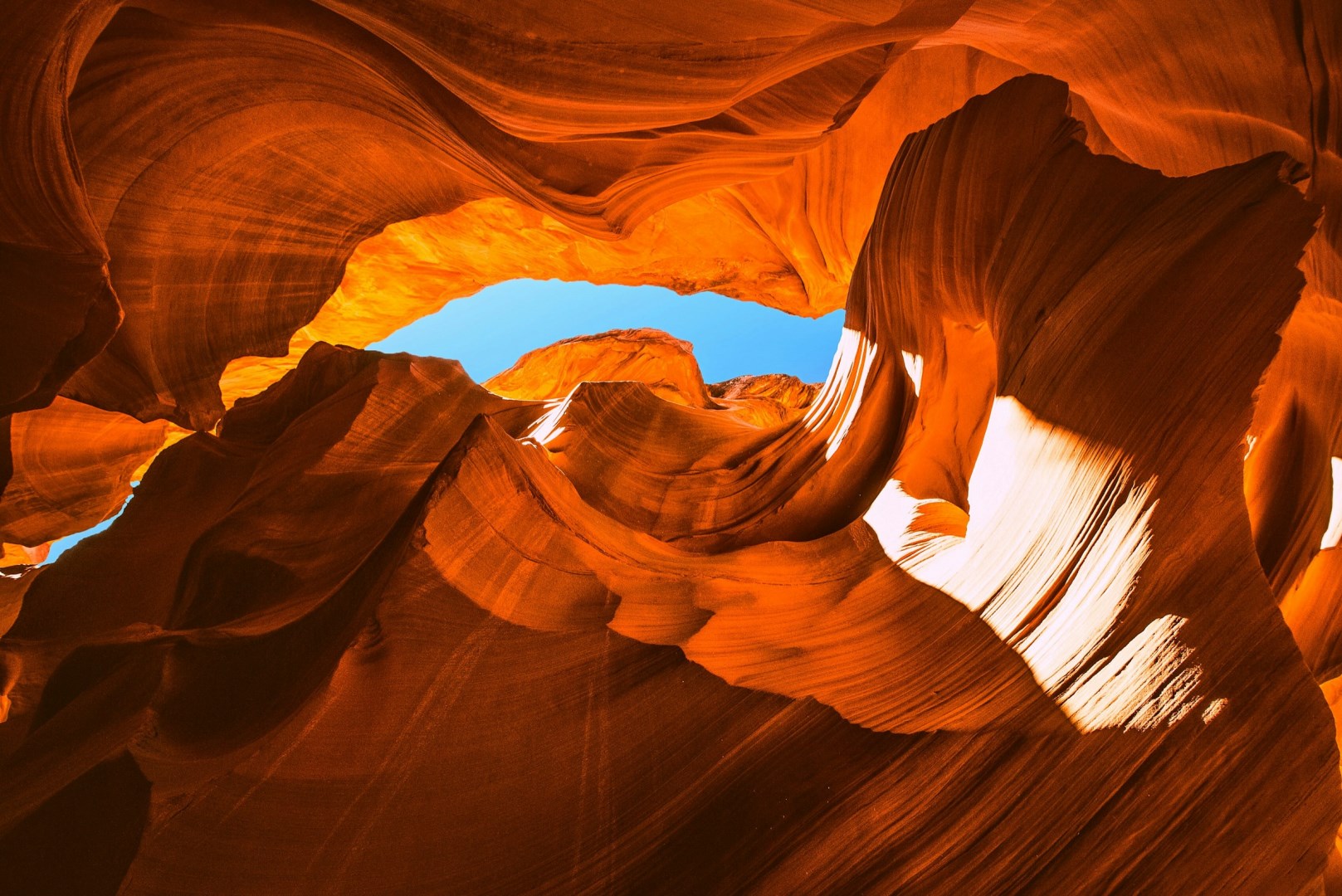
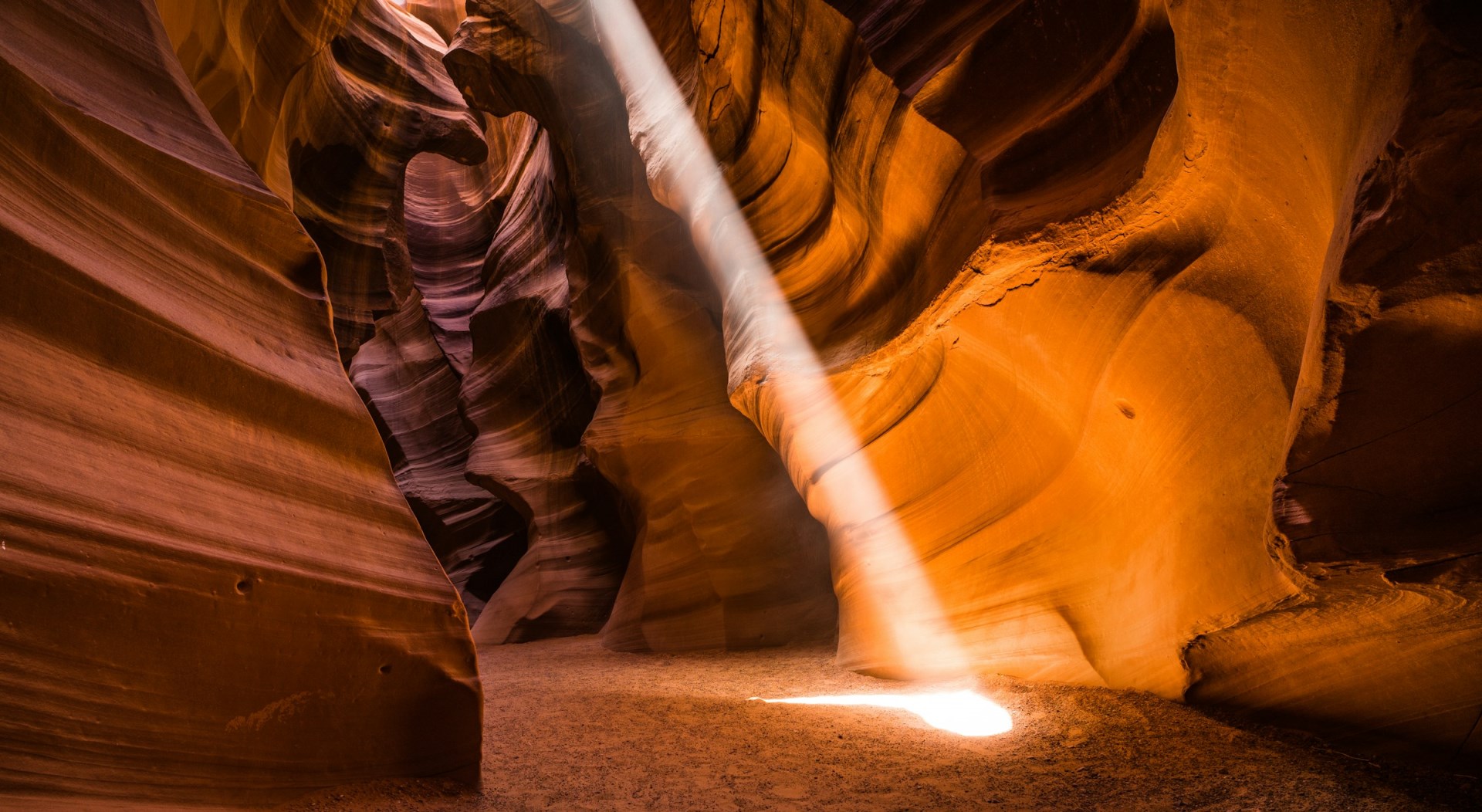
Antelope Canyon is a narrow sandstone slot canyon on the Navajo Nation in northern Arizona, near Page and Lake Powell. It is divided into two main sections, Upper Antelope Canyon and Lower Antelope Canyon, both shaped by water erosion through Navajo Sandstone. The canyon is known for flowing walls, narrow passages, and shifting patterns of light and shadow. Its enclosed corridors can change dramatically in appearance as sunlight enters from above. Because the canyon is on Navajo Nation land, access is controlled through authorized tour operators rather than independent hiking, making guided visits an important part of experiencing the site.
Antelope Canyon holds cultural significance for the Navajo people, who know the canyon as part of a landscape with deep connections to Diné traditions and place-based knowledge. The Navajo Nation manages the land, and authorized Navajo guides lead visitors through the canyon while explaining its geology, cultural importance, and surrounding environment. The canyon's formation is closely tied to flash flooding, which continues to influence the landscape and makes conditions potentially hazardous. The narrow passages also demonstrate how water can gradually carve sandstone into smooth curves and sculpted walls, creating the distinctive formations seen today.
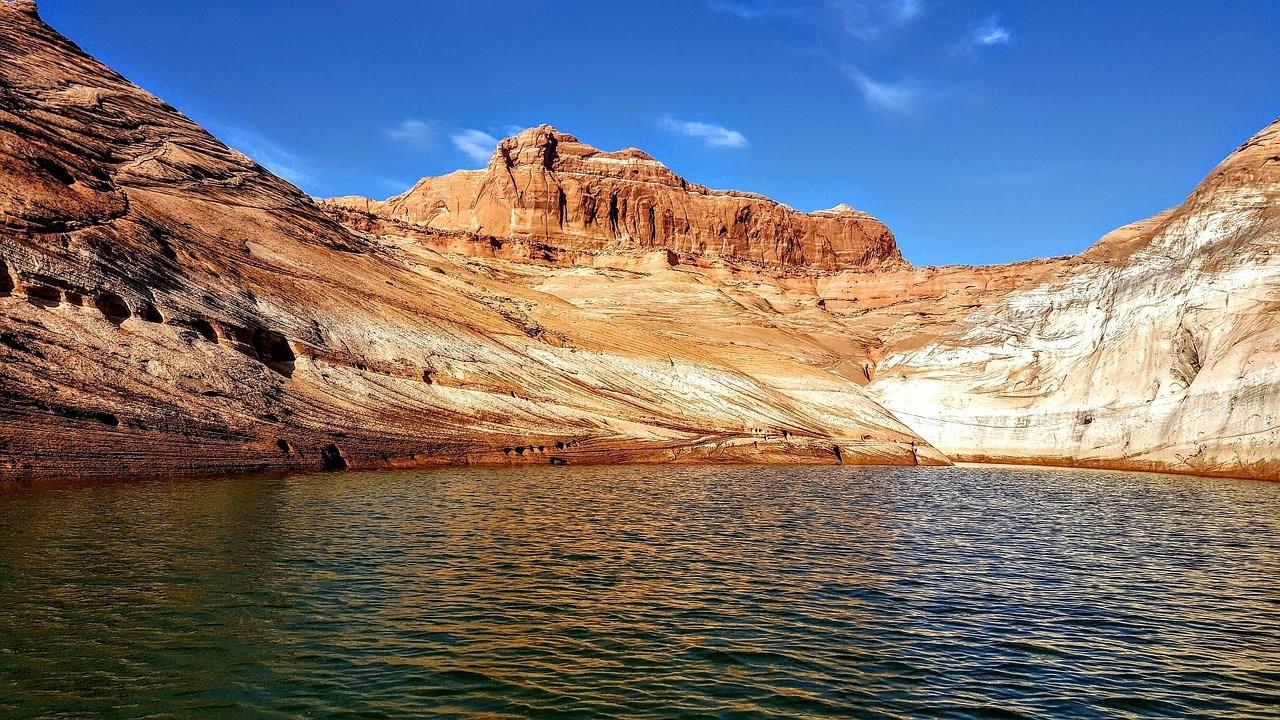
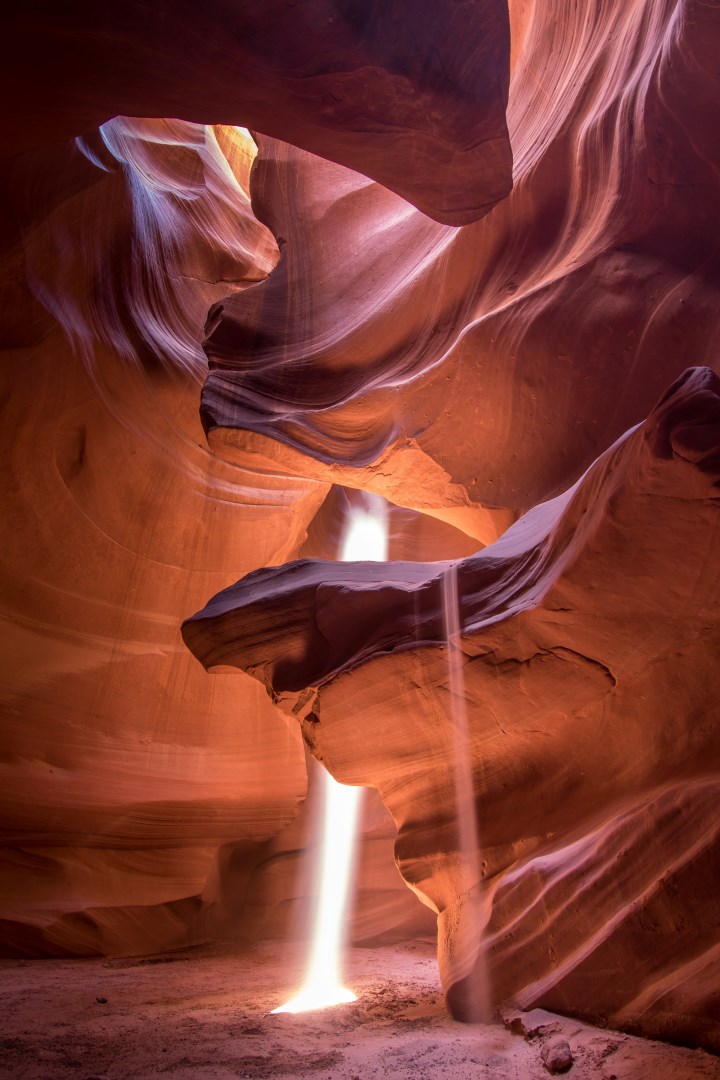
Upper and Lower Antelope Canyon offer different experiences because of their contrasting shapes and access routes. Upper Antelope Canyon is relatively level and is especially known for beams of sunlight entering the canyon during favorable conditions. Lower Antelope Canyon is narrower and involves stairs and ladders as visitors move through its winding passages. Nearby Lake Powell and Glen Canyon provide a broader setting of red-rock cliffs, mesas, and desert waterways. Other regional landmarks include Horseshoe Bend and the Colorado River, which have helped make the Page area an important base for exploring the landscapes of the Colorado Plateau.
Antelope Canyon does not have a traditional local food culture of its own, but visitors to the Page area can find Navajo and Southwestern dishes alongside contemporary American restaurants. Regional foods may include fry bread, mutton, blue corn products, and other ingredients associated with Diné and Southwestern cooking. One of the canyon's most important natural details is its vulnerability to flash floods, which can occur even when conditions overhead appear dry. The sandstone walls also contain visible layers and curves produced by erosion, allowing visitors to see geological processes preserved directly in the canyon's surfaces.
