




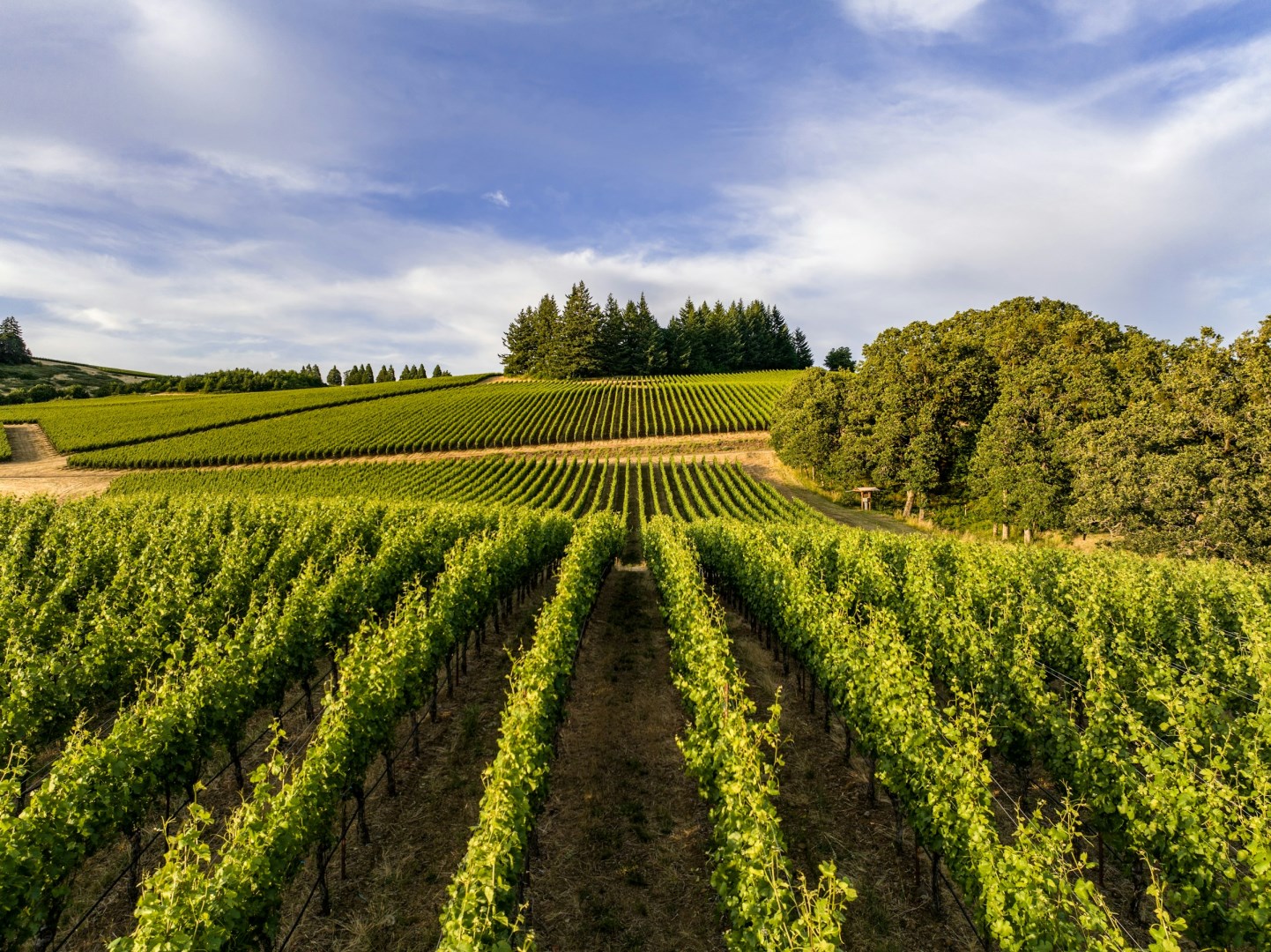
Willamette Valley is a broad agricultural valley in northwestern Oregon, stretching between the Cascade Range and the Coast Range. The Willamette River runs through its center, while fertile farmland, wooded foothills, vineyards, orchards, and small communities fill the surrounding landscape. Portland lies at the valley’s northern end, with Salem and Eugene among its principal cities. The region is known for its productive agricultural land and its distinctive wine country, but its character also comes from river corridors, covered bridges, forested hills, and the patchwork of farms that surrounds its towns.
The Willamette Valley has a long Indigenous history, particularly associated with the Kalapuya peoples, whose communities depended on the valley’s plants, animals, waterways, and carefully managed grasslands. European-American settlement later transformed much of the landscape through farming, livestock production, and transportation networks. Today, places such as Champoeg State Heritage Area preserve important aspects of Oregon’s early political and settlement history. The valley also maintains strong agricultural traditions, with farmers markets, farm stands, historic barns, and family-operated farms providing visible links between its present-day communities and rural heritage.
The valley offers a wide range of landscapes and attractions, from farmland and wetlands to forested foothills and vineyards. The Willamette River provides opportunities for boating, fishing, wildlife observation, and riverside recreation, while the nearby Coast and Cascade ranges offer hiking and scenic drives. Wine-growing areas such as the Dundee Hills, Eola-Amity Hills, and Chehalem Mountains are known for their vineyards and tasting rooms, particularly those producing Pinot noir. Silver Falls State Park, east of Salem, protects a forested canyon with a series of waterfalls and is one of the region’s best-known natural attractions.
Food and wine are central to the Willamette Valley’s identity, supported by fertile soils and a long growing season. The region produces wine grapes, berries, hazelnuts, nursery crops, vegetables, fruits, and other agricultural products, while local restaurants frequently emphasize seasonal ingredients. Pinot noir is especially associated with the valley, whose cool climate and varied soils suit the grape. Visitors can also find farm-to-table restaurants, cideries, breweries, farmers markets, and roadside produce stands throughout the region. This close relationship between agriculture, wine production, and local food gives the Willamette Valley much of its distinctive character.
