



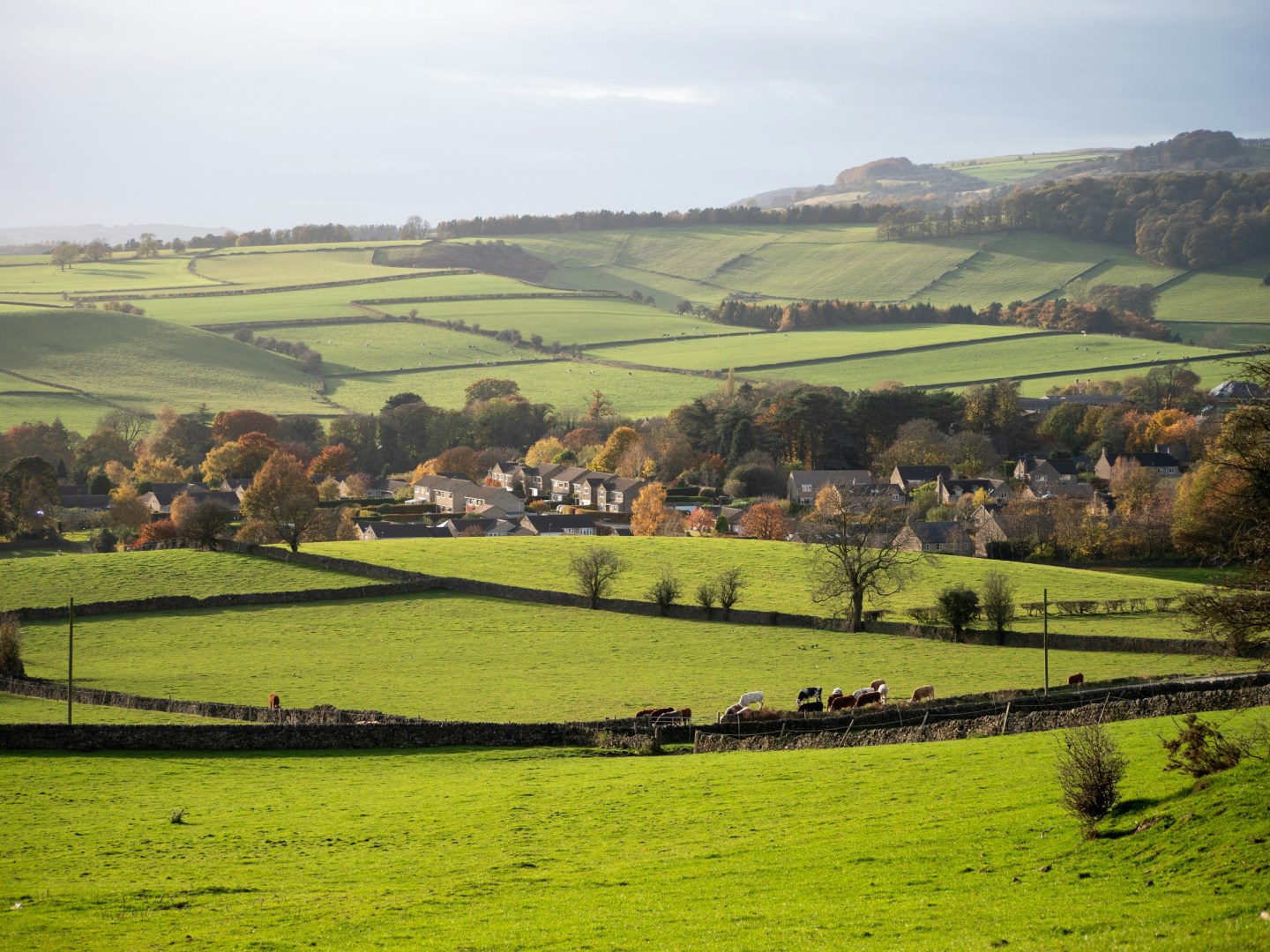
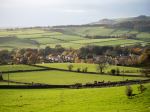
The Peak District National Park occupies a large area in central England, mainly across Derbyshire with smaller sections extending into Cheshire, Staffordshire, and Yorkshire. It is divided broadly into the gritstone moorlands of the Dark Peak, the limestone dales of the White Peak, and the rolling farmland of the South West Peak. Unlike a wilderness park, it is a lived-in landscape containing villages, farms, roads, reservoirs, and historic buildings. Towns such as Bakewell, Buxton, and Castleton provide useful bases for exploring the surrounding countryside and its network of walking and cycling routes.
The landscape records thousands of years of human activity, from prehistoric monuments and ancient settlements to dry-stone walls, farms, mines, quarries, and former railway lines. Lead mining was particularly important in the Peak District, leaving features such as the remains of Magpie Mine and numerous old shafts and workings. Traditional customs remain part of local identity, including well dressing, in which more than 70 villages decorate wells with intricate pictures made from natural materials. The area also has strong connections with the history of public access to the countryside, including the famous mass trespass on Kinder Scout.
The park's most recognisable landscapes include Kinder Scout, the highest point in the Peak District, and the gritstone edges of Stanage, Curbar, and Froggatt. The limestone valleys of the White Peak offer a different setting, with rivers, meadows, caves, and villages built from local stone. Castleton is known for its caves and Blue John stone, while Chatsworth House and its surrounding estate provide one of the region's best-known historic landscapes. The Pennine Way begins at Edale, and the Tissington and Monsal trails follow former railway routes through valleys, tunnels, and countryside.
Food is closely connected with the Peak District's farming traditions and local towns. Bakewell is particularly associated with Bakewell pudding, a pastry dessert made with jam and a rich almond-based filling, while the town's name is often confused with the separately named Bakewell tart. Local producers also supply beef, lamb, dairy products, cheeses, and other farm foods to markets, shops, and restaurants throughout the region. Another distinctive product is Blue John stone, a rare form of fluorite found around Castleton and traditionally used for decorative objects and jewellery. The park's mineral springs also underpin the identity of Buxton and other spa towns.
Other Popular Destinations in England


