
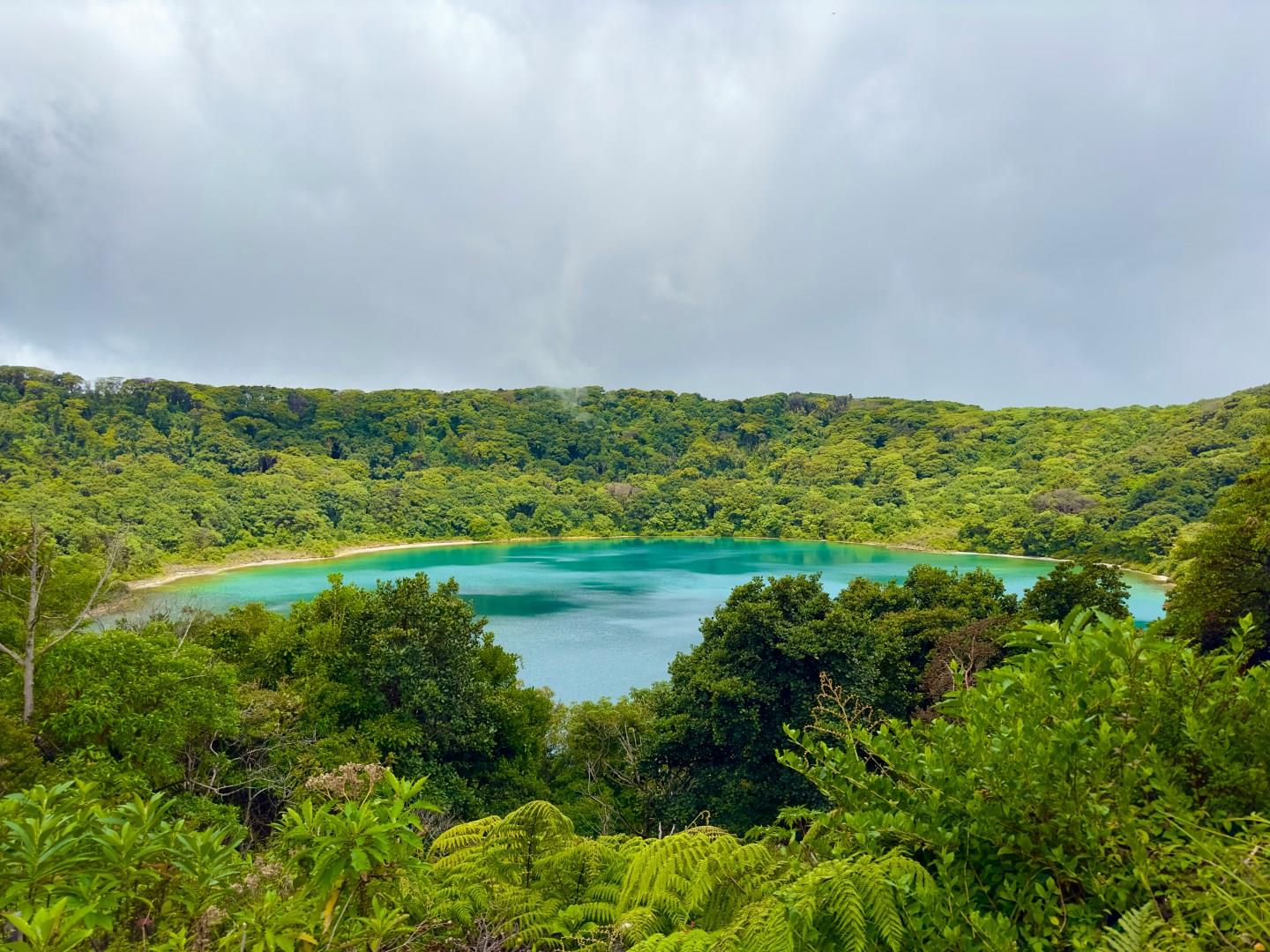
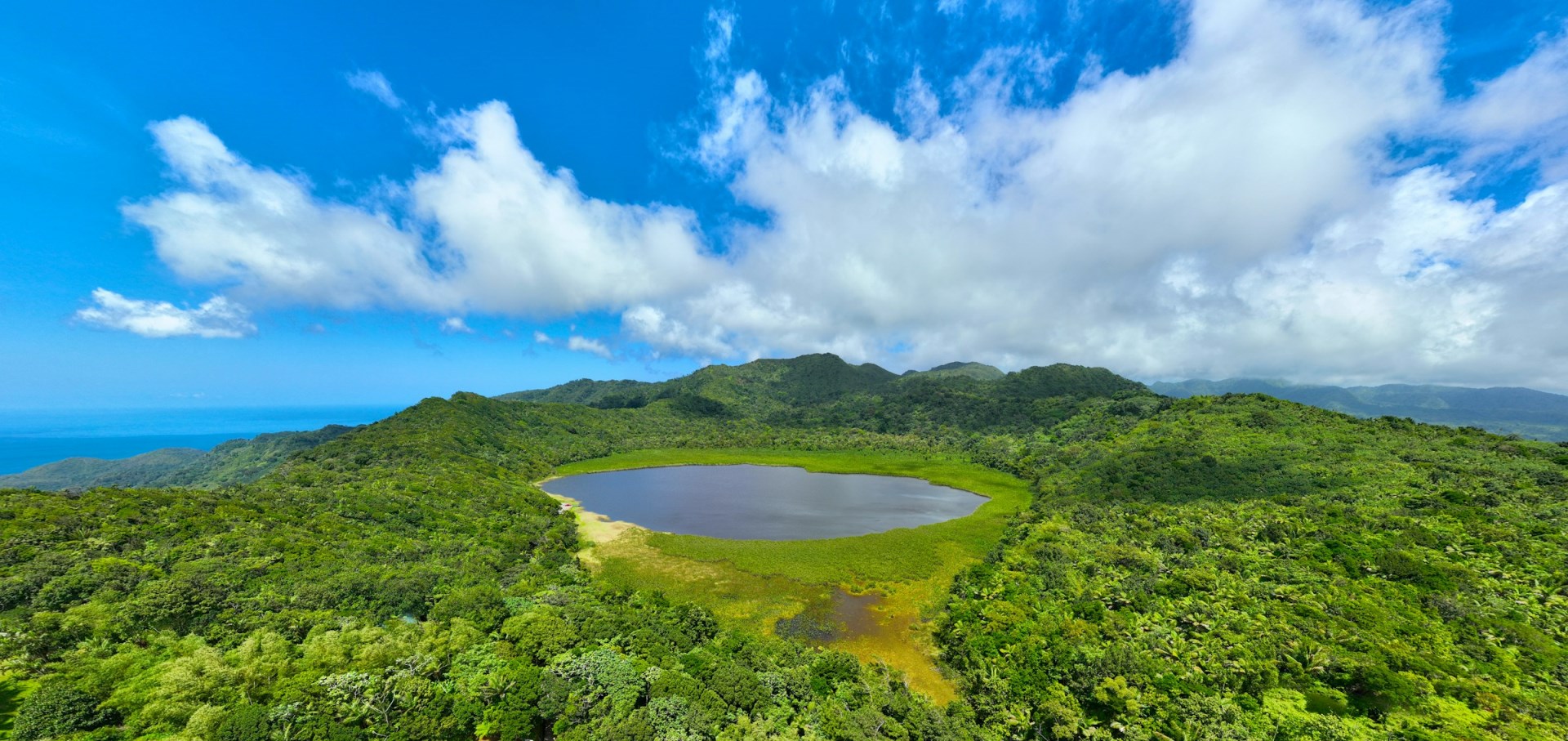
Grand Étang National Park is a protected highland area in central Grenada, surrounding Grand Étang Lake and extending across the island’s forested interior. The park lies within the volcanic mountain landscape of Grenada, where steep slopes, dense rainforest, streams, and misty uplands create conditions that differ from the drier coastal areas. Grand Étang Lake occupies a volcanic crater and is one of the most recognizable features of the reserve. The park forms part of Grenada’s central watershed and protects forests that help supply freshwater to communities across the island.
The forests around Grand Étang have long been connected with Grenada’s agricultural and rural communities. Traditional crops grown around the surrounding highlands include nutmeg, cocoa, bananas, and other tropical produce, reflecting the importance of farming to Grenadian life. The island’s African, European, and Caribbean influences are expressed through music, food, religious traditions, and community celebrations. Grand Étang is also associated with conservation and environmental education, with the protected area helping preserve native forest and water resources. Local knowledge of forest plants, wildlife, farming, and weather remains part of the relationship between communities and Grenada’s mountainous interior.
Grand Étang Lake is surrounded by rainforest and provides a focal point for walks and wildlife observation. Several trails lead through the park and into the surrounding hills, including routes toward Mount Qua Qua and other central Grenadian peaks. The forest supports Mona monkeys, armadillos, agoutis, frogs, reptiles, and numerous tropical birds, while streams and waterfalls occur in wetter sections of the park. The Grand Étang Visitor Centre provides information about the area’s ecology and trails. The park’s elevation also creates a cooler, wetter environment than the coast, with clouds and mist often forming around the forested mountain slopes.
Food connected with the Grand Étang area reflects Grenada’s agricultural landscape, with cocoa, nutmeg, bananas, breadfruit, plantains, root vegetables, and spices commonly used in local cooking. Grenada is known as the “Isle of Spice,” and nutmeg and mace remain important ingredients in both sweet and savory dishes. Oil down, a one-pot meal made with coconut milk, breadfruit, vegetables, and meat or fish, is the country’s national dish. One distinctive feature of Grand Étang is the combination of rainforest and volcanic terrain with productive agricultural land nearby, creating a close relationship between protected forest, freshwater, and the crops that support Grenadian communities.
