







Lake Retba, also known as Lac Rose, is a shallow salt lake near the Atlantic coast, north of Dakar. Its water is separated from the ocean by a narrow belt of dunes, creating a landscape of pale sand, salt flats, and low scrub. The lake is best known for its high salt concentration, which can produce pink, reddish, or mauve tones under particular conditions of sunlight and water chemistry. Its appearance changes with weather and light rather than remaining one fixed color. The lake is part of the cultural and working landscape of the surrounding communities.
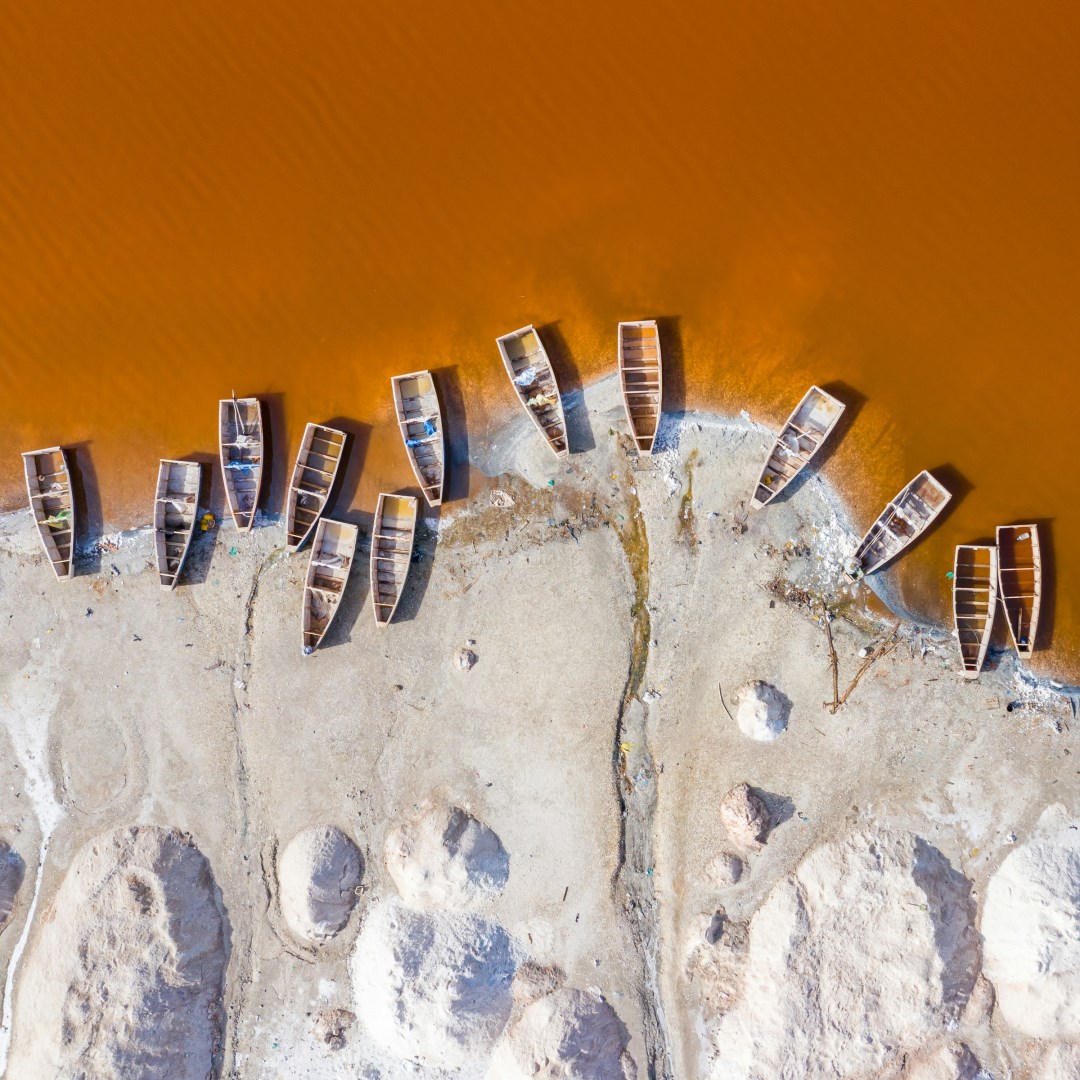
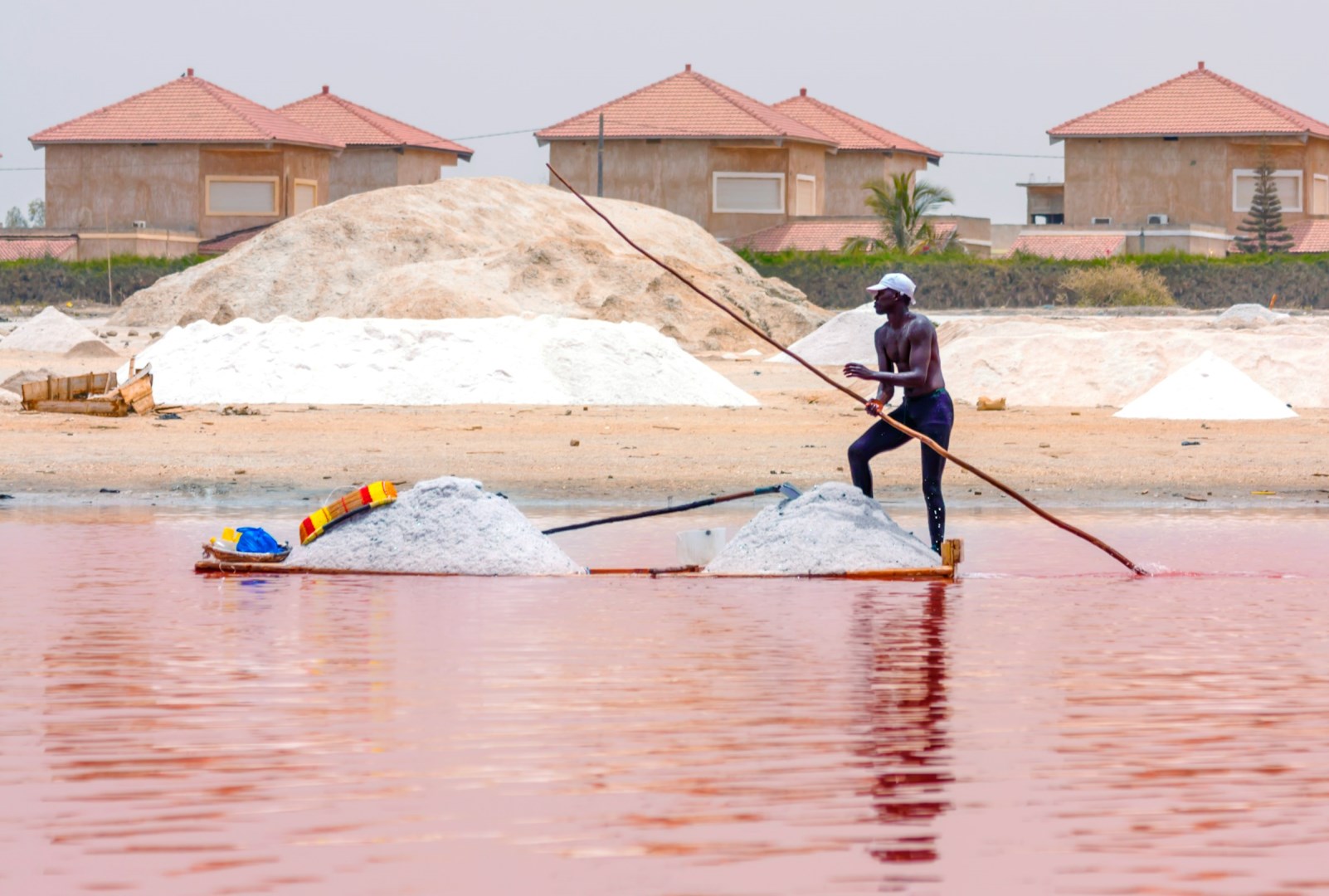
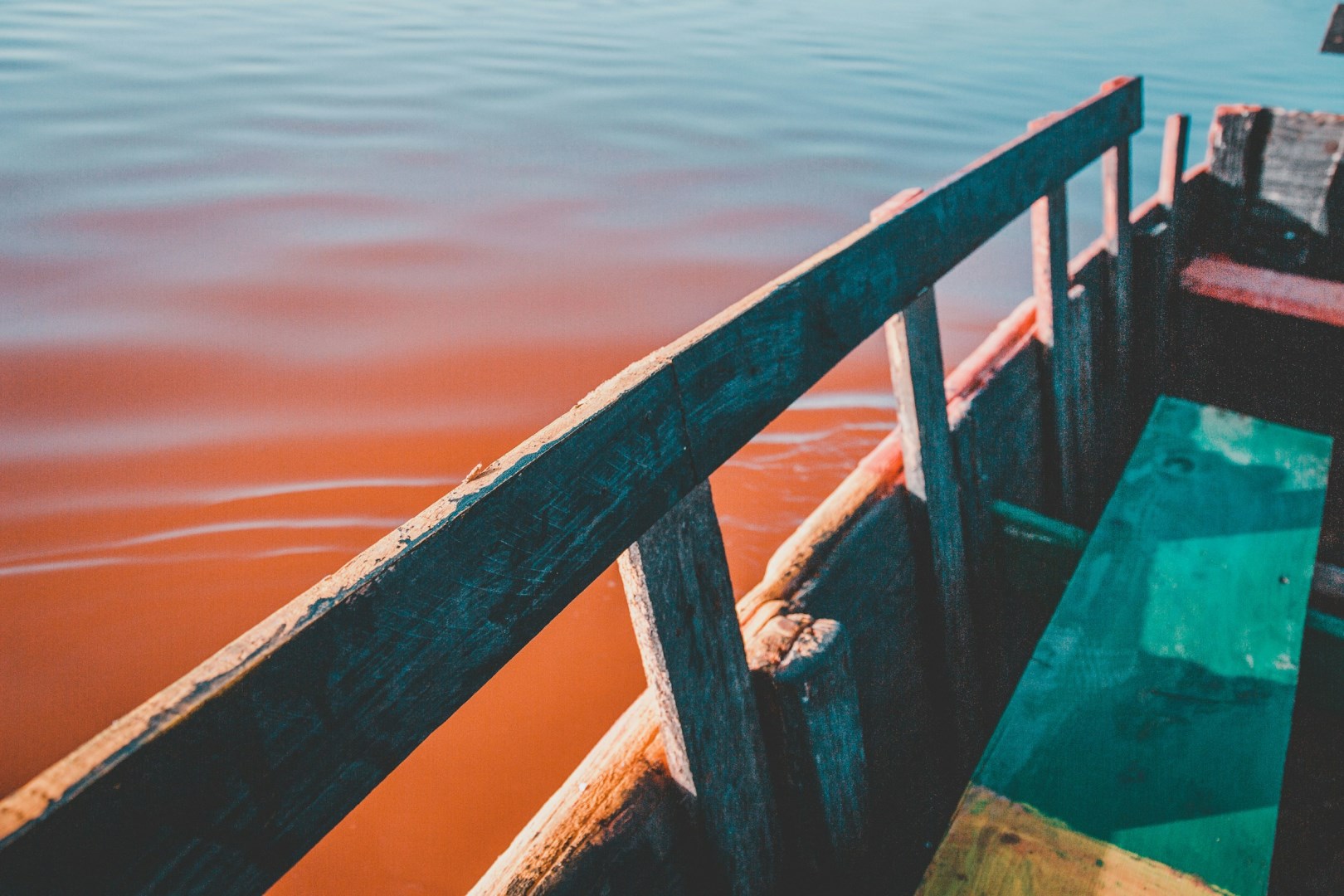
Salt harvesting is central to Lake Retba’s local identity. Workers traditionally collect salt from the lakebed using wooden poles and hand tools, then pile the crystals into large mounds along the shoreline to drain and dry. The salt is commonly treated with vegetable oil to help protect workers’ skin during harvesting. Boats used for collection are often coated with oil to limit the corrosive effects of the highly saline water. This activity supports local livelihoods and has made the lake an important example of how communities have adapted economic practices to a highly saline environment.
The lake is relatively small and shallow, with salt concentrations that can become extremely high during the dry season. Its surrounding dunes provide a clear contrast with the bright water and white salt piles along the shore. The area is also close to Dakar and the coastal resort communities of the Petite Côte, making it accessible as a day excursion. Visitors can observe salt harvesting, walk along sections of the shoreline, and learn about the local production process. The lake’s appearance and physical conditions are closely connected to evaporation, rainfall, and seasonal changes.
Lake Retba’s unusual water color is linked to microorganisms that thrive in its saline conditions, particularly the halophilic alga Dunaliella salina, which produces pigments that can give the water reddish or pink tones. The lake’s extreme salinity also allows people to float easily in the water, although conditions can vary and local guidance is important. Salt remains the defining local product, with harvested crystals transported and sold for domestic and commercial use. The combination of salt workers, wooden boats, white salt mounds, and changing-colored water makes Lake Retba a distinctive cultural and environmental site near Senegal’s capital.
