



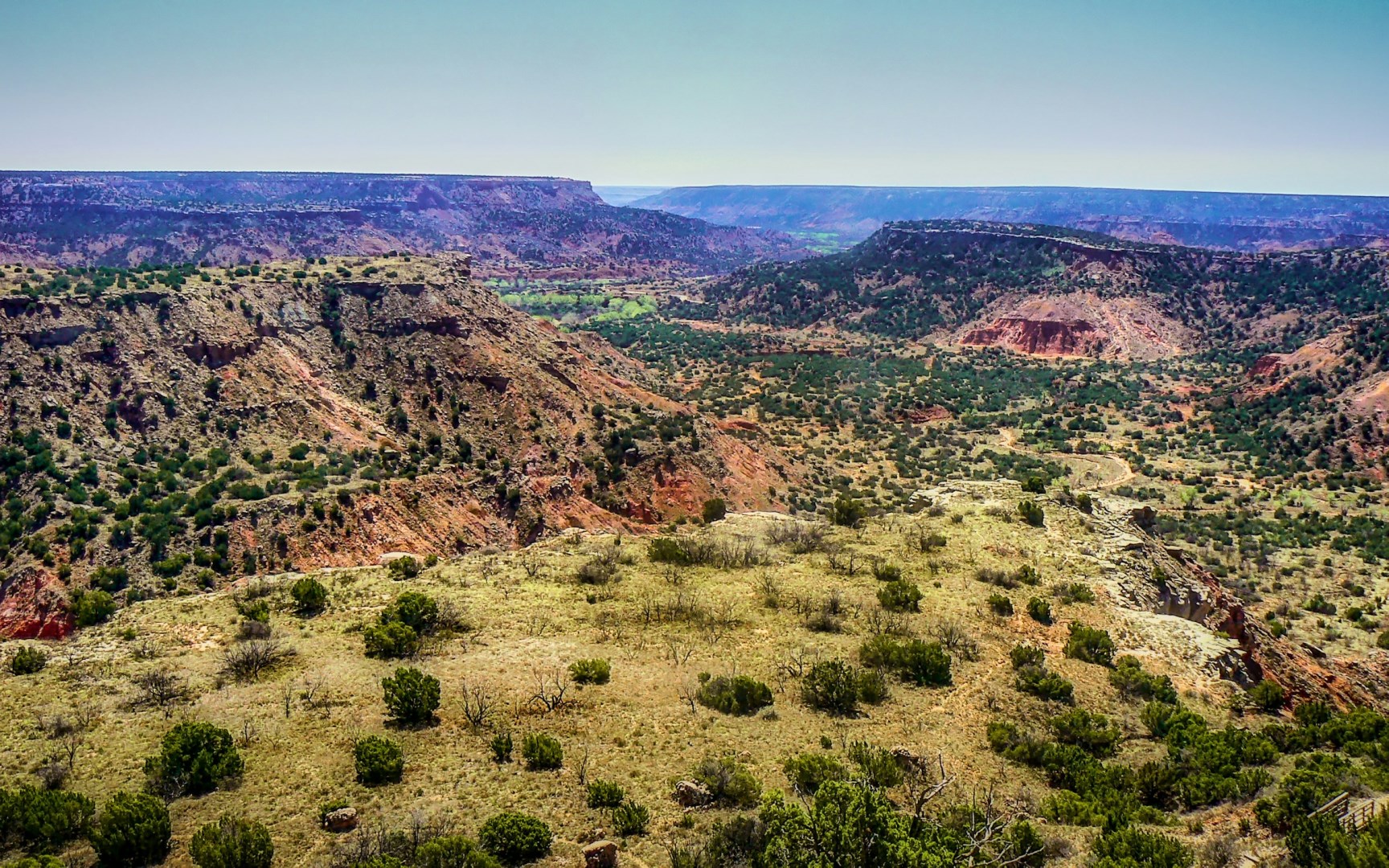
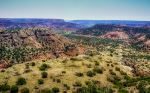
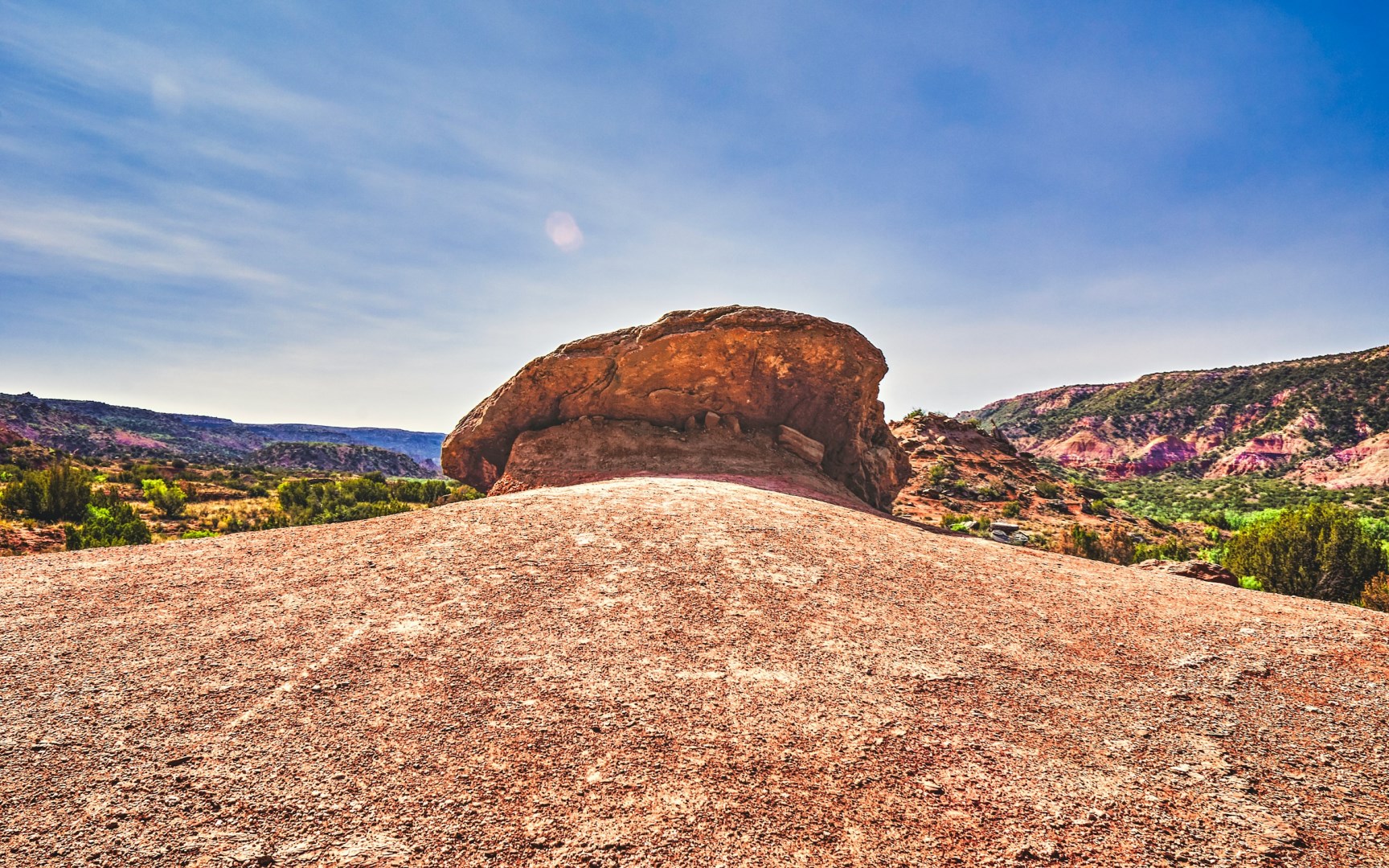
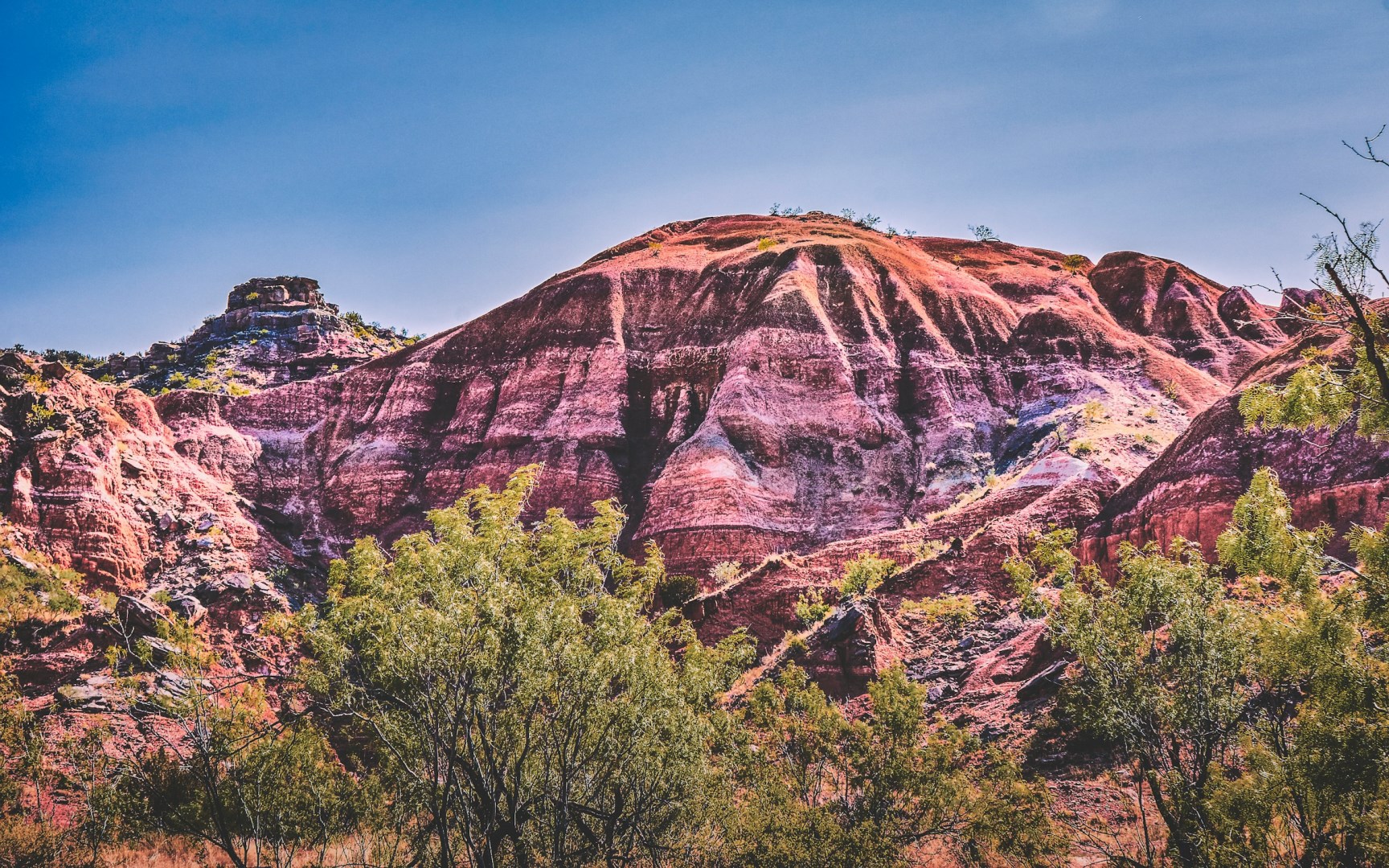
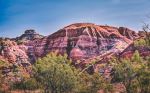
Palo Duro Canyon State Park lies in the Texas Panhandle near Canyon, protecting a section of Palo Duro Canyon, often called the “Grand Canyon of Texas.” The canyon stretches through the surrounding High Plains, with layered rock walls, mesas, buttes, and dry grasslands creating a landscape distinct from most of Texas. Its colorful geology includes bands of red, orange, yellow, and white rock exposed along the canyon walls. The park provides access to this rugged terrain while preserving grassland and canyon habitats shaped by the region’s dry climate.
The canyon has longstanding connections to Indigenous peoples, including the Comanche and Kiowa, who used the surrounding plains and canyon country. Later settlement brought ranching and agriculture to the Texas Panhandle, leaving a strong imprint on the region’s identity. The park also preserves remnants of the Civilian Conservation Corps, whose work included trails, roads, stone structures, and other facilities that remain part of the park landscape. The nearby Panhandle-Plains Historical Museum in Canyon provides broader context about Indigenous cultures, ranching, art, and settlement across the Texas Panhandle.
Palo Duro Canyon State Park contains an extensive network of trails that descend from the rim into the canyon. The Lighthouse Trail leads to one of the park’s best-known geological formations, a tall rock pillar surrounded by layered cliffs and open terrain. The Givens, Spicer and Lowry Running Loop follows canyon terrain with views of hoodoos, mesas, and changing rock formations, while the Capitol Peak area provides access to quieter sections of the canyon. Hiking, mountain biking, horseback riding, camping, and wildlife observation are among the park’s main activities.
The park’s dry grasslands and canyon vegetation support mule deer, wild turkeys, coyotes, roadrunners, lizards, and numerous bird species. Plants include mesquite, juniper, cottonwood, prickly pear, and native grasses, with vegetation changing according to elevation and available water. Nearby communities contribute foods associated with the Texas Panhandle, including beef, barbecue, Tex-Mex dishes, and locally grown produce. A distinctive feature of Palo Duro Canyon is its geology: the exposed rock layers reveal millions of years of sedimentation and erosion, allowing visitors to see a detailed cross-section of the landscape from the canyon floor to the High Plains above.
