


Central Asia | Bangladesh | Bagerhat
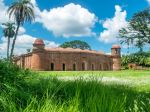
Bagerhat is a historic city in southwestern Bangladesh, known for its remarkable concentration of Islamic monuments and its setting near the former channels of the Ganges-Brahmaputra delta. The city was established by Khan Jahan Ali and developed as an important settlement surrounded by waterways, ponds, roads, and mosques. Today, Bagerhat is best known for the Historic Mosque City of Bagerhat, a UNESCO World Heritage Site containing numerous brick-built religious and civic structures. Its location near the Sundarbans also places the city within a landscape shaped by rivers, wetlands, and mangrove ecosystems.
Bagerhat’s cultural identity is strongly associated with Khan Jahan Ali, a Muslim saint and regional leader whose legacy remains important to local religious traditions. His mausoleum, surrounded by the large Thakur Dighi pond, continues to attract visitors and pilgrims. The city’s historic monuments demonstrate a distinctive form of Bengal Islamic architecture, characterized by brick construction, multiple domes, thick walls, arches, and terracotta decoration. The Bagerhat Museum, located near the major monuments, displays inscriptions, stone sculptures, terracotta plaques, pottery, and other archaeological objects that help explain the region’s architectural and cultural heritage.
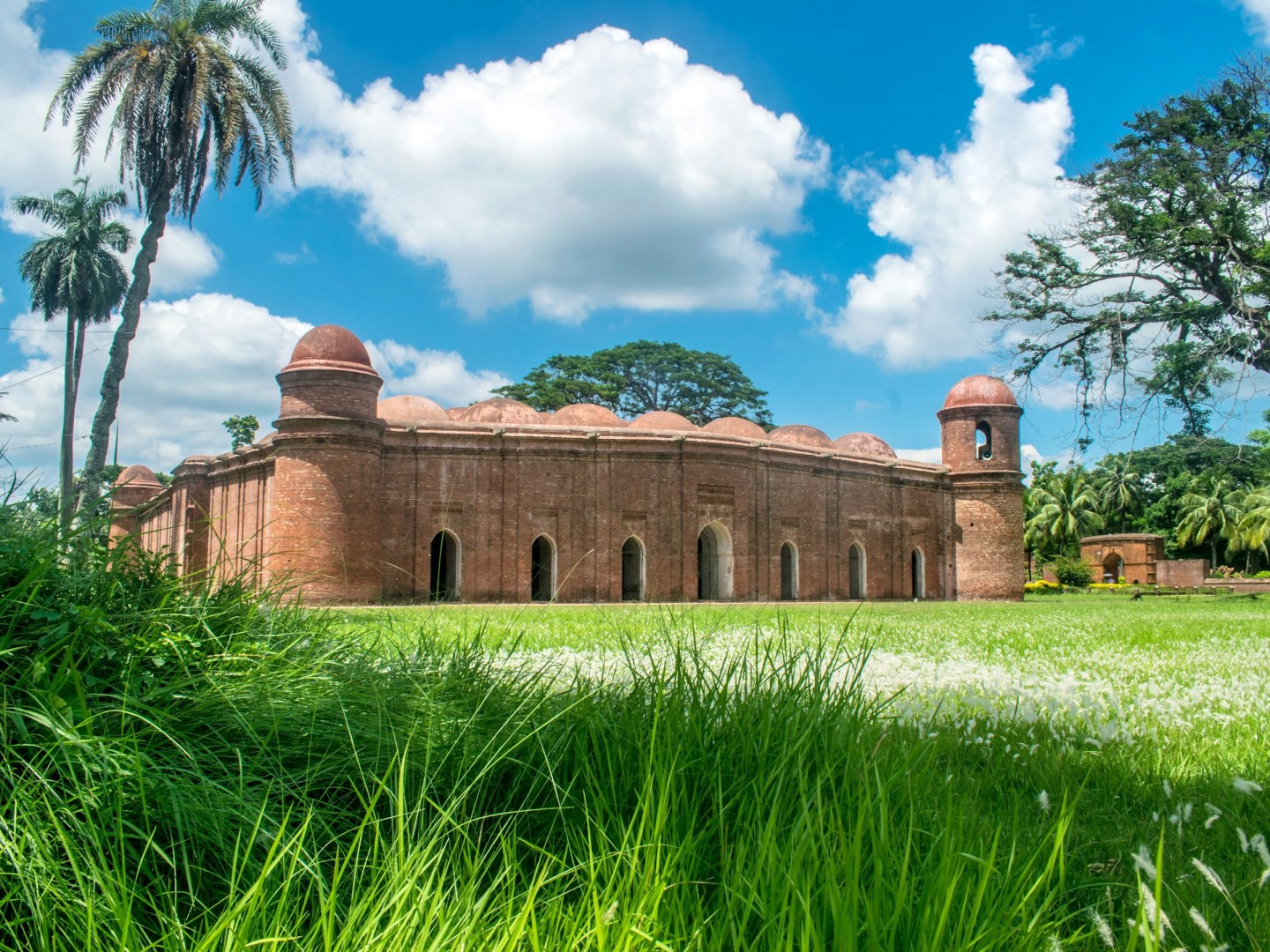
The Sixty Dome Mosque, also called Shait Gambuj Mosque, is Bagerhat’s most recognizable landmark. Despite its common name, the building has 77 domes and is supported by 60 stone columns arranged within its large prayer hall. Other surviving monuments include the Nine Dome Mosque, Singair Mosque, Chunakhola Mosque, Bibi Begni Mosque, and the mausoleum of Khan Jahan Ali. Ancient ponds, roads, bridges, and other remains are also part of the Historic Mosque City, showing that Bagerhat was planned as a substantial urban settlement rather than simply a collection of isolated religious buildings.
Food in Bagerhat reflects the cuisine of southwestern Bangladesh, where rice, freshwater fish, vegetables, lentils, mustard oil, and aromatic spices are common ingredients. The city’s proximity to rivers and wetlands has traditionally supported fishing and agriculture, while nearby communities also maintain connections with the resources of the Sundarbans. One distinctive detail is the scale of Bagerhat’s historic urban remains: UNESCO records the former city as covering a large area and containing numerous mosques, mausoleums, roads, bridges, water tanks, and other structures. The surviving monuments provide an unusually concentrated record of early Islamic architecture in Bengal.
Other Popular Destinations in Bangladesh