



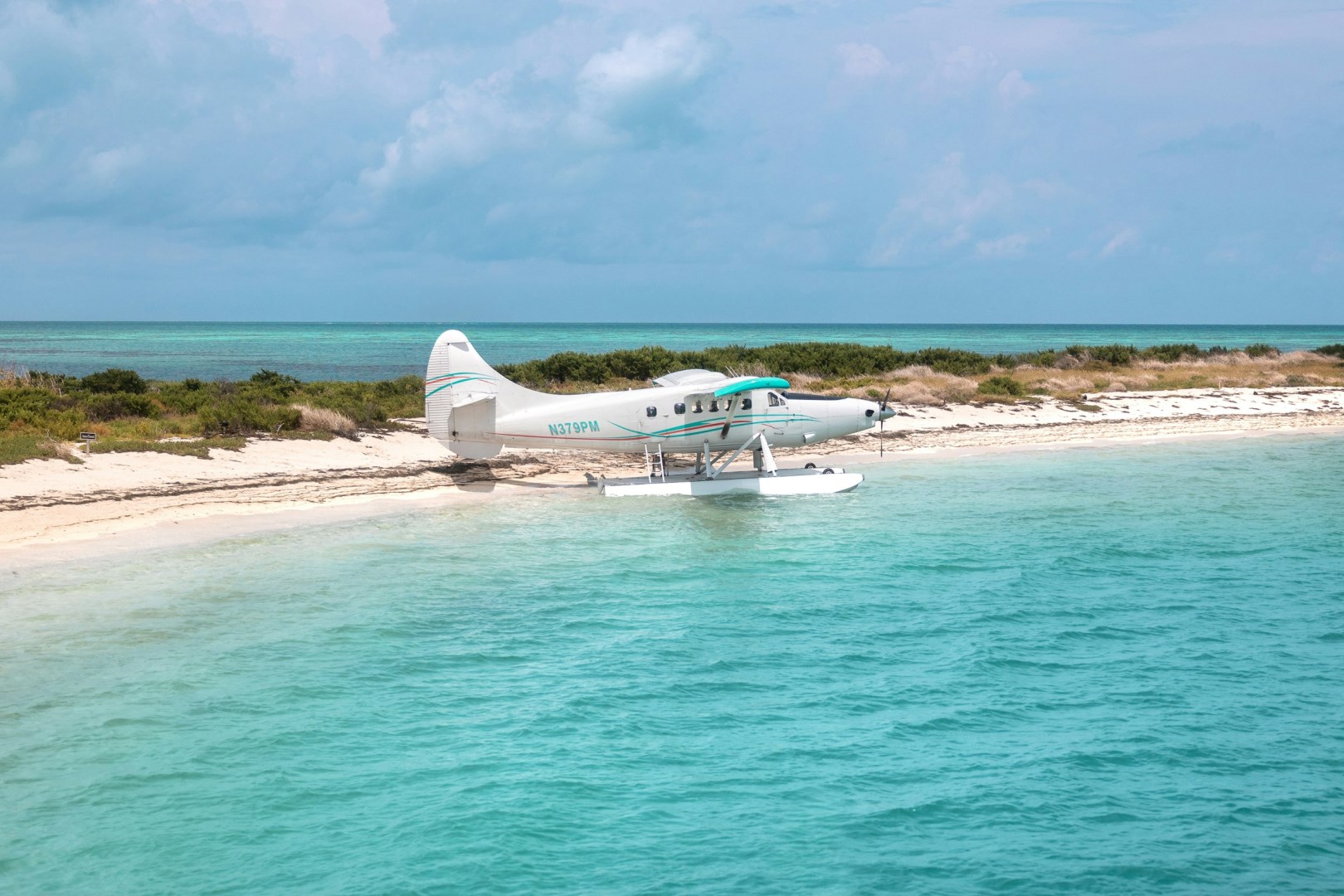
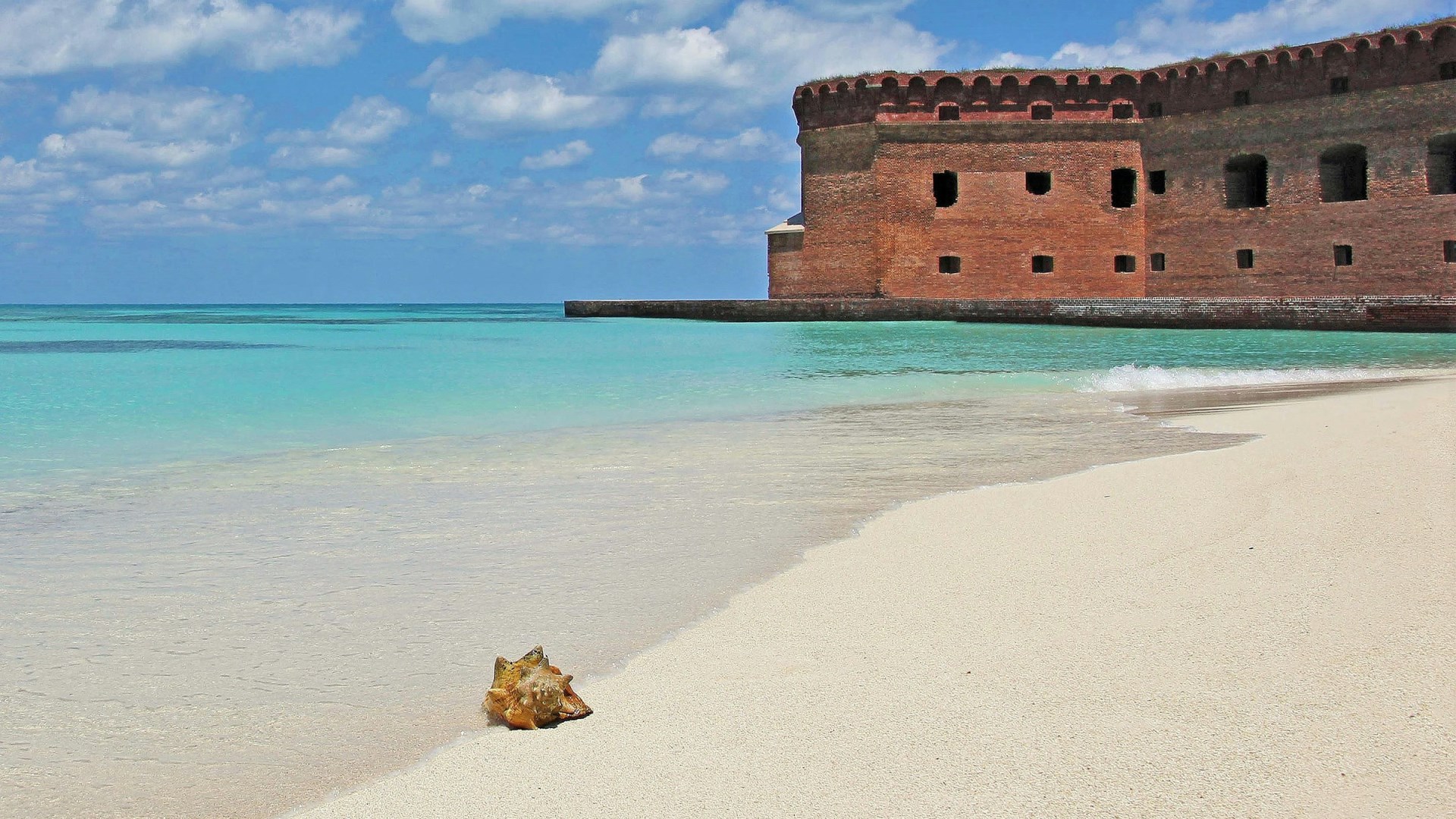
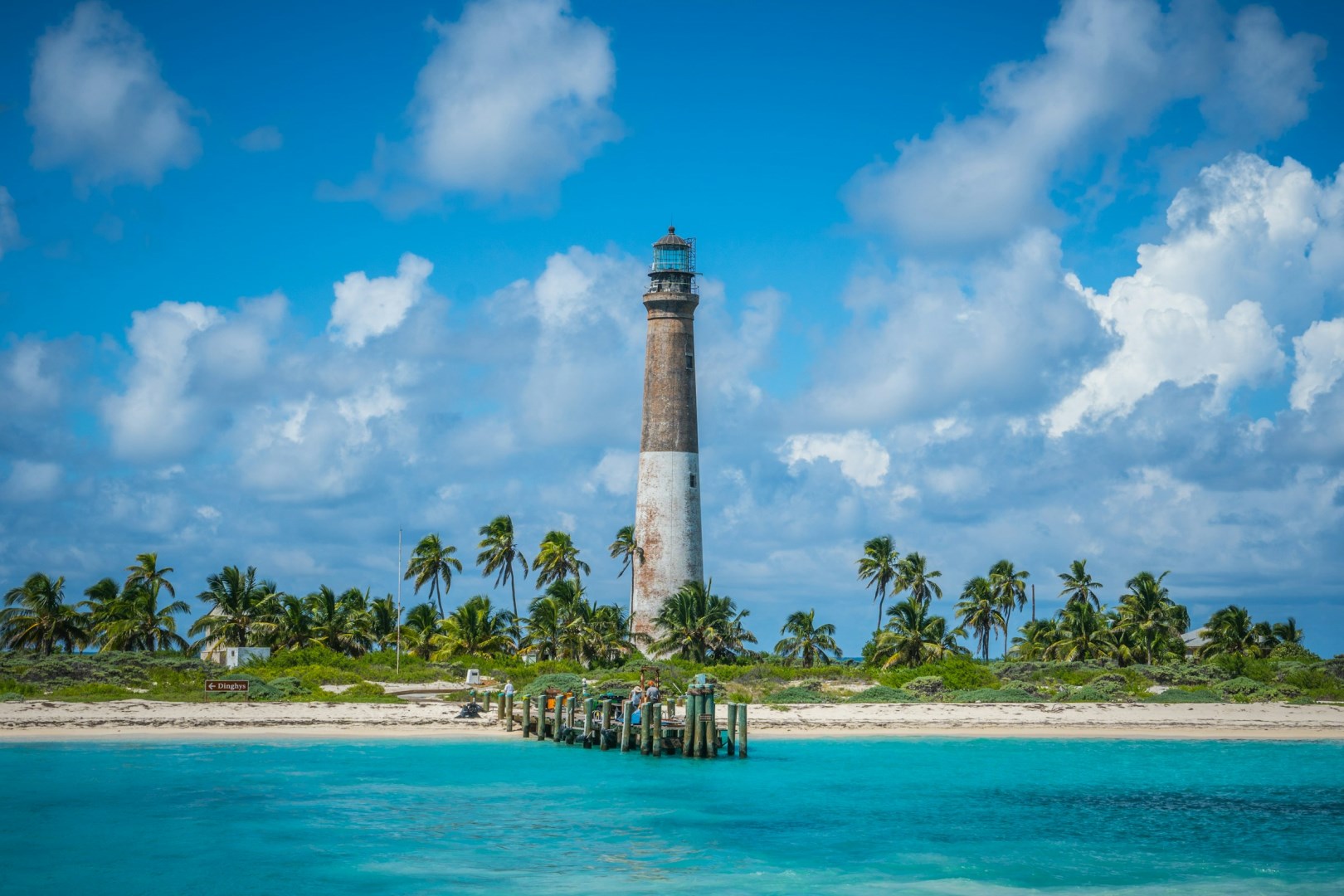
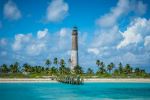
Dry Tortugas National Park is a remote island and marine park in the Florida Keys, located nearly 70 miles west of Key West. The park consists of seven small islands surrounded by shallow waters, coral reefs, seagrass beds, and open ocean. More than 99 percent of the park is water, making its marine environment as important as its land area. Garden Key is the main visitor destination and contains historic Fort Jefferson, while Loggerhead Key, the largest island, is known for its lighthouse and protected coastal habitat. Access is by boat, ferry, private vessel, or seaplane.
The park has a long maritime and military history shaped by its strategic position between the Gulf of Mexico, Caribbean, and Atlantic Ocean. The islands were originally called Las Tortugas because of the abundance of sea turtles found in surrounding waters. Fort Jefferson, located on Garden Key, is one of the largest all-masonry coastal forts in the United States and was built to protect shipping routes through the region. It later served as a military prison, most notably holding Dr. Samuel Mudd, who was imprisoned for his connection to John Wilkes Booth.
Dry Tortugas is especially notable for its underwater environment. Coral reefs surround the islands and support roughly 30 species of coral along with tropical fish, lobsters, sponges, sea stars, anemones, sharks, and other marine life. Snorkeling and diving around Garden Key provide access to coral formations, historic structures, and shipwreck remains. Loggerhead Key contains a historic brick lighthouse, while Bush Key supports important nesting colonies of seabirds and is seasonally closed to protect them. The park has recorded nearly 300 bird species, making it an important stop for migratory birds traveling between North and South America.
There are no conventional restaurants or permanent commercial communities within Dry Tortugas National Park, so visitors generally bring food and water for their time on the islands. The remote setting makes careful preparation an essential part of a visit, particularly because services are limited once visitors arrive. Sea turtles remain one of the park’s defining natural features, with green and loggerhead turtles nesting on sandy beaches and several other species occurring in surrounding waters. Hundreds of shipwrecks also lie within the reefs and waters around the islands, reflecting the navigational hazards that helped make the Dry Tortugas historically important.
Other Popular Destinations in Florida


