
South America | Bolivia | Sajama National Park
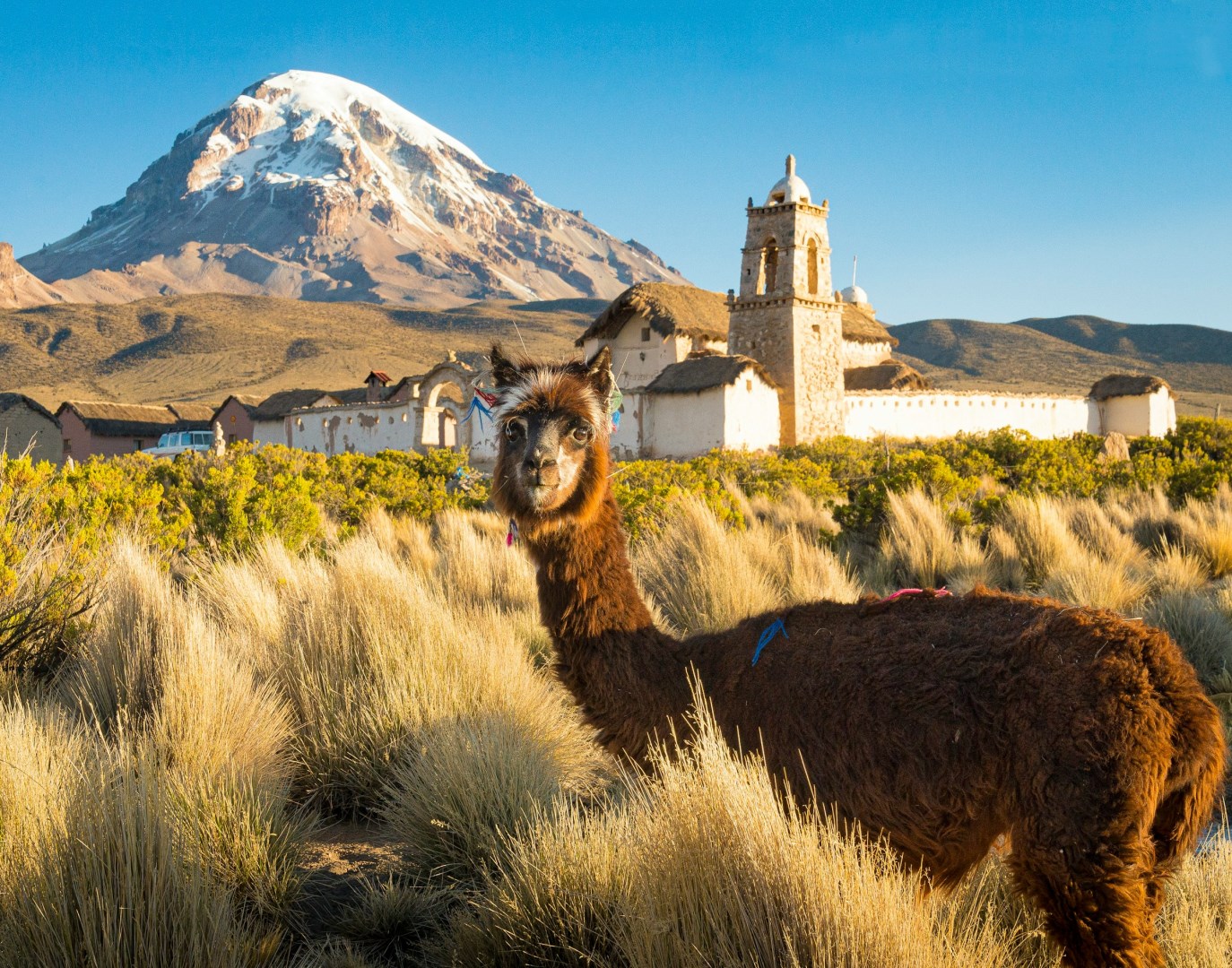
Sajama National Park lies in western Bolivia near the border with Chile, within the highlands of the Oruro Department. It protects a broad landscape of volcanoes, high-altitude grasslands, wetlands, volcanic formations, and native queñua forests. The park is centered on Nevado Sajama, Bolivia’s highest mountain, whose snow-covered summit rises above the surrounding Altiplano. A small number of rural communities live within and around the protected area, maintaining pastoral and agricultural practices adapted to the cold, dry environment. The park is managed by Bolivia’s National Service of Protected Areas (SERNAP).
The cultural landscape of Sajama is closely connected with the Aymara communities of the region. Traditional settlements contain adobe houses and historic churches, including colonial-era churches in the communities of Sajama, Lagunas, and Suni Papelpampa. Livestock raising, particularly of llamas and alpacas, remains important to local livelihoods, while bofedales, or high-altitude wetlands, provide essential grazing areas. Several sites also have ritual significance within local Andean traditions, linking the natural landscape with community beliefs and practices.
Sajama National Park contains a range of distinctive highland attractions. Geothermal features include geysers and hot springs at places such as Manasaya, while high-altitude lagoons provide habitat for aquatic birds. The park’s tourism routes also pass through the Caripe wetland, queñua forests, and viewpoints overlooking the Andean landscape. Nevado Sajama is the park’s most prominent mountain, while the Payachata volcanic group, including Parinacota and Pomerape, rises near the Chilean border. Vicuñas and suris, the local name for the greater rhea, are among the wildlife found across the park.
Food and daily life in Sajama reflect the resources available in the high Andes. Llama and alpaca products, potatoes, quinoa, and chuño are important parts of regional food traditions, while local communities also produce textiles from camelid fibers. The park’s wetlands are particularly important to grazing communities and wildlife because water is scarce across much of the surrounding Altiplano. Its combination of volcanoes, geysers, wetlands, wildlife, traditional villages, and high-altitude pastoral landscapes makes Sajama National Park an important example of Bolivia’s natural and cultural heritage.
Learn More About Sajama National Park
Other Popular Destinations in Bolivia