


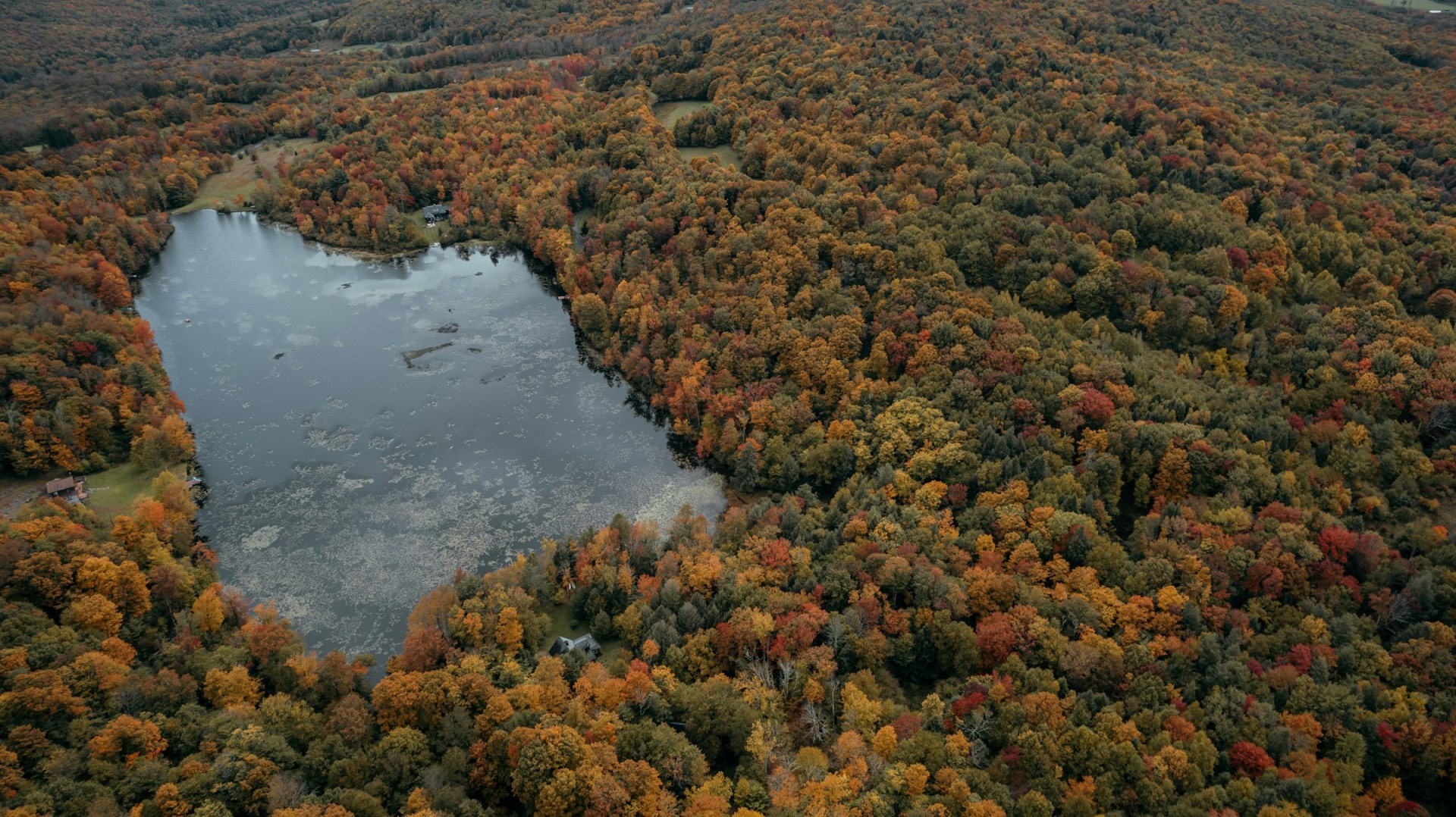
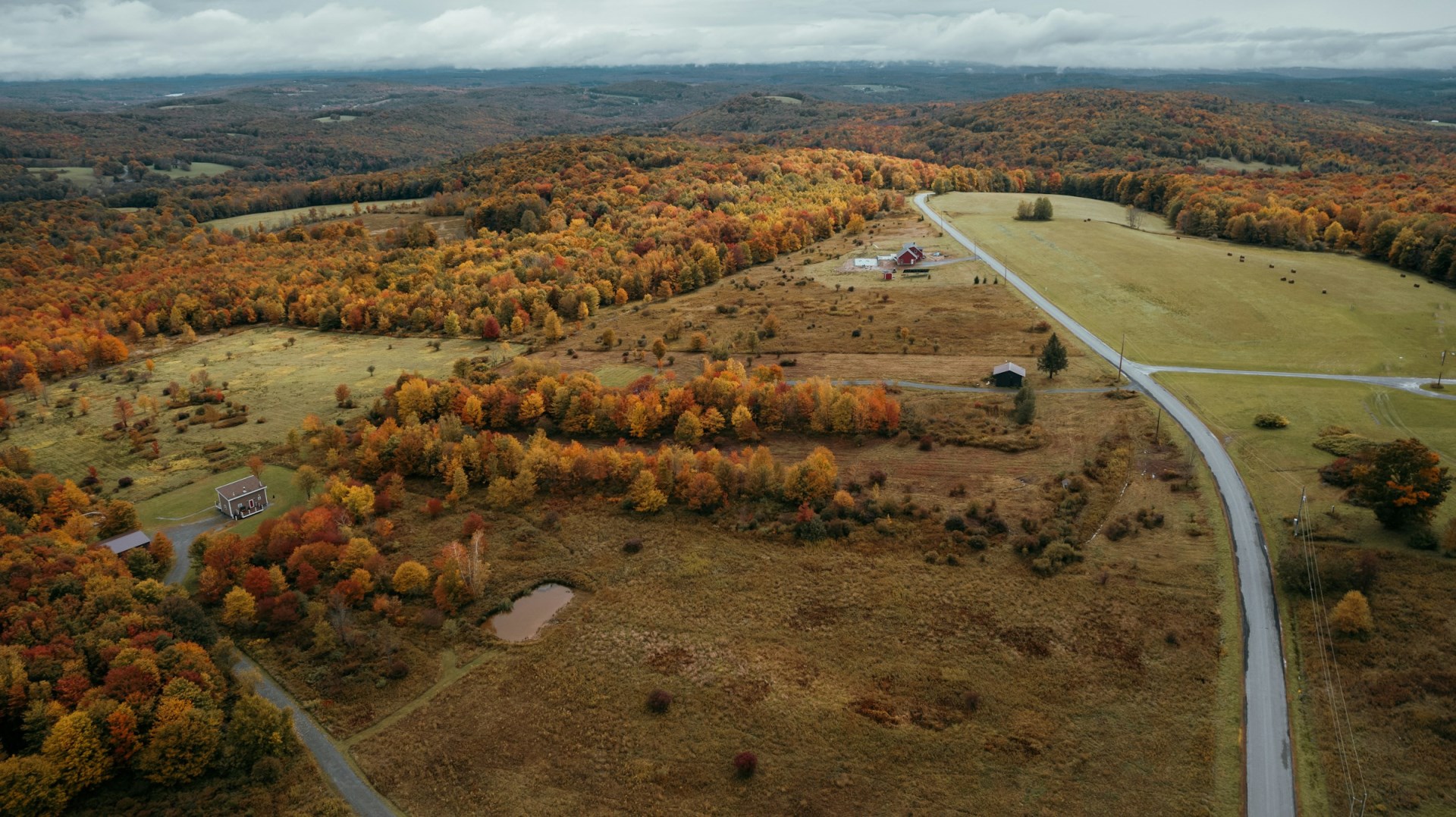

The Catskill Mountains are a mountainous region in southeastern New York, forming part of the larger Appalachian landscape. The area is centered on the Catskill Park, which covers more than 700,000 acres across Delaware, Greene, Sullivan, and Ulster counties. Forested slopes, steep valleys, streams, lakes, and rocky overlooks define the terrain, while small towns and rural communities occupy the surrounding valleys. The Catskills are within easy reach of the New York metropolitan area but have a distinctly rural setting, with hiking, camping, fishing, skiing, and scenic driving among the main outdoor activities.
The Catskills have a long cultural history involving Indigenous peoples, farming communities, tourism, and the arts. The region has strong connections to the Hudson River School, whose landscape painters drew inspiration from the mountains, forests, waterfalls, and valleys. Writers also found material here, including Washington Irving, whose story of Rip Van Winkle helped make the Catskills part of American literary culture. Historic mountain resorts later attracted visitors to the area, while old farmsteads, stone walls, villages, and former resort sites provide reminders of earlier communities and industries.
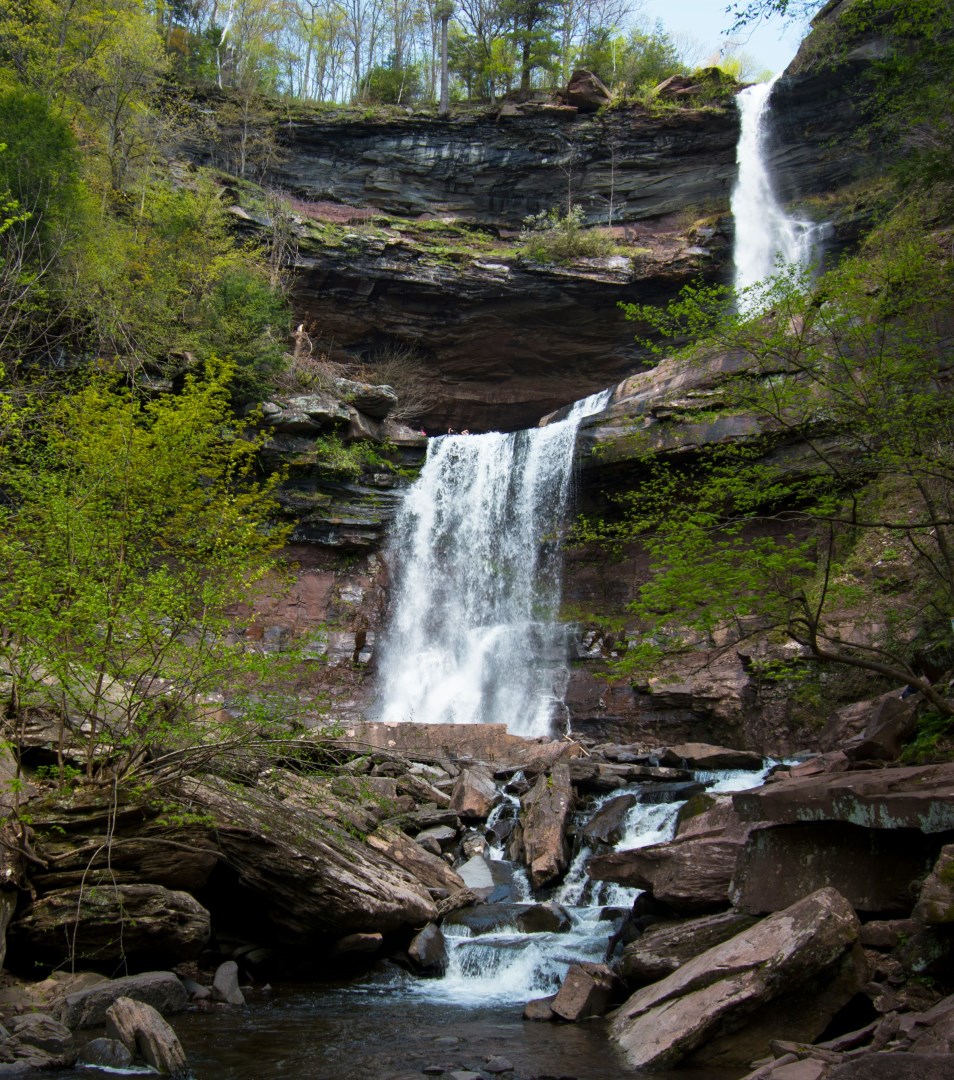
The landscape contains numerous notable natural landmarks. Kaaterskill Falls is one of the best-known waterfalls in the region, with two main drops totaling more than 260 feet. Slide Mountain is the highest peak in the Catskills and lies within the Slide Mountain Wilderness. The Escarpment Trail provides views toward the Hudson Valley, while overlooks such as Giant Ledge and Huckleberry Point offer expansive mountain panoramas. The Catskill Park also contains lakes, streams, forests, and protected wilderness areas where visitors can hike, camp, fish, paddle, and observe wildlife including black bears, white-tailed deer, beavers, coyotes, and numerous bird species.
Food and local agriculture remain important to communities throughout the Catskills, with farms, farmers’ markets, breweries, cideries, restaurants, and small food producers found across the region. Trout fishing has a particularly strong tradition, with waterways such as the Beaverkill known for their fishing heritage. The Catskills also have a distinctive connection to New York City’s water supply, with several large reservoirs in the region providing drinking water to the city. This relationship has helped protect extensive areas of land around the reservoirs, adding another layer to the region’s environmental and economic importance.
