




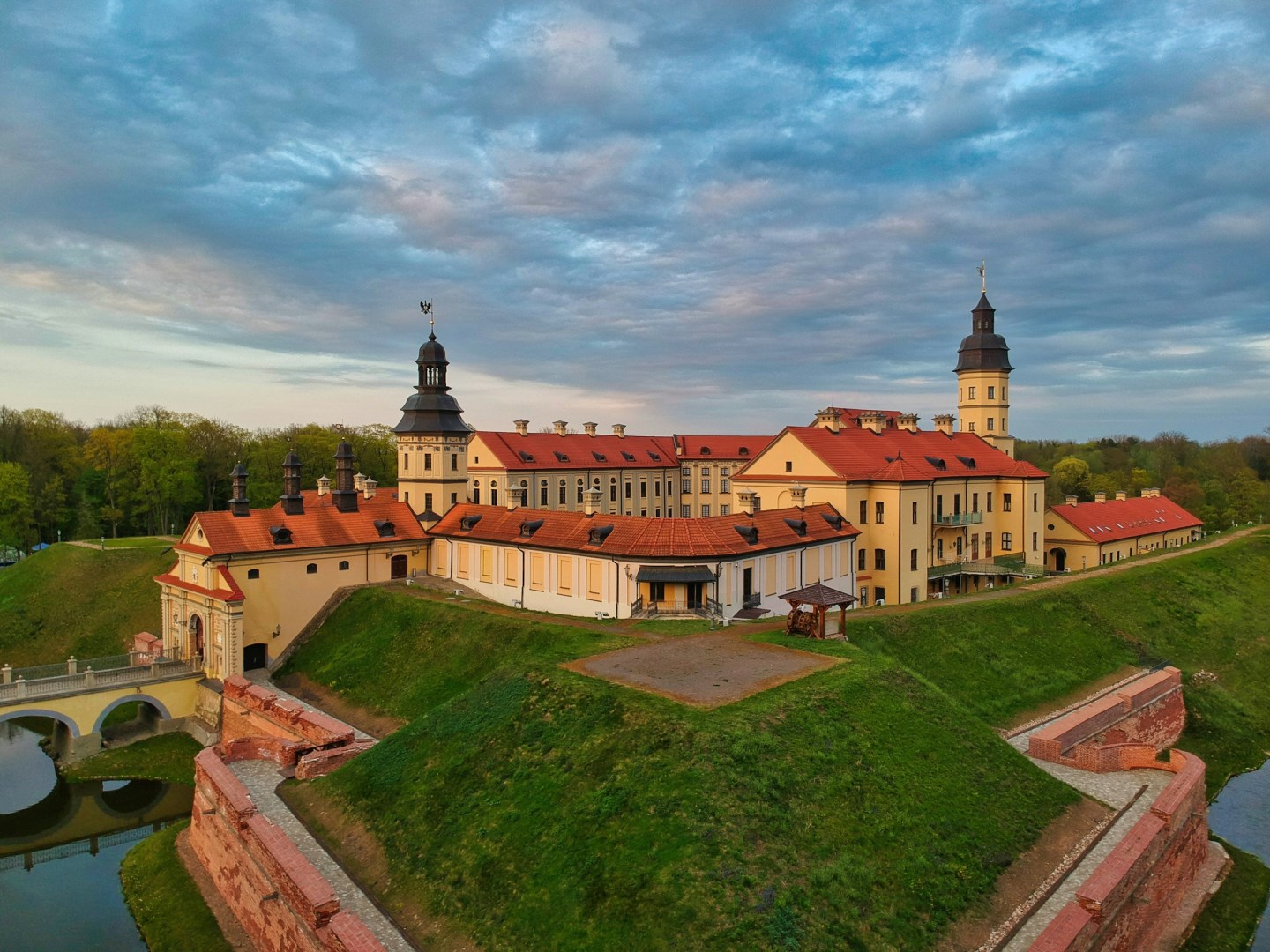
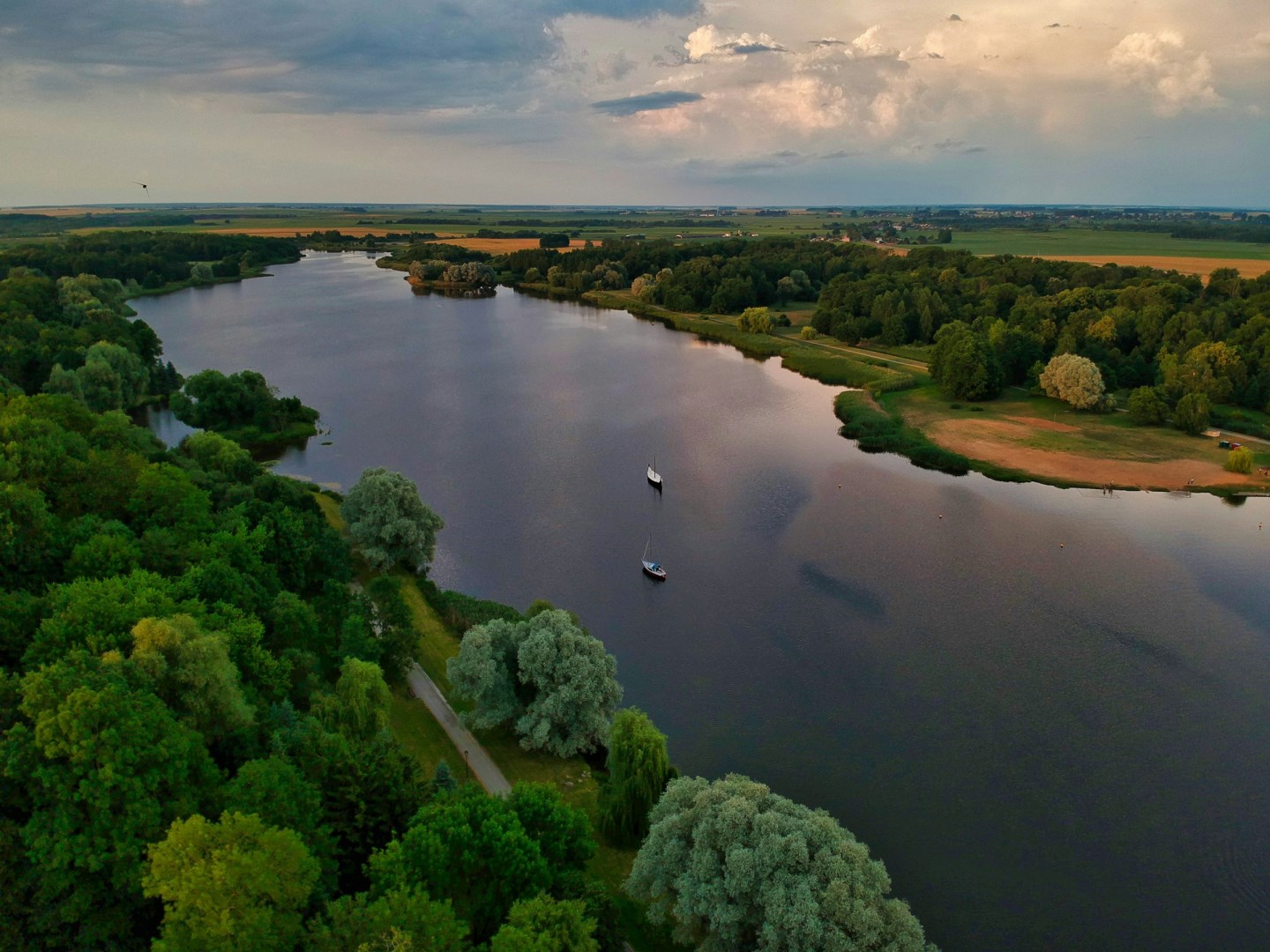
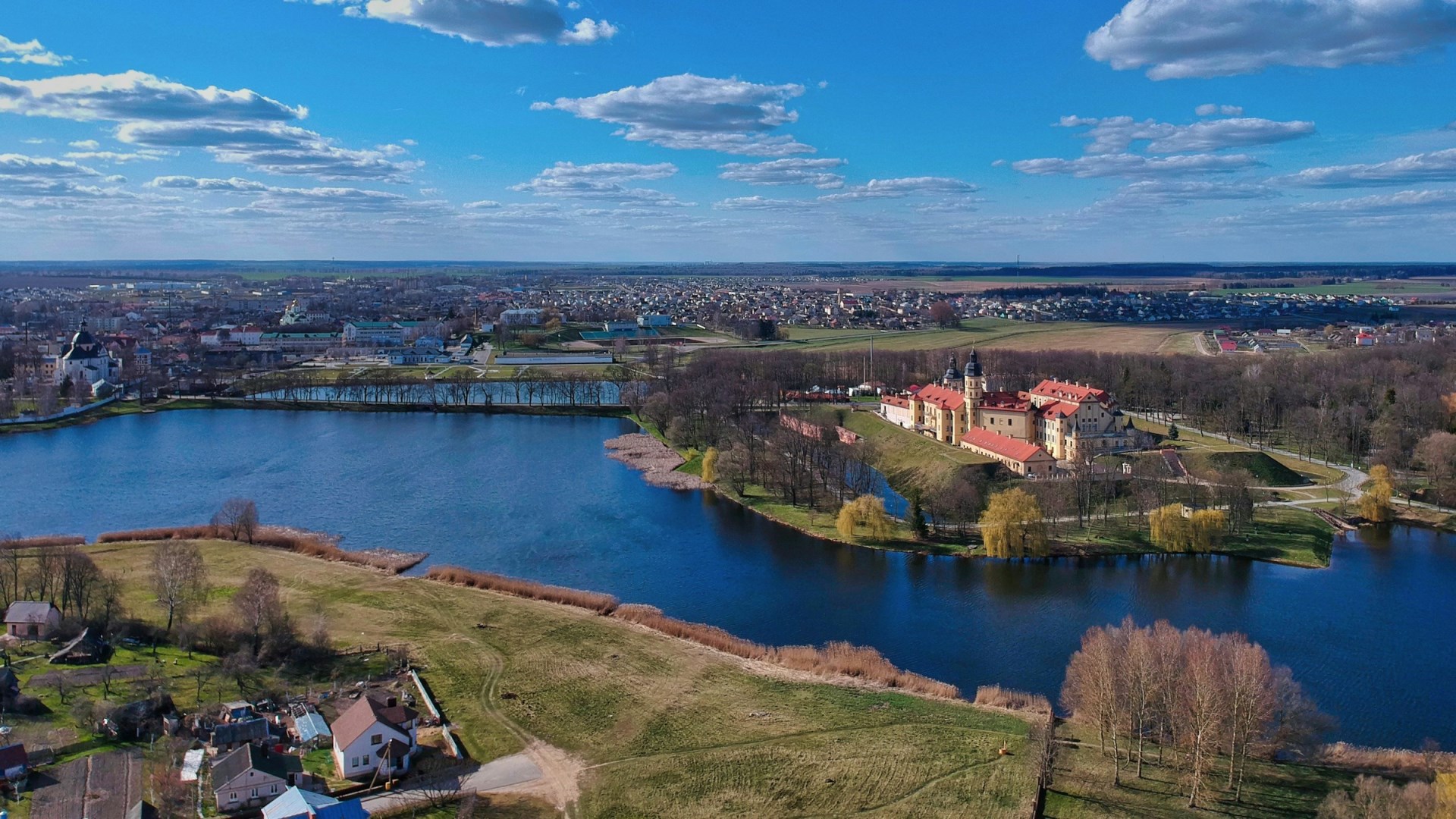
Nesvizh is a historic town in central Belarus known for its connection with the Radziwill family and its well-preserved architectural heritage. The town lies among low wooded landscapes and cultivated fields, with the Nesvizh Castle complex forming its principal landmark. The castle, gardens, ponds, and surrounding historic buildings create a distinctive cultural landscape that is recognized by UNESCO as a World Heritage property. Nesvizh also contains a compact historic center with religious buildings, former residences, and streets that reflect the town's long role as a regional center of culture, craftsmanship, and architecture.
The history of Nesvizh is closely connected with the Radziwill dynasty, one of the influential aristocratic families of the former Grand Duchy of Lithuania and the Polish-Lithuanian Commonwealth. Their residence helped turn the town into a center for architecture, arts, science, and crafts, attracting architects and artisans from different parts of Europe. Corpus Christi Church is particularly significant as the Radziwill family mausoleum and an important example of Central European church architecture. The town also reflects the region's diverse religious heritage, with Catholic, Orthodox, Protestant, and Jewish traditions having formed part of its cultural landscape.
Nesvizh Castle is the town's principal attraction, consisting of interconnected palace buildings arranged around a six-sided courtyard and surrounded by the remains of historic fortifications and a moat. The castle is set within an extensive landscaped area containing parks, ponds, and waterways. Nearby, Corpus Christi Church is linked to the castle by a causeway and contains the Radziwill family mausoleum. Other notable sites include Nesvizh Town Hall and Market Square, the Slutsk Gate, and the Bernardine monastery complex. Together, these buildings provide a compact view of the town's architectural heritage.
Local food in Nesvizh reflects the broader culinary traditions of Belarus, with potatoes, rye, mushrooms, berries, dairy products, and meat forming important ingredients. Traditional Belarusian dishes associated with the region include draniki, potato pancakes often served with sour cream, as well as kalduny, potato dumplings filled with meat or other ingredients. Rural food traditions also include mushroom dishes, pickled vegetables, fruit preserves, and homemade baked goods. A distinctive detail of Nesvizh is the way its cultural landscape brings together palace architecture, religious buildings, artificial lakes, gardens, and historic urban spaces within a relatively small area.
