




The Bow River is one of Alberta’s best-known waterways, flowing from the Canadian Rockies through Banff National Park before continuing across the foothills and plains toward Calgary. Its headwaters are fed by glaciers and mountain snow, giving the river a cold, clear character and connecting high alpine landscapes with the prairie environment downstream. The river passes through Banff, Canmore, and Calgary, where it supports recreation, wildlife habitat, agriculture, and municipal water supplies. Its broad valley also provides an important natural corridor through the southern Canadian Rockies and Alberta foothills.
The Bow River lies within the traditional territories of several Indigenous peoples, including the Stoney Nakoda, Tsuut’ina, Blackfoot, and Îyâxe Nakoda communities. Indigenous peoples have long used the river valley for travel, hunting, fishing, and gathering, with the waterway forming part of a much wider cultural landscape. The river also influenced the development of settlements and transportation routes in southern Alberta. Today, communities along the Bow continue to use the river for recreation and daily life, while conservation programs focus on maintaining water quality, aquatic habitat, and healthy river ecosystems.
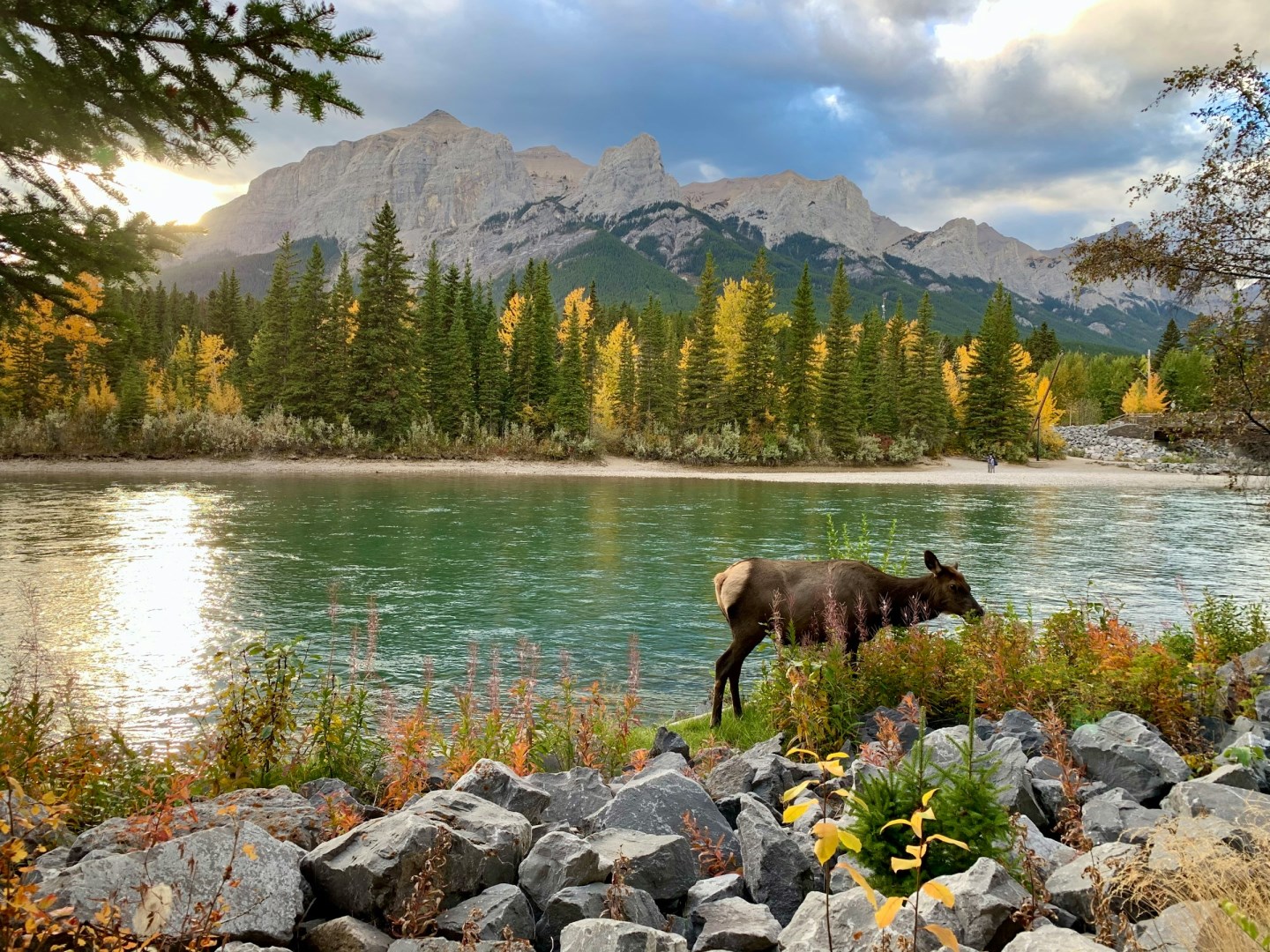
The upper Bow River flows through mountain scenery around Lake Louise, Bow Lake, and the Bow Valley, with the Bow Glacier feeding the river's headwaters. In Banff National Park, the river passes beneath forested slopes and rugged peaks before reaching the town of Banff and continuing toward Canmore. Farther east, the Bow flows through Calgary, where pathways follow its banks and several parks provide access to the water. The river supports trout, whitefish, and other aquatic species, while surrounding habitats provide food and shelter for elk, deer, beavers, birds, and other wildlife. Canoeing, fishing, rafting, hiking, and cycling are popular along different sections.
The Bow River is important to Alberta’s food and agricultural systems because its water supports irrigation across the province’s southern plains. Crops grown in the Bow River irrigation district include potatoes, sugar beets, grains, and forage, while ranching remains significant in the surrounding foothills and prairie. Recreational fishing is also closely associated with the river, particularly for trout in its colder mountain sections. A distinctive feature of the Bow is the way its character changes downstream: glacial and snowmelt-fed water begins among alpine peaks, passes through forested mountain valleys, and eventually enters a broad prairie landscape where the river becomes part of a major irrigation network.
