





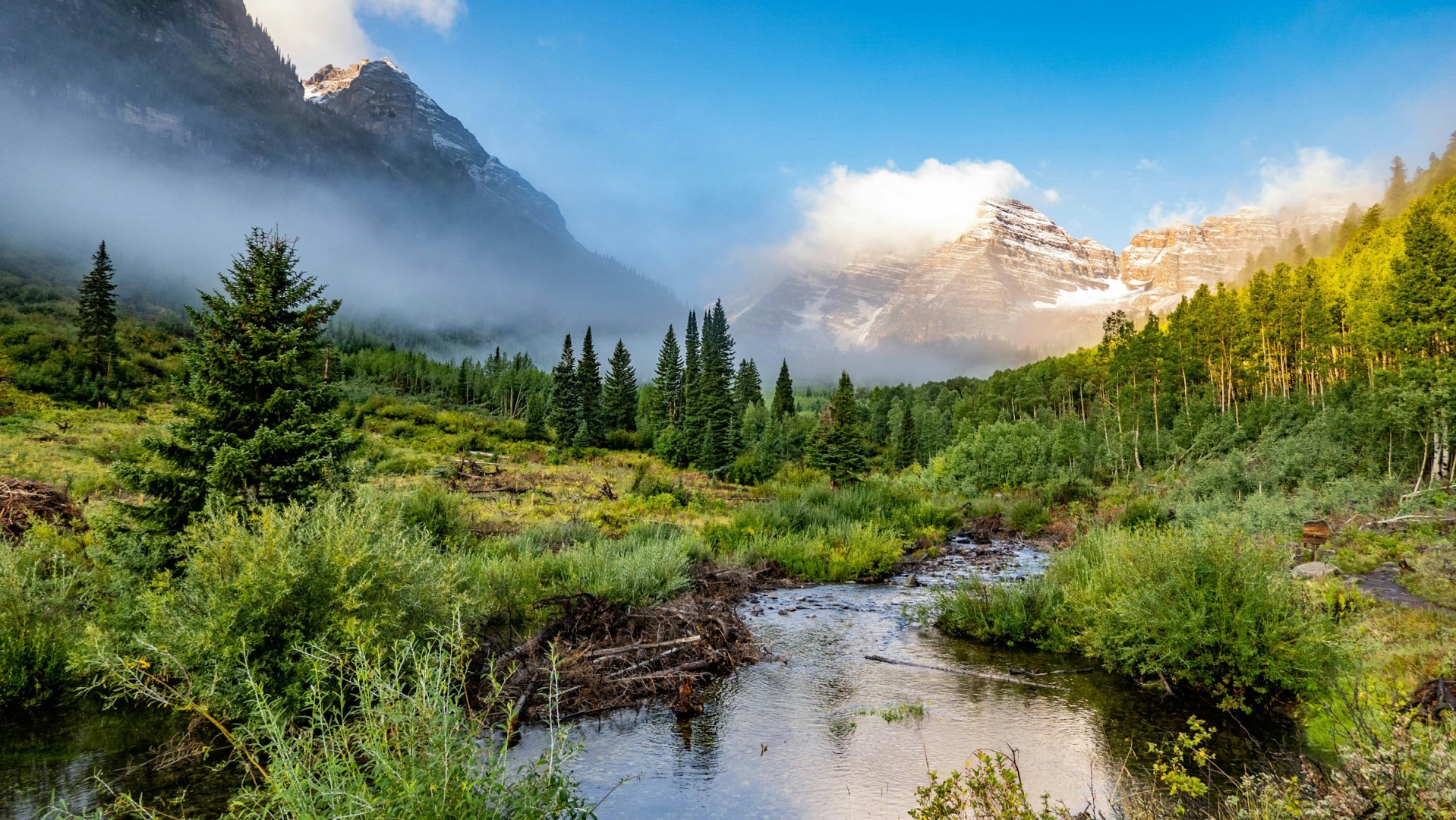

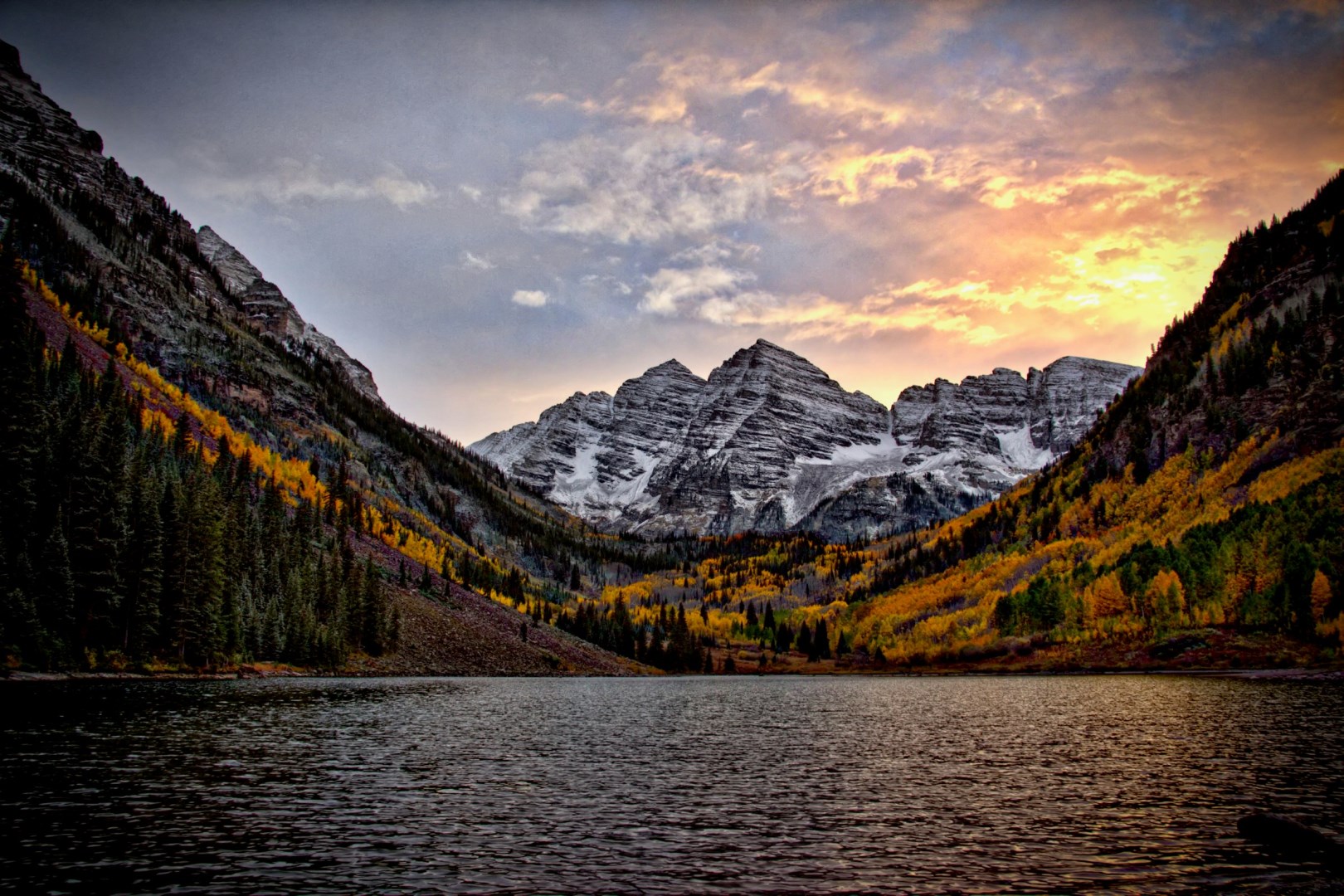

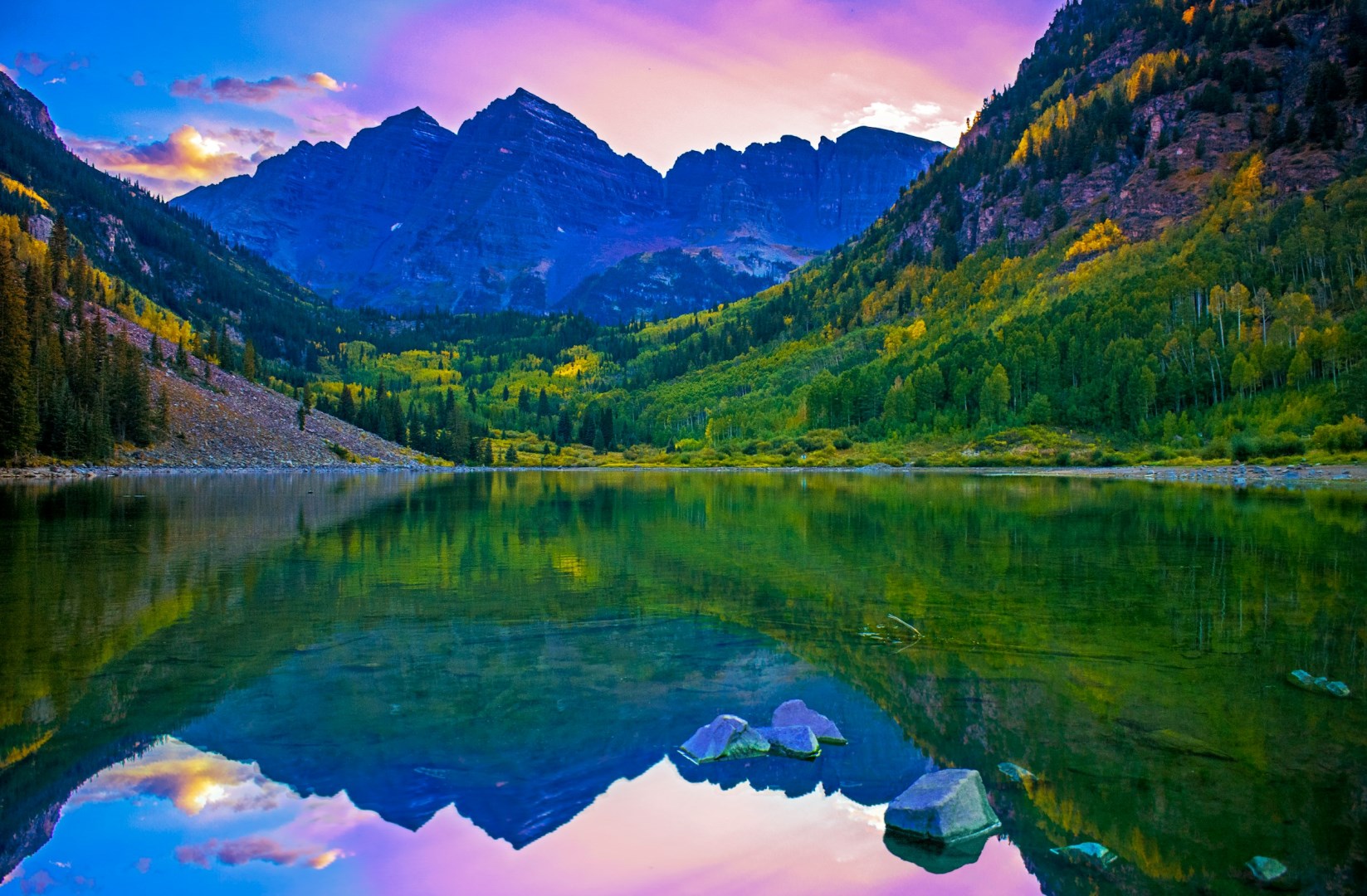

Maroon Bells is a famous mountain landscape near Aspen, Colorado, centered on two distinctive bell-shaped peaks rising above the Maroon Creek Valley. Maroon Peak and North Maroon Peak reach more than 14,000 feet, with their dark red mudstone slopes creating a strong contrast against the surrounding forests and alpine terrain. Maroon Lake sits directly below the peaks and often reflects their shapes in its calm waters. The area is part of the White River National Forest and the Maroon Bells-Snowmass Wilderness, where natural conditions are carefully protected and visitor access is managed.
The Maroon Bells landscape has long been part of the traditional territory of Indigenous peoples who traveled through the central Colorado mountains for hunting and seasonal activities. Later, the surrounding valleys became associated with mining, transportation, and settlement in the Aspen area. The mountains themselves received their name from their distinctive shape and maroon-colored rock. Today, the area is managed as public land within the White River National Forest, with conservation playing an important role in protecting its forests, alpine habitats, trails, and wilderness character. Visitors are expected to follow regulations designed to limit impacts on this heavily visited landscape.
Maroon Lake provides the most accessible view of the peaks and serves as the starting point for several hiking routes. The Maroon Lake Scenic Trail follows the shoreline and Maroon Creek, while longer trails lead toward Crater Lake, West Maroon Pass, Buckskin Pass, and the Four Pass Loop. The valley contains aspen groves, wildflower meadows, conifer forests, and alpine tundra, with wildlife including elk, mule deer, marmots, and mountain goats. At about 9,580 feet, Maroon Lake is high enough for visitors to notice thinner air and rapidly changing mountain weather.
Maroon Bells has no permanent restaurants or major commercial services at the scenic area, so visitors generally obtain food and supplies in nearby Aspen before traveling into the valley. Picnicking is available at designated locations, and developed campgrounds provide overnight opportunities with advance reservations. Access to the scenic area is regulated during the main visitor season, with shuttle and parking reservations required under current arrangements. A distinctive feature of Maroon Bells is the instability of its mudstone peaks, which makes climbing the summits particularly hazardous. The combination of fragile geology, high elevation, wilderness protections, and heavy visitation requires careful planning and responsible use.
Other Popular Destinations in Colorado