



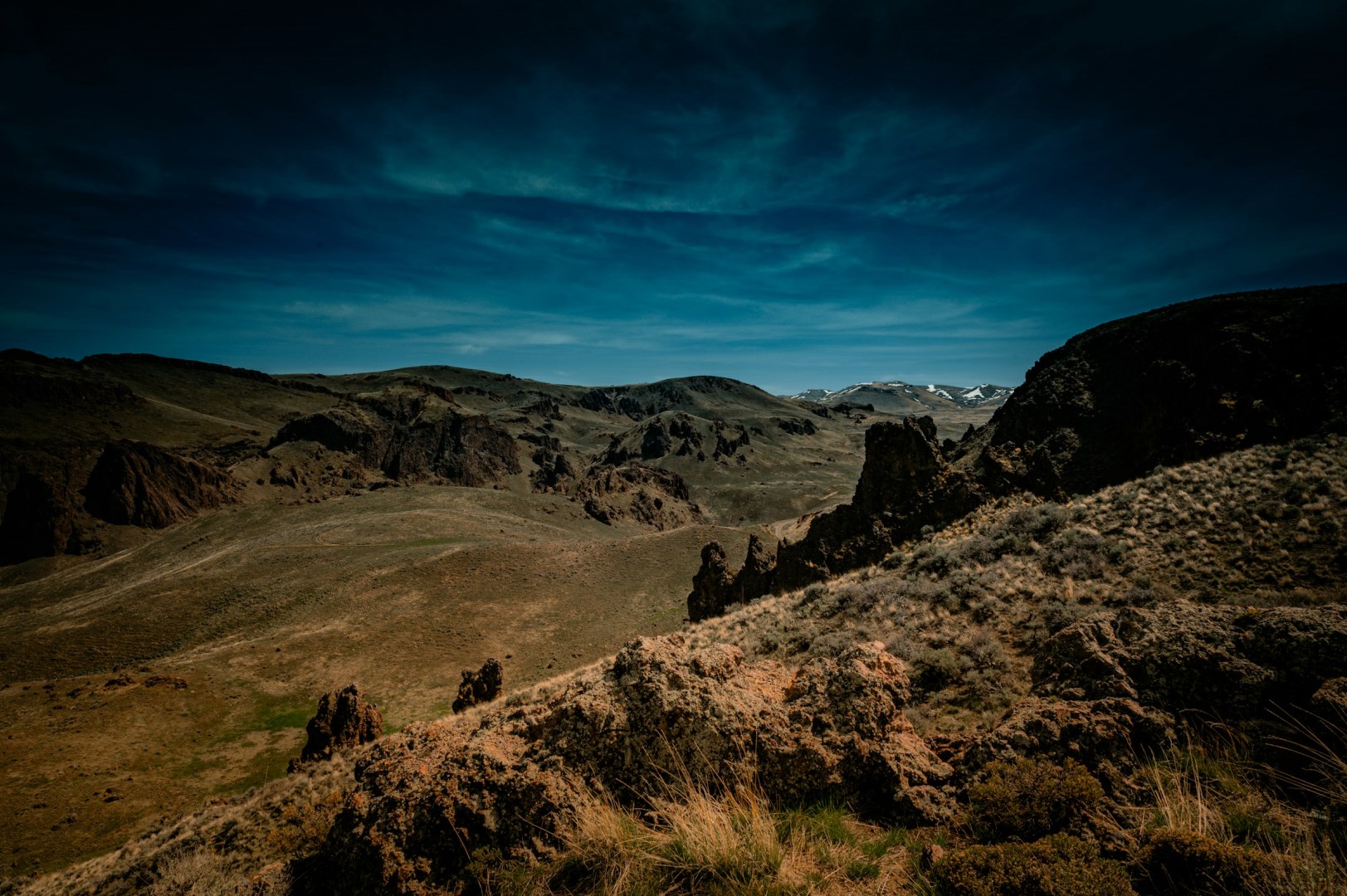
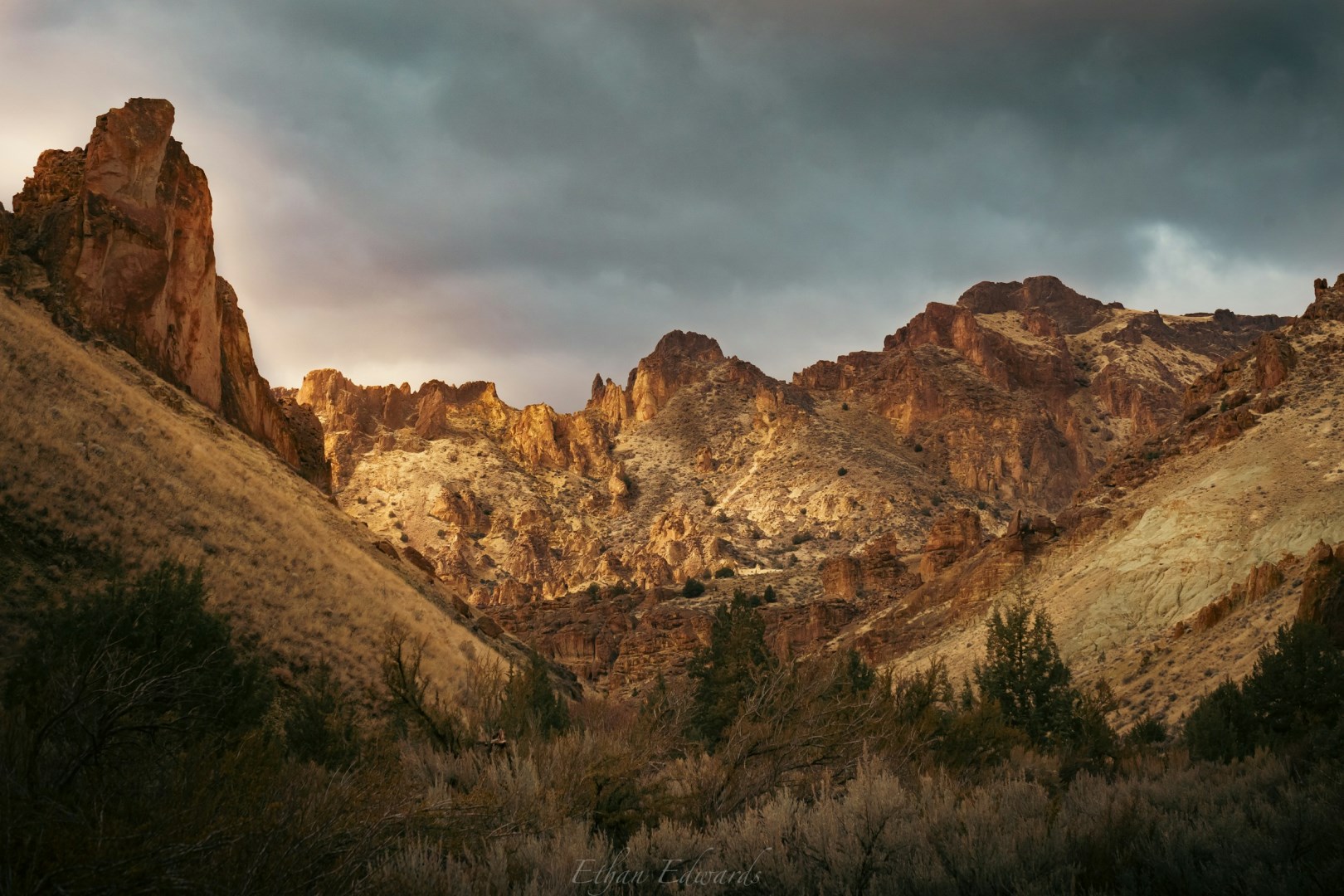

Jordan Valley is a small community in southeastern Oregon near the Idaho border, surrounded by the open high-desert landscape of Malheur County. The area is characterized by sagebrush plains, dry hills, rocky ridges, and wide views across a sparsely populated region. Jordan Creek runs through the valley, providing a natural feature in an otherwise arid environment. The community developed as a ranching and agricultural center and remains closely connected to the surrounding range country. Its remote setting gives Jordan Valley a distinctly rural character, far removed from Oregon’s larger cities and coastal communities.
Jordan Valley has a cultural history shaped by Indigenous peoples, Basque immigrants, ranching, and mining. The Northern Paiute and other Indigenous peoples lived throughout southeastern Oregon before European-American settlement. Basque immigrants later became particularly important to the community, bringing sheep-herding traditions and establishing businesses and social institutions. The Jordan Valley Basque Festival celebrates this heritage through music, dancing, food, and community gatherings. The town’s history is also connected to gold mining and the movement of travelers through southeastern Oregon, with remnants of earlier settlement still visible in the surrounding landscape.
The surrounding high desert provides the main natural attraction. Jordan Valley lies near the Owyhee River region, where deep canyons, volcanic formations, and rugged desert terrain create a landscape very different from Oregon’s wetter western side. The nearby Jordan Craters form a large volcanic field containing cinder cones and lava flows, while the Owyhee Canyonlands extend across a remote area of southeastern Oregon. Wildlife in the region includes pronghorn, mule deer, coyotes, raptors, and numerous sagebrush-dependent birds. The open terrain is especially suited to scenic driving, wildlife observation, and exploring remote backcountry.
Food and community traditions in Jordan Valley reflect its ranching and Basque heritage. Basque-style dishes, including lamb, beans, stews, and breads, are associated with local celebrations and family traditions, while beef and other ranch products remain part of the regional food culture. The town’s historic Jordan Valley Hotel, a former stage stop and community gathering place, is one of its notable landmarks. Jordan Valley’s remote location, small population, Basque traditions, and proximity to the Owyhee Canyonlands make it an unusual destination for travelers interested in Oregon’s high-desert landscapes and rural cultural heritage.
Other Popular Destinations in Oregon


