



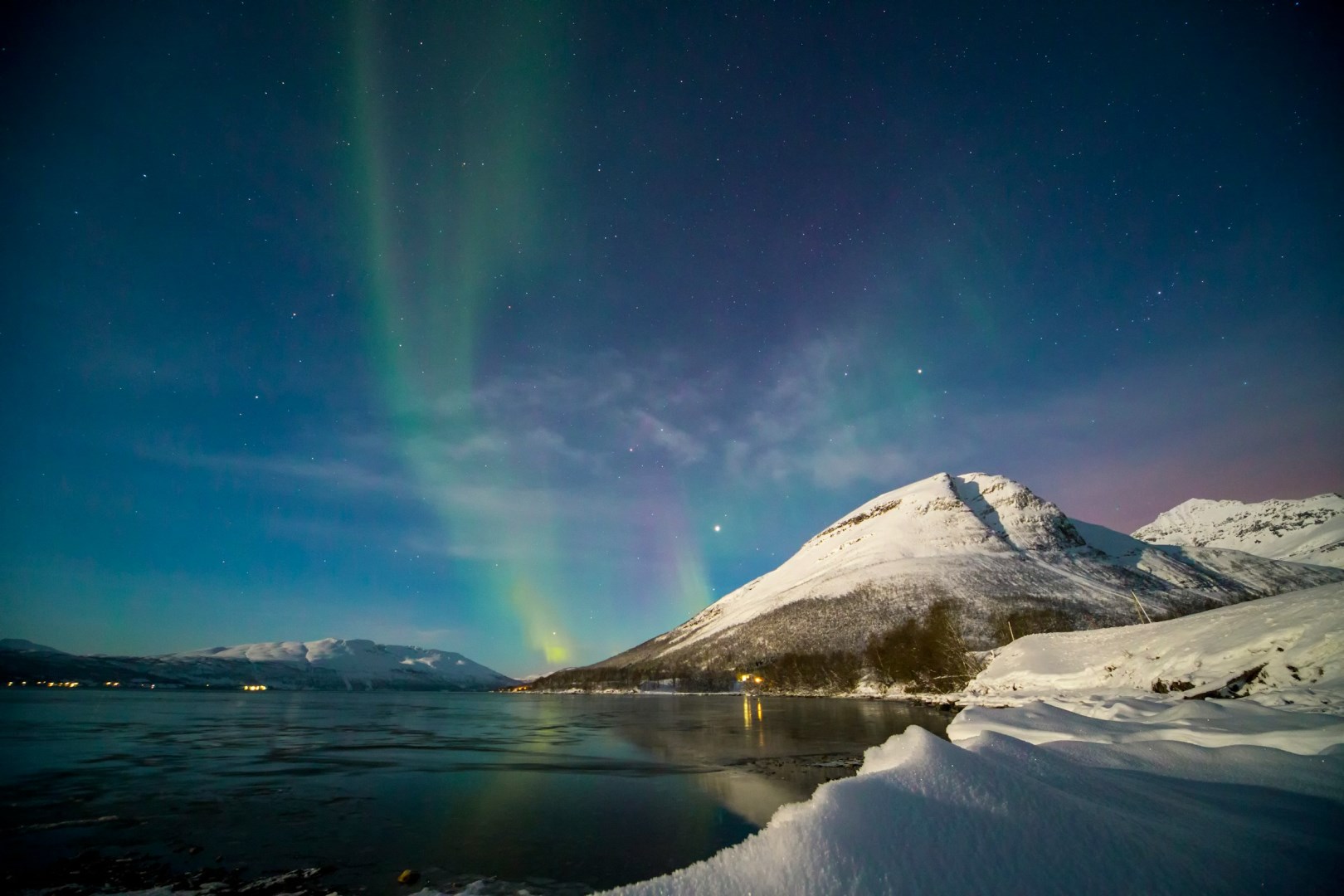



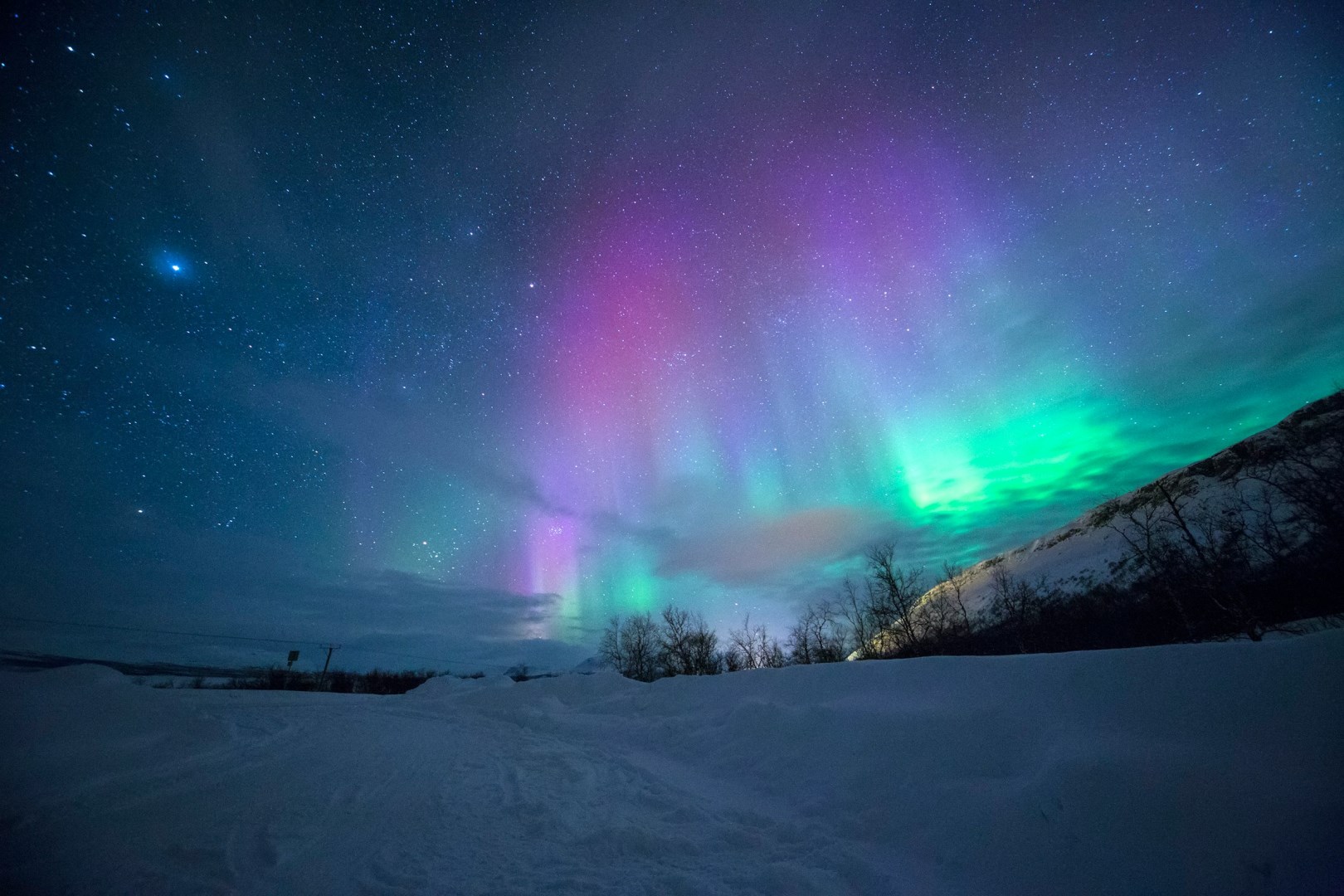
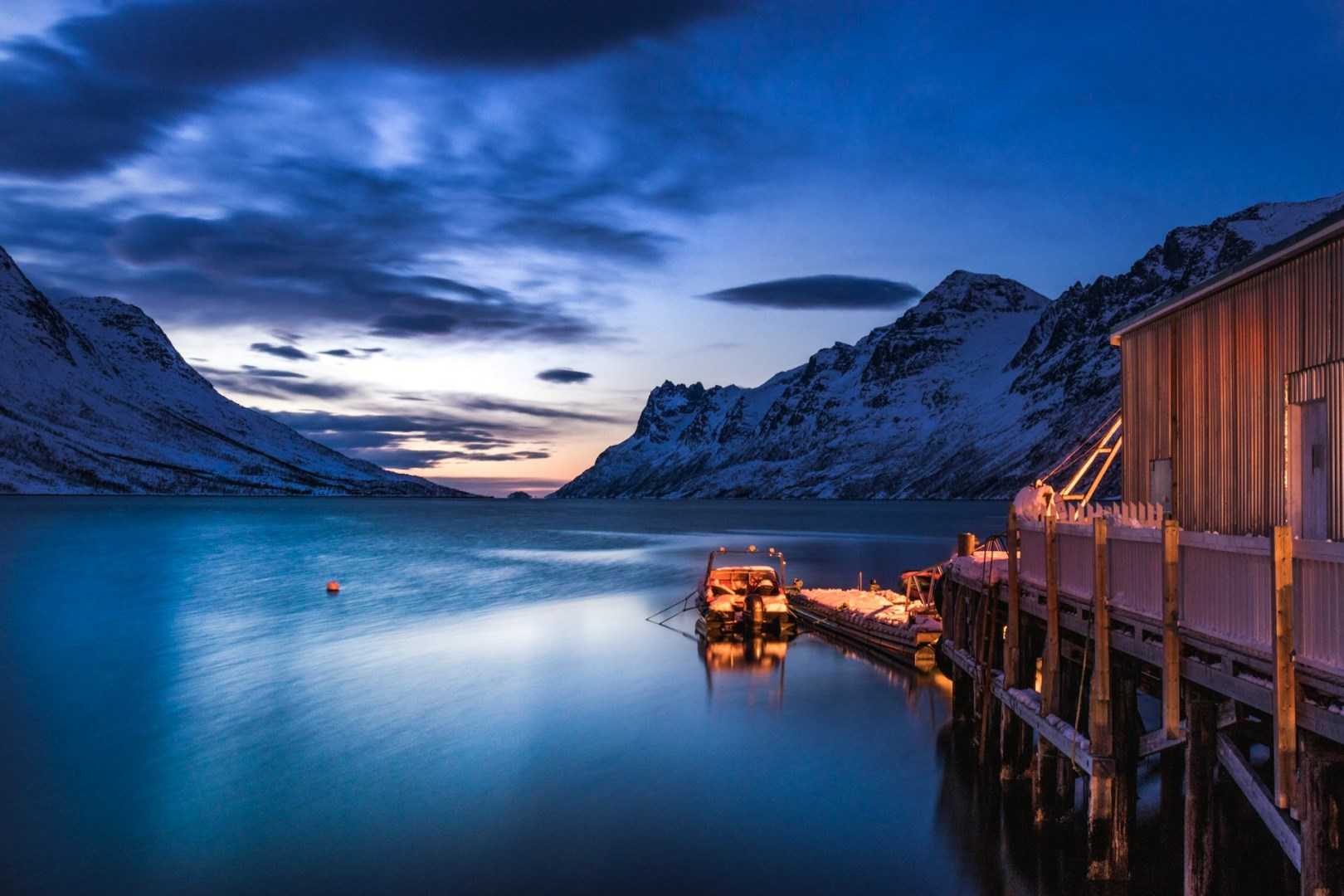

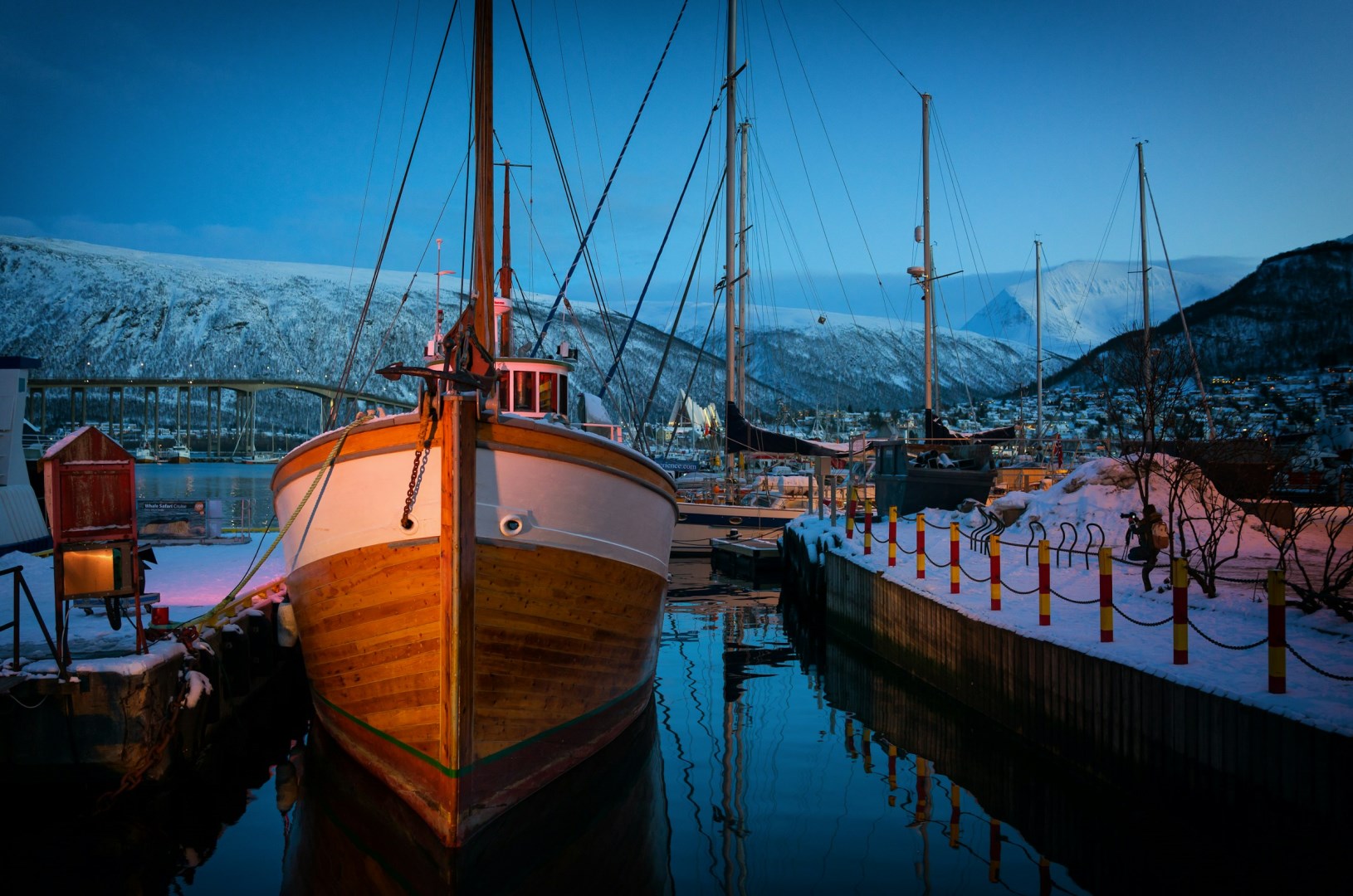

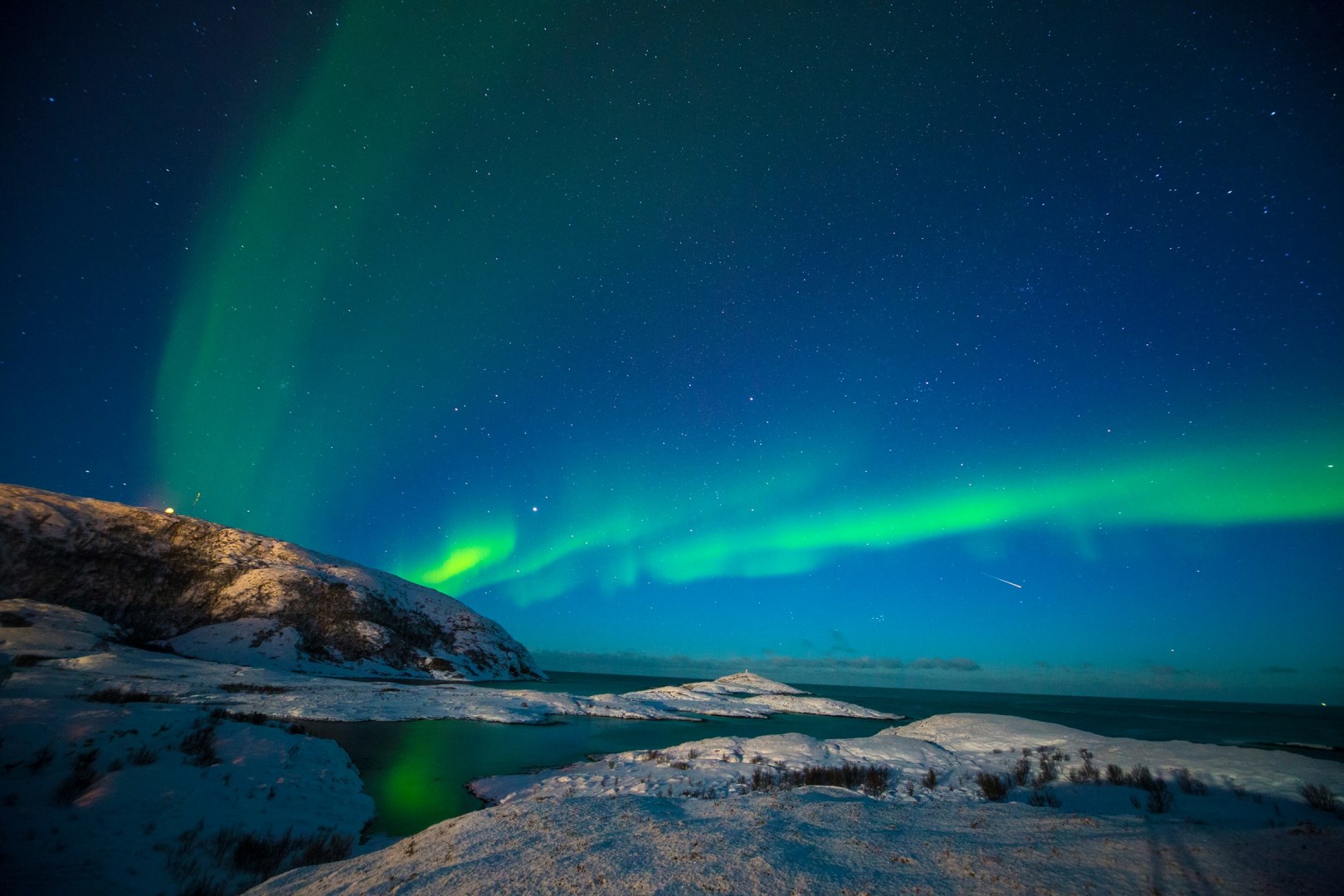
Tromsø, a gem nestled in the Arctic Circle, offers an unparalleled blend of natural wonders and cultural richness. Known as the "Gateway to the Arctic," this Norwegian city is famed for its spectacular Northern Lights. Between September and April, Tromsø becomes a prime location for witnessing the aurora borealis, a mesmerizing display of green, purple, and pink lights dancing across the polar sky.
A stroll through Tromsø’s city center reveals a vibrant blend of modern and historical architecture. The striking Arctic Cathedral, with its distinctive triangular shape and stained-glass windows, stands as a testament to the city's unique aesthetic. The Polar Museum provides fascinating insights into Tromsø’s history as a base for Arctic expeditions, including those of famed explorers like Roald Amundsen.
Tromsø is also a gateway to Arctic adventures. From whale watching tours that offer glimpses of orcas and humpback whales to snowshoeing and dog sledding across the snow-covered landscapes, the city offers a wealth of outdoor activities. For those keen on experiencing the midnight sun, Tromsø is one of the best places to enjoy this phenomenon from late May to late July.
Fun Fact: Tromsø is home to the world’s northernmost university, UiT The Arctic University of Norway. This makes Tromsø a hub of both academic and cultural activity in the Arctic region.
A stroll through Tromsø’s city center reveals a vibrant blend of modern and historical architecture. The striking Arctic Cathedral, with its distinctive triangular shape and stained-glass windows, stands as a testament to the city's unique aesthetic. The Polar Museum provides fascinating insights into Tromsø’s history as a base for Arctic expeditions, including those of famed explorers like Roald Amundsen.
Tromsø is also a gateway to Arctic adventures. From whale watching tours that offer glimpses of orcas and humpback whales to snowshoeing and dog sledding across the snow-covered landscapes, the city offers a wealth of outdoor activities. For those keen on experiencing the midnight sun, Tromsø is one of the best places to enjoy this phenomenon from late May to late July.
Fun Fact: Tromsø is home to the world’s northernmost university, UiT The Arctic University of Norway. This makes Tromsø a hub of both academic and cultural activity in the Arctic region.
Other Popular Destinations in Norway

Charming Bergen will sweep you away with its picturesque architecture and breathtaking natural beauty. Nestled between stunningly verdant mountains and the winding fjords of the North Sea, this scenic town will delight you at every turn.

Oslo, Norway’s capital, stands at the crossroads of Nordic history and forward-thinking design. Originally founded over a thousand years ago by Viking King Harald Hardrada, the city has evolved from a medieval trading hub into one of Europe’s most modern capitals. Visitors can explore its layered past at the Akershus Fortress, a 13th-century stronghold still standing guard over Oslofjord, or walk through the preserved wooden homes of Damstredet.
