






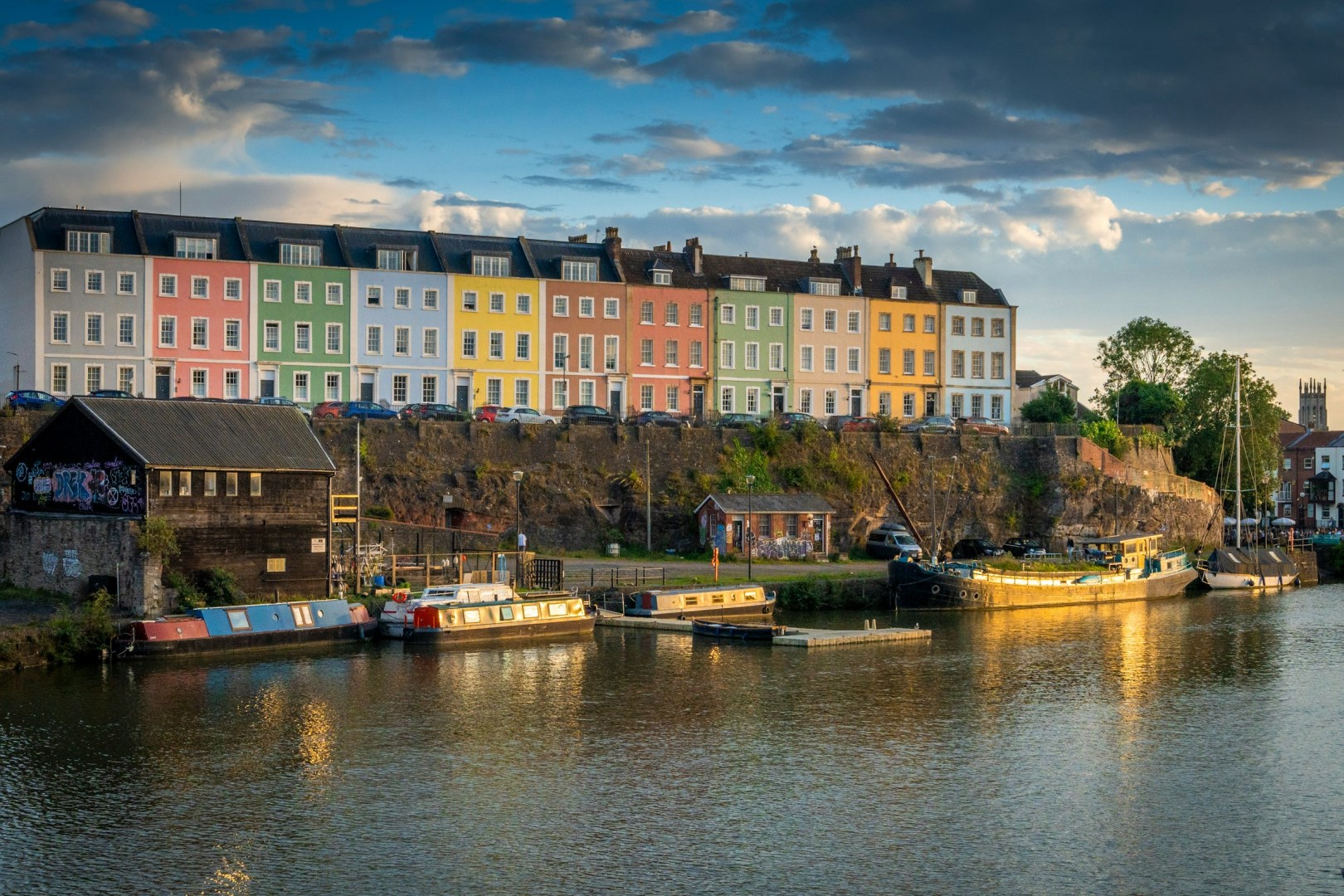
Bristol is a city in southwest England built around the River Avon, with a maritime history that has shaped its neighborhoods, architecture, and economy. The historic harbor occupies the center of the city, where former warehouses, quays, and docks have been adapted for museums, galleries, restaurants, and public spaces. Clifton Suspension Bridge spans the Avon Gorge and is one of Bristol’s most recognizable landmarks. The city also has a strong reputation for independent arts, music, and creative industries, with neighborhoods such as Stokes Croft and Bedminster contributing different architectural and cultural identities.
Bristol’s history is closely connected with trade, shipbuilding, engineering, and the movement of people across the Atlantic. The city’s maritime heritage can be explored at the M Shed museum and aboard the preserved steamship SS Great Britain, designed by Isambard Kingdom Brunel. Bristol also has a significant connection with the history of the transatlantic slave trade, and the city has developed exhibitions and public interpretation addressing that legacy. Bristol Cathedral, St Mary Redcliffe, and the medieval streets around the old city provide further evidence of the city’s religious and architectural heritage, while contemporary street art forms another visible part of its cultural identity.
Bristol’s attractions range from historic buildings to industrial and natural landmarks. Clifton Suspension Bridge crosses the Avon Gorge between Clifton and Leigh Woods, while the Cabot Tower in Brandon Hill provides views across the city. The harbor area includes the Bristol Aquarium, Arnolfini arts center, and M Shed, with walking routes linking the waterfront to the old city. The SS Great Britain is displayed in the dry dock where it was launched, offering access to its decks and restored interiors. Beyond the center, Ashton Court Estate provides open parkland, woodland, and walking trails close to the urban area.
Bristol’s food scene reflects both southwest England and the city’s diverse population. Local specialties include West Country cider, Somerset cheeses, sourdough breads, and seasonal produce, while restaurants and markets offer cuisines from communities with roots around the world. The city also has a long association with chocolate production through the former Fry’s factory, an important part of Bristol’s industrial history. Another distinctive feature is the city’s connection with street art, particularly the work associated with Banksy, who was born in Bristol. Murals and changing public artworks can be found across several neighborhoods, making visual art part of the everyday streetscape.
Other Popular Destinations in England


