


Interlaken


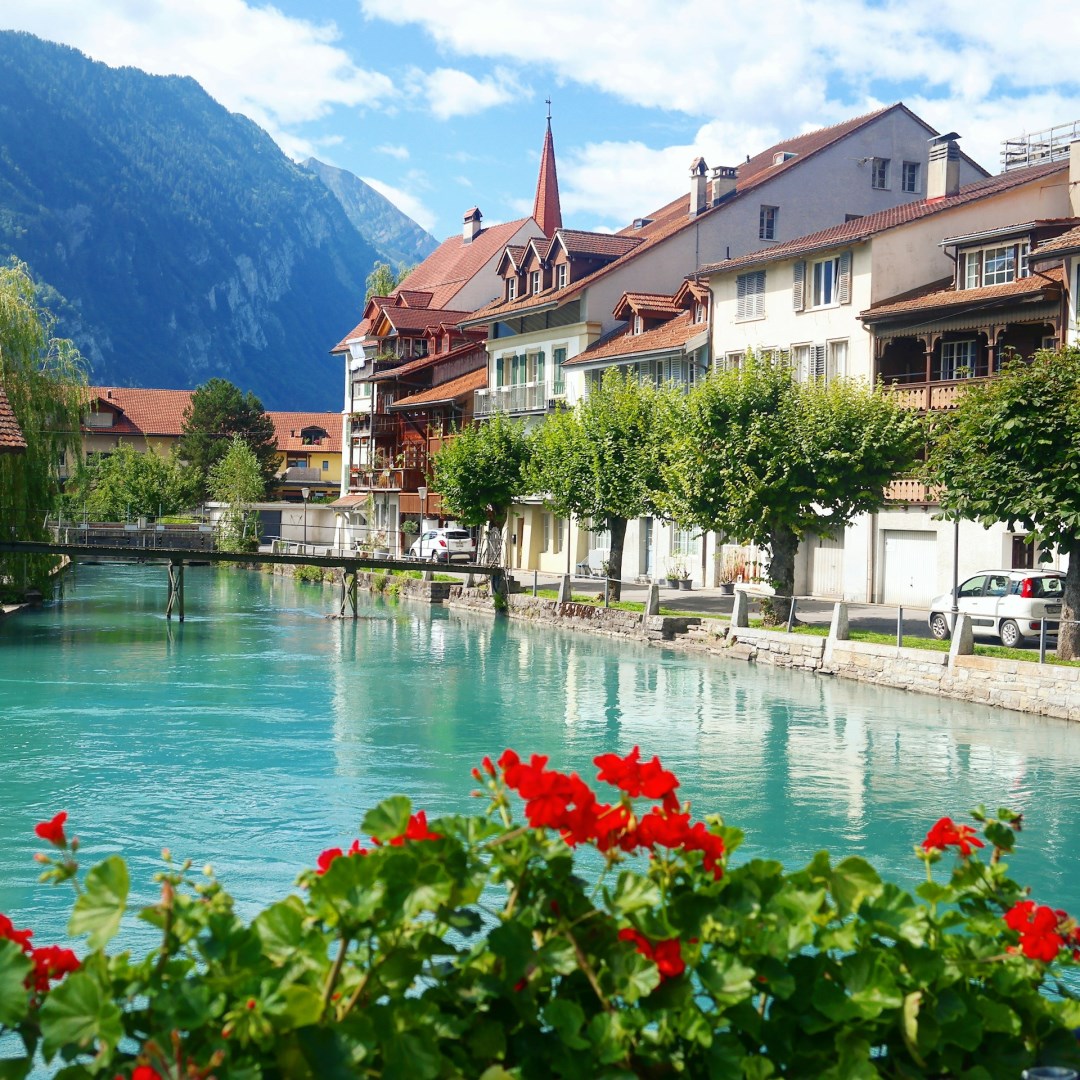
The town of Interlaken derives its name from Latin origins. Traces of the town's foundations can be seen in the 12th century castle with its fascinating Augustinian monastery.
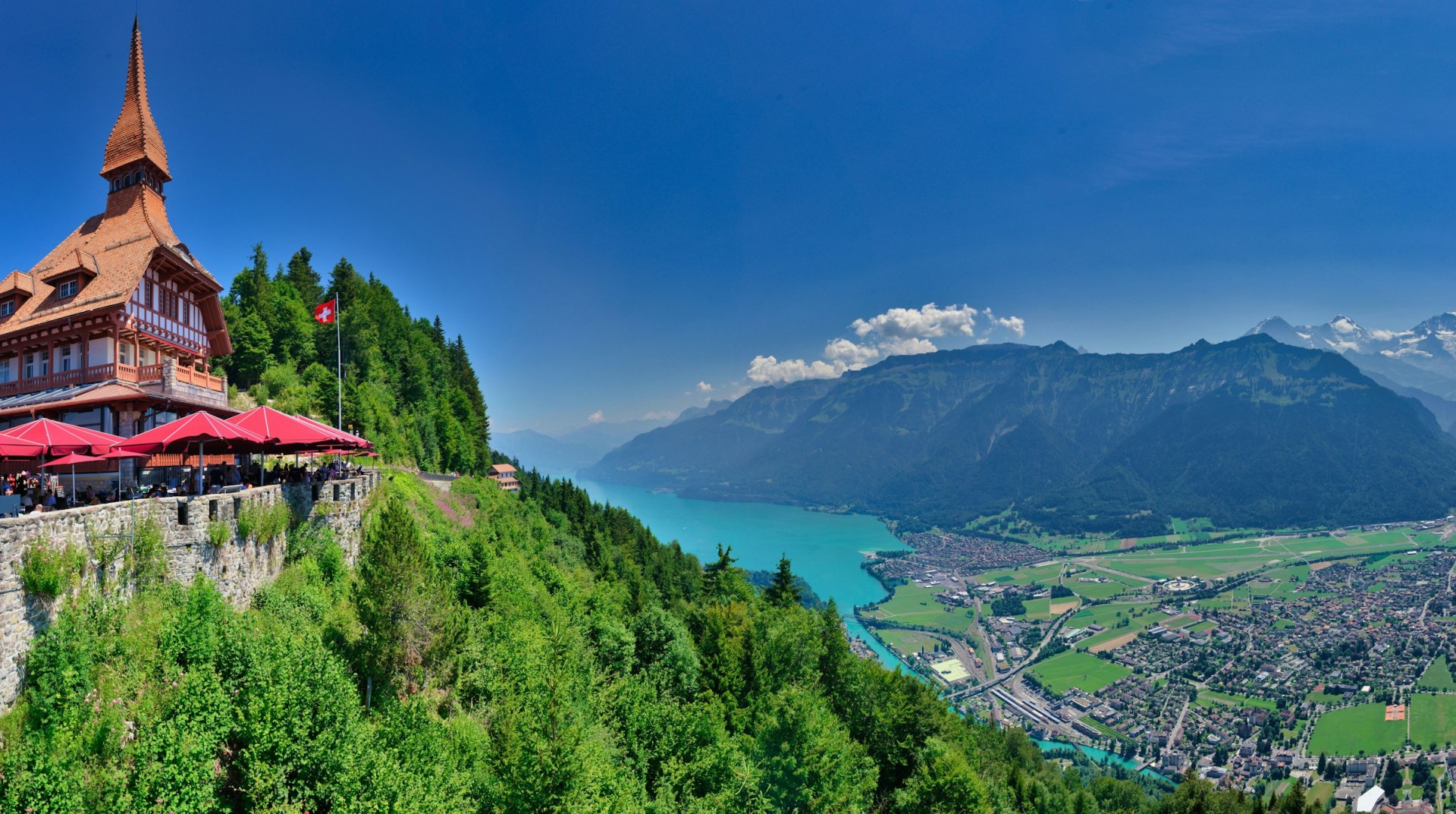
Nestling cozily beneath the legendary triad of the Eiger, Mönch and Jungfrau mountains, Interlaken, 570 meters above sea level is a wondrous health resort and an international favorite. The superb mountainous scenery and gentle climate are ideal venues for virtually every leisure activity, all year round. Interlaken shimmers like a jewel between the lakes of Brienz and Thun.
Höheweg, broken in the middle by Höhematte is the business and social center of Interlaken. The shopping is varied and interesting from simple souvenirs to luxurious timepieces. Grand hotels and inviting restaurants and cafes to spoil the visitor abound whilst a traditional horse-drawn carriage ferries guests to and from their destinations in fine style. The famous Kursaal - Interlaken's casino is situated in the center of Höheweg. Here you can find many types of entertainment including elegant balls, annual music festivals, Folklorica, local and trade shows in addition to the obvious delights of the casino tables. Interlaken is also an ideal starting point for excursions to the Bern upper lands and breathtaking Jungfrau region with the centerpiece's massive peak soaring 4158 meters into the cloudless skies.
Nestling cozily beneath the legendary triad of the Eiger, Mönch and Jungfrau mountains, Interlaken, 570 meters above sea level is a wondrous health resort and an international favorite. The superb mountainous scenery and gentle climate are ideal venues for virtually every leisure activity, all year round. Interlaken shimmers like a jewel between the lakes of Brienz and Thun.
Höheweg, broken in the middle by Höhematte is the business and social center of Interlaken. The shopping is varied and interesting from simple souvenirs to luxurious timepieces. Grand hotels and inviting restaurants and cafes to spoil the visitor abound whilst a traditional horse-drawn carriage ferries guests to and from their destinations in fine style. The famous Kursaal - Interlaken's casino is situated in the center of Höheweg. Here you can find many types of entertainment including elegant balls, annual music festivals, Folklorica, local and trade shows in addition to the obvious delights of the casino tables. Interlaken is also an ideal starting point for excursions to the Bern upper lands and breathtaking Jungfrau region with the centerpiece's massive peak soaring 4158 meters into the cloudless skies.
