


King Salmon is a small community in southwest Alaska on the Alaska Peninsula, located along the Naknek River near the shores of Naknek Lake. It serves as a regional transportation and service center for the Bristol Bay area and as an important base for visitors traveling into the surrounding wilderness. The community is surrounded by tundra, wetlands, lakes, rivers, and low volcanic hills rather than tall mountains. Its remote location and seasonal economy give King Salmon a practical character, with aviation, commercial fishing, sport fishing, government services, and tourism forming important parts of local life.
The area around King Salmon lies within the traditional homeland of the Alutiiq and Yup'ik peoples, whose communities have long depended on the region's rivers, lakes, tundra, and coastal waters. Fishing, hunting, trapping, and gathering remain important sources of food and cultural continuity. The nearby community of Naknek has a strong Bristol Bay fishing tradition, while local archaeological sites reflect a much longer human presence in the region. King Salmon also has a significant military history, with the former King Salmon Air Force Station reflecting the community's role in Alaska's aviation and defense network.
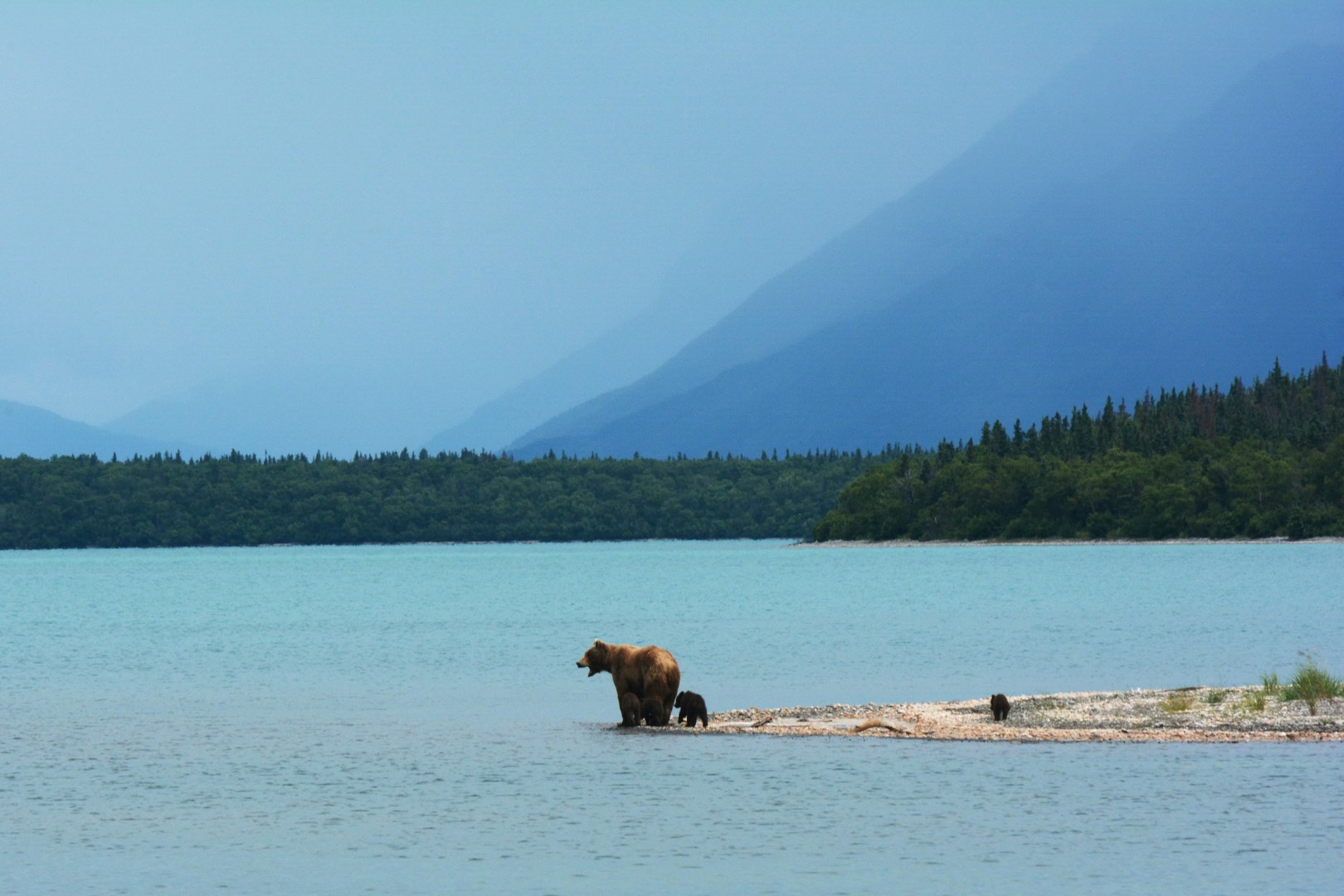
King Salmon is best known as a gateway to several major protected areas and world-class fishing waters. Katmai National Park and Preserve lies nearby and is famous for its brown bears, particularly around Brooks Falls, where bears gather to catch migrating salmon. Lake Clark National Park and Preserve is also accessible by air, with volcanoes, glaciers, rivers, and remote wilderness. The Naknek River system supports large runs of salmon, including sockeye, king, silver, and chum salmon, attracting anglers from around the world. Floatplanes and small aircraft are essential for reaching many of the region's lakes, rivers, lodges, and backcountry sites.
Food in King Salmon is closely tied to the resources of Bristol Bay. Sockeye salmon is particularly important, both commercially and for local households, while king salmon, trout, char, and other fish are also harvested. Locally gathered berries, including blueberries, cranberries, and crowberries, can be used in jams, baked goods, and desserts. Wild game may include moose and caribou, depending on local harvests and regulations. One distinctive feature of King Salmon is its dependence on aviation: there are no roads connecting the community to Alaska's main highway network, so aircraft and boats provide essential links with surrounding settlements and wilderness areas.
Other Popular Destinations in Alaska


